
Key Takeaways:
- Brand experience is the most decisive factor in how customers perceive and engage with a business, more than visuals or messaging alone.
- Strategic, consistent brand experience builds trust, drives growth, and keeps businesses relevant in crowded markets.
- Successful brand experience is operational, not ornamental. It must be embedded across product, service, culture, and internal teams.
A great brand experience is no longer a nice-to-have. It’s the primary way customers judge whether a business is worth their time, attention, and trust.
In fact, 73% of consumers say experience is a key factor in their purchasing decisions, according to PwC.
Yet many businesses still treat branding as a visual or messaging exercise, and not something that lives across the product, service, and culture.
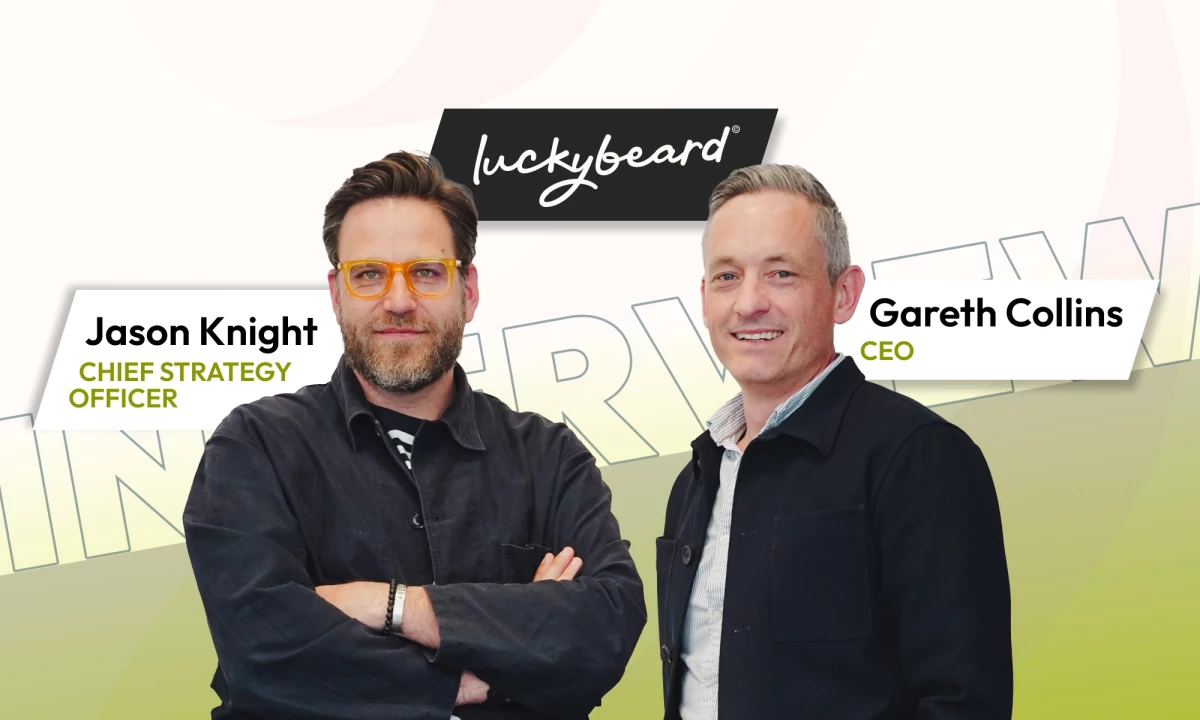
Gareth Collins, CEO, and Jason Knight, CSO at brand and communications consultancy Luckybeard, have helped global businesses turn brand experience into a growth engine.
Their work spans end-to-end brand building, digital transformation, and embedding strategy across every interaction a customer has with a brand.
We spoke with Gareth and Jason to unpack what creating a great brand experience really means, why it matters more than ever, and how businesses can use it to build lasting relevance.

Who Are Gareth Collins and Jason Knight?
Gareth Collins is the CEO of Luckybeard, bringing years of leadership experience from creative and digital agencies across South Africa and the UK. Jason Knight is Chief Strategy Officer at Luckybeard, where he works closely with clients to define brand purpose, shape positioning, and translate strategy into action. Together, they help businesses build brands that behave as well as they look.
Brand Experience Is the Brand
Many companies still treat branding as a marketing campaign, a visual identity, a tone of voice, a tagline — but that’s not how people experience brands in real life.
“Brand experience is the sum of everything a company does that leaves an impression, whether intentional or not,” says Jason.
That includes your website interface, customer service tone, product packaging, or the onboarding flow of your app. These aren’t isolated design choices. They are all expressions of your brand.
And in today’s AI-driven environment, Jason emphasizes that perception is driven by experience, not messaging.
“Consumers don’t judge brands by what they claim — they judge them by how the interaction feels,” he says. “Experience is the brand.”
This isn’t just a philosophical statement. It’s a strategic reality.
Gareth points to a Kantar study showing that 75% of brand building now comes through experience-based touchpoints.
“That’s a staggering figure — and a huge opportunity for brands that get it right,” he notes.
Why Brand Experience Drives Growth
As products become easier to replicate and features converge across competitors, experience is emerging as the new battleground for differentiation.
After all, strategic investment in brand experience creates lasting relevance.
“When companies invest in strategic brand experience, they’re not just polishing perception — they’re engineering value,” says Jason.
And that value shows up in retention, referrals, and relevance in a cluttered market.
Coherence is a major driver of that value.
Gareth explains, “When different teams interpret the brand in different ways, it creates disjointed experiences. Your people are the frontline of your brand. If they don’t understand it — or don’t believe in it — even the best external strategy falls flat.”
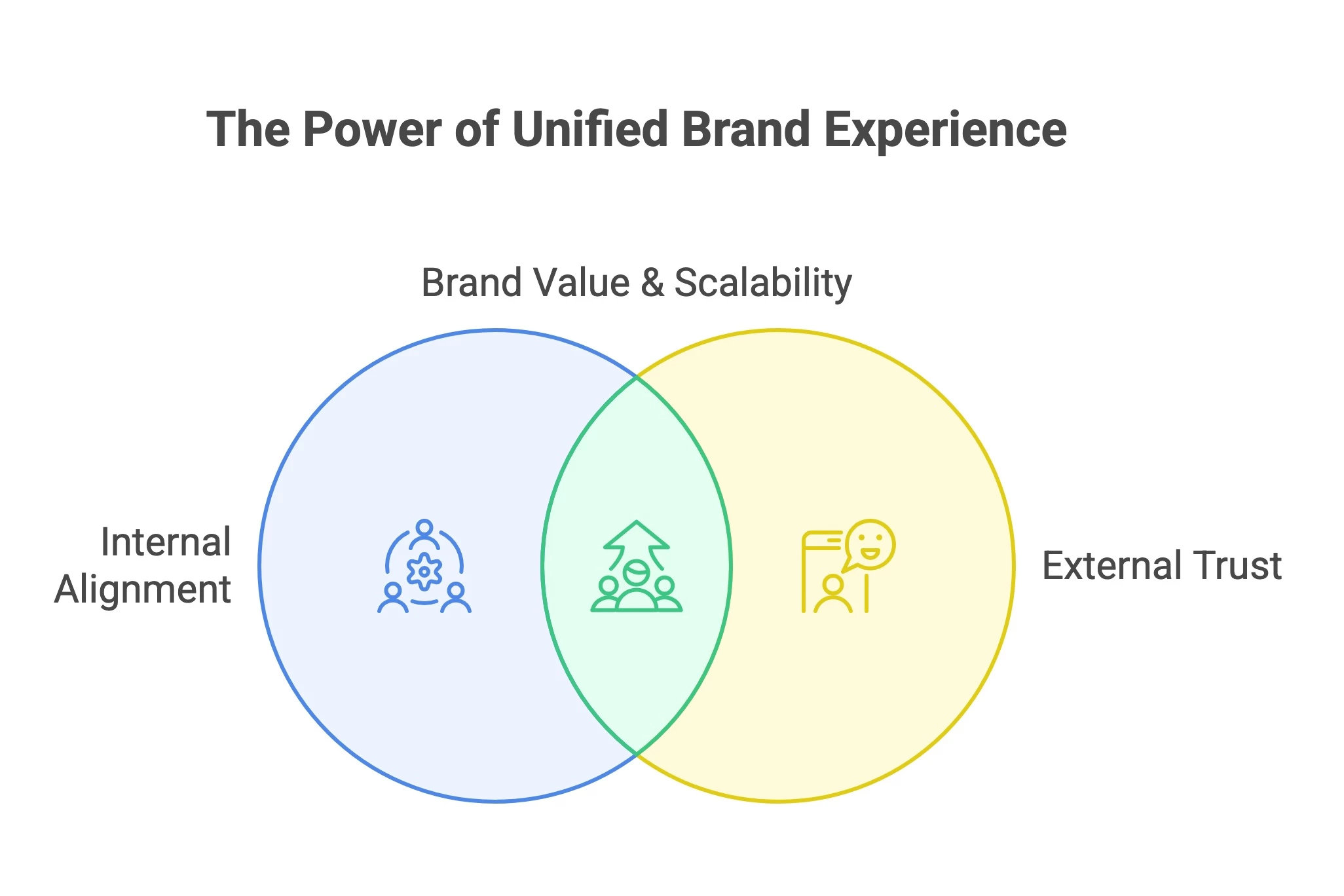
Great brand experience unifies. It makes teams more aligned internally and creates trust externally.
And that alignment is essential for scaling a brand without losing clarity.
The Biggest Mistake? Misalignment
One of the biggest threats to brand experience isn’t external factors; it’s internal issues.
Misalignment across leadership, departments, or execution teams often results in fractured brand experiences.
“Misalignment — whether it’s among leadership, between teams, or between strategy and execution — is one of the biggest killers of great brand experience,” Jason warns.
“There’s also a tendency to chase the latest trends instead of staying grounded in a clear brand positioning.”
“I'd add inconsistency. When different teams interpret the brand in different ways, it creates disjointed experiences for customers,” Gareth adds.
That confusion at the center tends to show up in customer-facing experiences:
- Inconsistent interfaces
- Messaging that doesn’t match tone
- Services that don’t live up to brand promises
And customers notice immediately.
Start by Embedding Strategy Into Culture
For companies looking to improve brand experience, a surface-level rebrand won’t cut it.
What’s needed is a robust brand framework that’s embedded across every department and discipline, from product and design to customer service and internal culture.
“Start by getting the basics right,” says Jason.
“That means building a robust brand framework — purpose, principles, behaviours, design — and embedding that thinking into everything: product design, user experience, service offering.”
But even the best framework won’t stick without cultural buy-in.
“It’s as much about culture as it is about controls,” adds Gareth. “When teams are aligned and engaged, consistency becomes second nature.”
In short: brand experience begins on the inside.
Leverage Feedback as a Strategy
The brand experience is never finished. It evolves as customer expectations shift and as companies grow.
The only way to keep it aligned is to stay in a constant feedback loop.
“Brand strategy is the blueprint; brand experience is the building,” says Jason. “We constantly use feedback loops to shape, test, and evolve the experience.”
That means taking feedback seriously, not just externally, but internally as well.
From UX testing and customer interviews to frontline team feedback, every data point helps close the gap between brand intent and real-world impact.
“We don’t see feedback as just validation… it helps sharpen and drive evolution,” Gareth explains. “Listening well and often is what enables brands to stay agile.”
Real-World Examples of Brand Experience Done Right
Luckybeard’s approach isn’t theoretical. Their work with clients like Investec and Unu Health shows what it means to turn strategy into experience.
“Our work with Investec stands out,” Jason shares. “We’ve helped lay the strategic and creative foundations of the brand. Now, we’re focused on bringing that to life consistently across every touchpoint.”
This kind of sustained partnership allows for deeper alignment and long-term brand coherence — something that often gets lost when strategy and execution are split between vendors.
Another example is Unu Health, a digital healthcare provider in South Africa.
“We worked with them to build the brand from the ground up — strategy, value proposition, name, identity, digital experience and communications,” says Gareth.
“It’s a great example of an end-to-end approach to brand experience.”
In both cases, the focus isn’t just on designing the brand, but on operationalizing it across real-world interactions.
What to Look for in a Brand Experience Partner
Hiring the right partner can help bridge the gap between strategy and execution, but only if they understand your business ambition.
“The key thing is finding a partner who truly understands your ambition,” says Jason.
“Someone who can spot the gaps, bring clarity and come up with simple, actionable roadmaps to close them.”
But beyond capability, chemistry matters. As Gareth puts it:
“[Find] someone you trust — who brings commercial acumen, creative vision and fresh thinking. That’s where real partnership begins.”
Designing for Magic in the Age of AI
AI is changing how people find, engage with, and judge brands.
From search algorithms to customer service bots, many experiences are now mediated by generative tools. That opens up huge opportunities and new risks.
“We’re heading into a world of hyper-personalisation,” says Jason. “Navigating that well starts with a strong, intentional brand experience.”
But frictionless can easily become forgettable. Gareth warns of a creeping “blandemic,” a wave of generic, AI-generated experiences that lack soul.
“AI could accelerate the ‘blandemic’ — a world where everything is… ultimately, forgettable,” he says. “We have to be intentional about designing moments of creativity and magic… those unexpected, human touches.”
The Brand Experience Shift You Can’t Ignore
The bottom line? Brand is no longer just a marketing asset. It’s a strategic business lever — one that shapes customer loyalty, employee alignment, and market relevance.
“Don’t treat brand as a veneer — it’s a business asset,” says Gareth. “When your brand is deeply aligned with your business model and customer needs, growth is both possible and meaningful.”
And that alignment can’t live in the marketing department alone.
“To build, don’t see brand as something that lives only in marketing,” says Jason. “It should show up in every touchpoint — across product, service, culture. The brands that bridge the gap between ambition and reality are the ones that unlock lasting value.”