
Gucci's 'The Tiger': Key Points
- Gucci replaced its Milan Fashion Week runway with a short film starring Demi Moore, Edward Norton, and other actors.
- The film uses family drama and psychedelic visuals to introduce Demna’s debut collection, “La Famiglia.”
- Screening activations in Milan and New York highlight Gucci’s experimental marketing approach for a global audience.
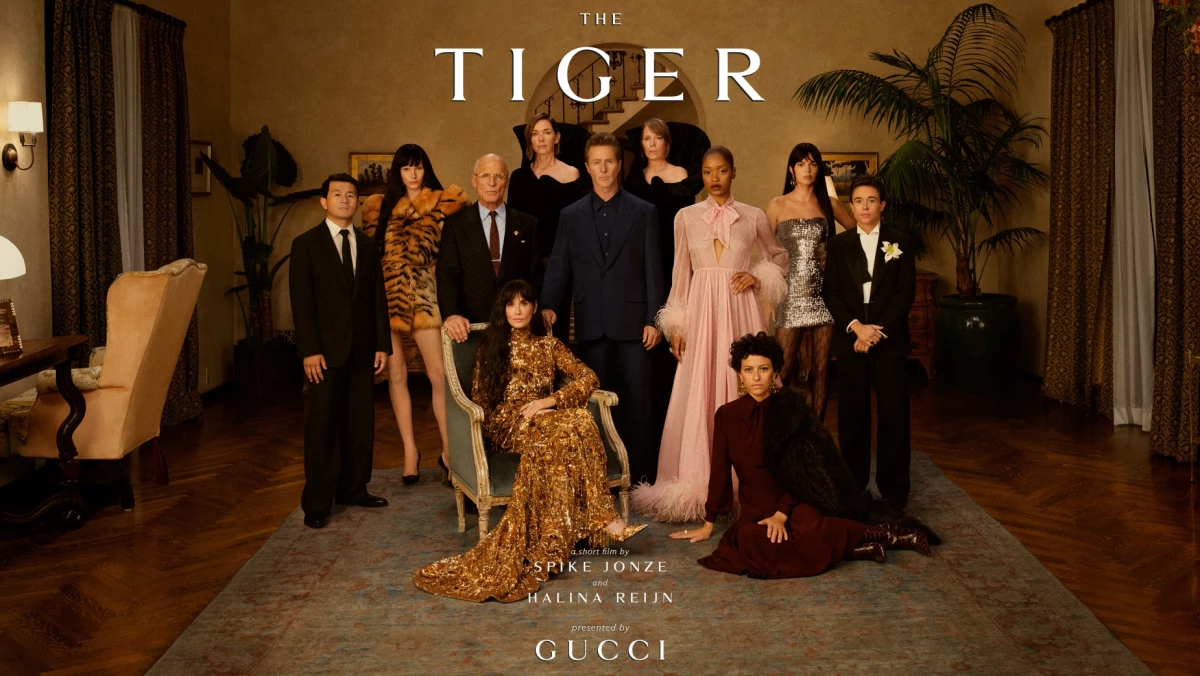
Gucci swapped the runway for the big screen at Milan Fashion Week with a short film featuring a cast of Hollywood heavyweights.
Directed by Spike Jonze and Halina Reijn and produced by MJZ, the 30-minute film "The Tiger" introduces creative director Demna’s debut collection, “La Famiglia.”
Demi Moore leads as Barbara Gucci, the fictional chairwoman of Gucci International, alongside big names such as:
- Edward Norton
- Ed Harris
- Elliot Page
- Keke Palmer
- Kendall Jenner
Instead of your traditional catwalk, Gucci leaned into cinema to showcase its first collection under Demna.
It's a display of how the brand prioritized brand storytelling instead of the usual launch to tailor and define Gucci's market presence.
“What do you do if you’re in a room with a tiger?” the campaign asks, leaving audiences to puzzle over the metaphor.
For Gucci, the gamble lies in whether a film can make as much cultural noise as a fashion show.
The film was screened in Milan and New York, reaching audiences beyond the front row.
A Family Spirals Into Chaos
The short follows Barbara Gucci hosting a birthday dinner, where family tension collides with high fashion.
Moore’s character struggles to balance her roles as mother, boss, and host, while a fictional Vanity Fair editor (played by Ed Harris) quietly observes.
As champagne is spiked, the warm gold-lit dinner scene unravels into psychedelic chaos.
Because it's still a collection showcase, the costumes and interiors on display became central to the film's storytelling.
Director of photography Jasper Wolf created a surreal visual identity that ties the narrative to the clothes.
The cast, including Alia Shawkat, Julianne Nicholson, and Ronny Chieng, contributed to the family drama and gave it a touch of comedy and uneasy vulnerability.
Gucci describes the project as both bizarre and beautiful, which is a reflection of Demna’s disruptive approach.
This approach is even heightened by the brand's decision to wipe out all previous posts from its Instagram page, starting on a clean slate with the new Demna era.
Last year, Gucci reported revenues of $9 billion, establishing its position as one of the world’s leading luxury fashion houses.
What Marketers Can Learn from Gucci
For marketers, Gucci’s pivot from runway to cinema offers valuable lessons on how to tell a compelling story as a leading luxury brand.
Key takeaways include:
- Campaigns work best when storytelling goes beyond product to build conversations around a collection.
- Film as a medium enables brands to seamlessly integrate celebrity, set design, and narrative without compromising focus on the clothes.
- Activations like screenings in key cities can amplify campaigns that don’t rely on traditional live shows.
The real test will be whether Gucci’s cinematic gamble is a formula to stick to moving forward: will it resonate with buyers and critics as much as runway presentations have in the past?
Our Take: Can Film Replace the Runway?
I find Gucci’s decision both bold and practical.
The runway, while iconic, can feel repetitive in today’s fashion world.
However, a short film allows for replay, broader reach, and cultural depth.
What excites me here is the possibility that more luxury houses may rethink the necessity of physical shows.
At the same time, cinema brings its own risks: audiences may see it as art first and product second.
That tension, though, is part of what makes this experiment worth tuning into.
If Gucci can prove a film creates the same demand as a front-row event, we may see more houses rewrite the rules of fashion launches.
In other news, Bentley launched its global campaign titled "How Do You Bentley?" to reposition itself as more than a luxury brand.