
Ford x Daniel Ricciardo: Key Findings
- The automaker partners with Wieden+Kennedy New York to launch a Daniel Ricciardo-led campaign featuring the Ford F-150 Raptor R.
- It changes focus from Formula 1 precision to off-road unpredictability, highlighting performance through storytelling.
- The push supports the "Ready Set Ford" marketing campaign, using social-first content to connect product capability with personality-driven narratives.
Ford is swapping racetracks for sand dunes to show what its Raptor can really do.
Together with Wieden+Kennedy New York, the brand launched a short film starring Formula 1 driver Daniel Ricciardo as part of its broader push toward story-led content.
Titled "A Raptor Meets Honey Badger," the film highlights Ricciardo’s nickname and charm, placing him in an off-road setting.
The efforts build on Ford’s "Ready Set Ford" global marketing campaign, which focuses on passion vehicles and human capability.
Ricciardo, who was named a Global Ford Racing Ambassador last year, fits this direction.
“Ever since Season 1 of Netflix’s hit show ‘Drive to Survive’, Daniel’s been the unofficial main character of the F1 world," Dan Peters and Reef Younis, creative directors at W+K NY, said in a statement.
"What you see on screen is exactly who he is when the lights go out, so we figured a traditional car ad wouldn't cut it.
To capture that Honey Badger energy, we needed something as loud and grand as he is: a Raptor R, a vast desert, and ultimately letting Daniel be Daniel — living his best life at full throttle."
At its core, the idea of the creative visualizes what Ricciardo feels like on a drive without the constant pressure of racing.
The answer to this shaped the tone of the film, which focuses less on competition and more on enjoying the moment, relying on instinct while still having control.
Where the Road Ends
Known for his aggressive driving style and easygoing personality, Ricciardo brings a different kind of energy to the brand’s storytelling.
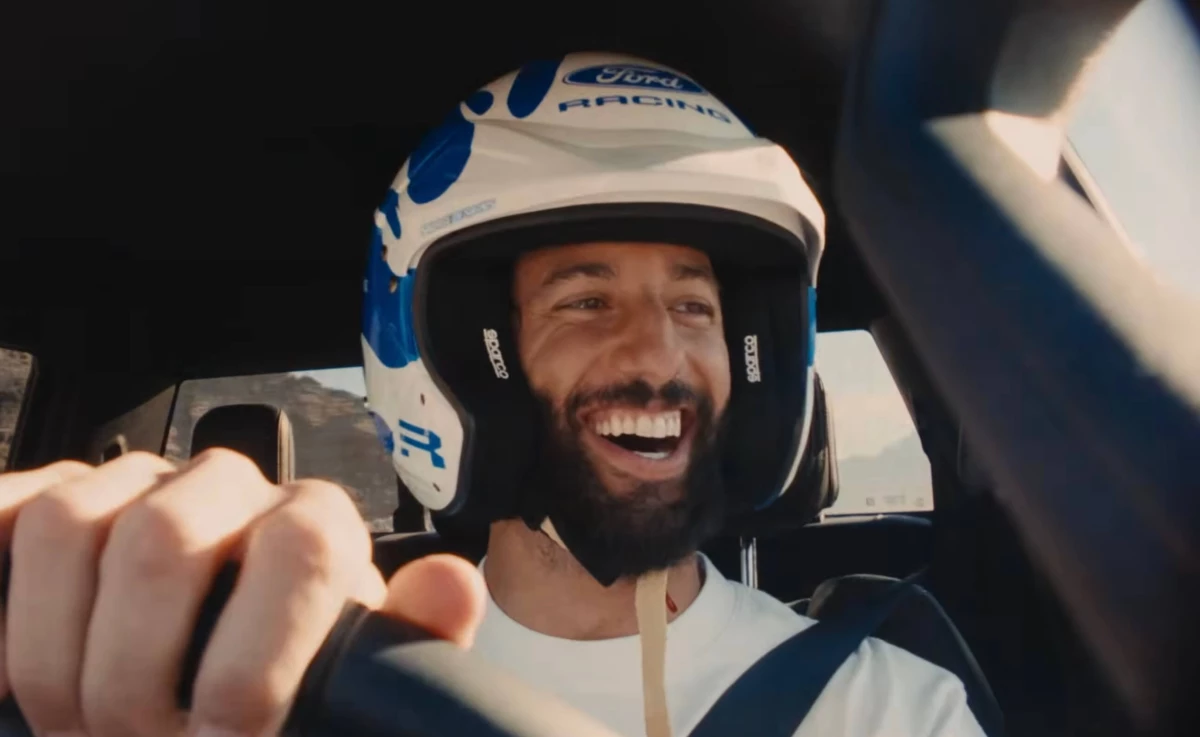
In the film, the racer pushes the Raptor through rough landscapes while reflecting a more relaxed, instinctive side of driving.
He navigates sand dunes, jumps on rocky roads, and traverses wide-open desert landscapes.
The changes in point of view, from close-up shots of Ricciardo's face lighting up with pure joy to outside scenes of the Raptor showing off its performance, pull viewers in.
By doing this, Ford highlights how performance can also reflect freedom and enjoyment.
The hero film ends with the witty caption, "They lived happily ever faster."
The campaign rolls out across social platforms, with the short film acting as the main asset supported by cutdowns and digital content.
It also ties back to Ford’s ongoing brand direction of focusing on personality-driven storytelling, away from feature-heavy messaging.
Ford’s Cinematic Take on Performance
The American car brand is giving us a clear example of how telling a proper story can change the perception of a product:
- Pairing a product with a personality like Ricciardo helps humanize it and boost audience appeal.
- Moving away from traditional ads allows brands to highlight emotion, not just specs or controlled driving environments.
- Social-first storytelling works best when it feels authentic, more so when it's aligned with both product and ambassador identities.
Last year, Ford reported global revenue of $187.3 billion with a market share of 10.8% in the U.S.
This puts the brand in a position where it can’t rely on scale alone, especially while sitting behind larger competitors in the same category.
The shift toward story-driven work gives Ford a way to compete on brand perception, using personality and narrative to influence how people connect with its products.
Our Take: Does Personality Beat Specs?
Ford's latest initiative doesn’t look like a car ad trying too hard to be cool.
It just lets Ricciardo do his thing because it's confident that the Raptor complements his personality and vice versa.
As a result, the energy feels real and not scripted.
It strips away the usual pressure and reminds us why people love driving in the first place.
Meanwhile, Lexus is taking a very different route by focusing on craftsmanship to sell its latest electric SUV.
Automotive brands need partners who understand how to build campaigns for diverse audiences.
Find the top automotive branding agencies in our directory.