
FedEx's Workplace Campaign: Key Points
- FedEx launches "The New Power Move" campaign targeting outdated office behaviors.
- Created by BBDO New York and directed by Björn Rühmann, the spots feature humor-driven takes on workplace rituals.
- The campaign aligns with FedEx’s broader push to position itself as a smart tech partner for business growth.
The flashiest move in the office today is smarter logistics, not a bigger watch.
That’s the idea behind FedEx’s latest campaign, developed by BBDO New York.
The ads first aired during NFL games and are now showing up across digital and social channels.
Called "The New Power Move," the ads poke fun at tired office habits like staring too long, flaunting flashy watches, or making a show of being fashionably late.
These moments are played for laughs, but they convey a specific message.
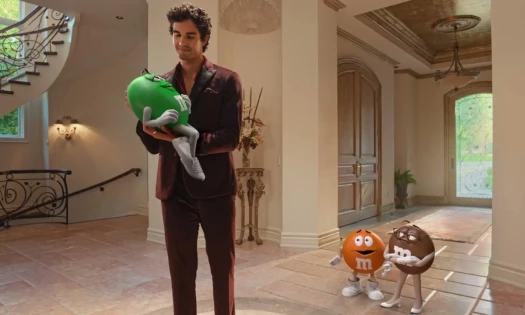
The spots include scenes like an executive arriving late to a meeting as a status move, a colleague using long silences as intimidation, and a boss flashing an oversized watch.
These gestures are immediately undercut with FedEx’s counter-message: tech, not theatrics, is the real power move.
Jenny Robertson, SVP of Global Brand and Communications at FedEx, explained the campaign’s focus on relevance and readiness:
"The global economy is rapidly changing, and business must evolve alongside it.
The New Power Move' is about empowering businesses with smart, data-driven solutions to stay ahead of the rapidly changing landscape."
Dan Oliva, Executive Creative Director at BBDO New York, emphasized the balance between strategy and tone in the creative work:
"We’re excited to launch a brand platform that moves FedEx into the intelligent future, but also carries with it the comedic personality FedEx has always had."
The work marks a return to FedEx’s earlier advertising style, one that is relatable, slightly sharp, and built around cultural moments familiar to working professionals.
Performance and Positioning
FedEx isn’t just leaning into humor for attention.
In Q1 of fiscal year 2026, the company beat analyst expectations despite pressure from global trade policy.
The company pointed to smarter routing and cost-saving moves as the reason it outperformed expectations.
In 2024, FedEx brought in $87.7 billion in revenue and maintained operations in over 220 countries and territories.
It held close to half of the U.S. express delivery market and continues to rate well with customers.
TD Cowen recently raised its price target for the company to $271.
FedEx is also putting money into areas like artificial intelligence, electric vehicles, and automation to better meet the demands of today’s businesses.
Creative & Campaign Takeaways for Agencies
There is value in speaking directly to a tired experience if you can bring something better to the table.
- FedEx used satire to cut through the noise and redirect attention to something more useful.
- The humor worked because the scenarios were grounded in office culture many people recognize.
- Cross-channel distribution let the campaign work on two levels: as entertainment and as brand positioning.
Good creative doesn’t always have to go big or serious.
Sometimes it just needs to hit the right note at the right moment.
Our Take: Can Humor Still Sell Tech?
The campaign reminded me that good creative doesn’t have to reinvent anything.
It just has to recognize what people already see and feel, and offer something that makes more sense.
FedEx showed how outdated power plays fall flat and made a case for smarter, faster solutions instead.
That made the pitch feel earned. And in business, this kind of trust is hard to buy.
BBH USA proved its flair for office-themed storytelling with Jif’s “The Merger,” a Succession-inspired spot where peanut butter and chocolate “merge” in corporate style.
FedEx showed tech beats theatrics. These firms help e-commerce brands streamline fulfillment with smarter, faster solutions.