
ESPN's 'BracketBrain' Campaign: Key Findings
- The network launched the second season of “Bracketbrain” to promote Tournament Challenge as the No. 1 bracket game.
- Last year’s 24.4 million brackets marked a third straight record, proving participation continues compounding annually.
- Integrated sponsors across men’s and women’s tournaments show how platform ownership drives premium advertising demand.
ESPN is treating March Madness like a medical condition, and business is booming.
Building on last year’s “Bracketbrain” platform, the network has rolled out a new satirical campaign that establishes ESPN Tournament Challenge as “the No. 1 bracket game."
And it's also the only logical prescription for college basketball obsession.
Developed with creative company Butler Shine Stern & Partners (BSSP), the effort compares bracket mania to a made-up seasonal diagnosis that spikes every March.
The idea behind it is quite simple. As the tournament approaches, rational behavior goes out the window.
"When the calendar hits March, filling out brackets is all anyone can think about,” said Seth Ader, VP of Brand Marketing at ESPN.
“With the Bracketbrain campaign, we’re shining a light on this great time of year, diagnosing the behavior, and reminding fans that ESPN Tournament Challenge is the place to celebrate their obsession.”
According to ESPN, symptoms include constant bracket obsession and moderate to severe bracket-related distractions.
In other words, if you or someone you know reorganizes their schedule around potential upsets, you may be experiencing "Bracketbrain."
The campaign also shows just how superior the platform is.
Last year, ESPN Tournament Challenge set a record with 24.4 million brackets, marking the third consecutive year of record growth and a 10% increase over 2024’s 22.6 million entries before tip-off.
With both the Men’s and Women’s Tournament Challenge games now open, ESPN is pushing early engagement across platforms.
A Pharma Spoof With Reach
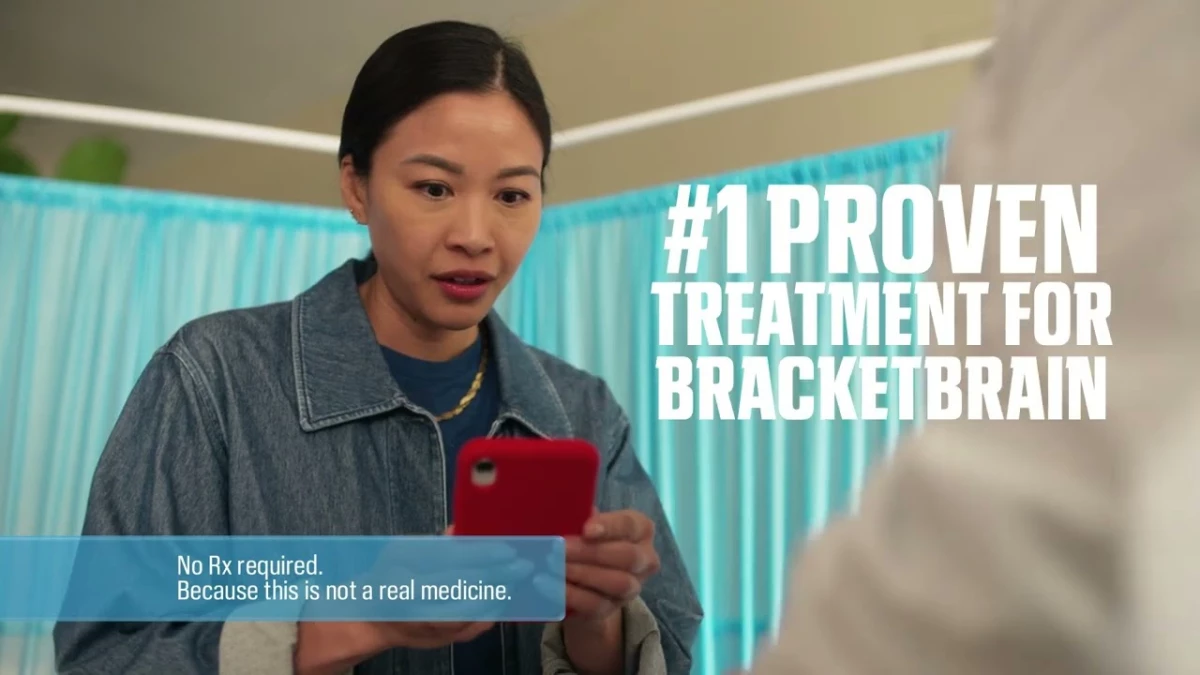
The creative borrows directly from pharmaceutical advertising tropes.
Think soft-focus lifestyle footage, fast-talking side-effect disclaimers, and a reassuring doctor figure.
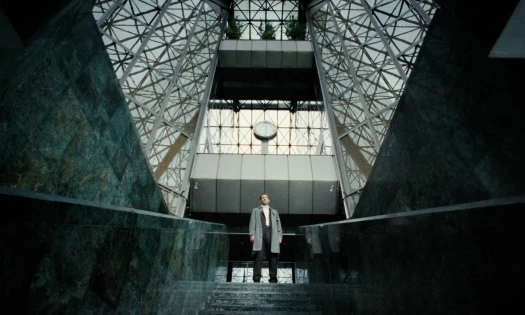
In the 30-second hero spot, “patients” begin seeing brackets everywhere.
A hiker marks his trail in bracket form. A diner reorganizes her food into matchups. A student fills out a Scantron sheet shaped like a tournament grid.
Then comes Joe Lunardi, introduced as head of the tongue-in-cheek ESPN Department of Bracketology.
In this world, ESPN Tournament Challenge is "the No. 1 treatment for Bracketbrain," and is a remedy that gets fans’ brains back in the game.
"Seven years into our partnership with ESPN, we know March does something to people," Sinan Dagli, ECD of BSSP, put it simply.
"This year, we’ve diagnosed the condition. Bracketbrain is real, it’s contagious, and ESPN Tournament Challenge is the number one proven way to treat it, right at the source," he explained.
Beyond the hero film, the campaign spans digital, social, courtside signage, email, and product placements.
Notably, two additional spots highlight tracking brackets on connected TV and the platform’s ease of use.
The Women’s Tournament Challenge is presented by Capital One, Allstate, and Miller Lite, while the Men’s edition is presented by Allstate, Chick-fil-A, and Coors Light.
Meanwhile, ESPN’s wider ecosystem strengthens the pitch.
Its app offers more than 47,000 live events annually, plus integrated stats, fantasy, and betting information from DraftKings.
All in all, these efforts keep fans inside its walls during tournament season.
'Bracketbrain' and Consumer Behavior
ESPN offers a blueprint for codifying the behavior of its consumers with humor. In this case, sports fans.
- Own the behavior you want associated with your brand. Naming it turns audience habits into branded territory.
- Validate what your audience already does. Framing existing behavior builds alignment and drives product use.
- Build recurring platforms. Repetition strengthens memory, participation, and long-term equity.
Like Old Spice turning outdated tropes into modern positioning or Axe confronting its own stereotypes, ESPN embraces self-awareness instead of resisting it.
Our Take: Can ESPN Own March?
The sports network knows its fans can get a little too obsessed with the sports they're into.
But instead of calling them crazy, it's made a term specifically for them.
ESPN understands that March is a temporary personality shift. I’ve seen friends redraw brackets mid-dinner like their dignity depends on it.
The campaign works because it respects the ritual and finds a way to make light of the matter instead of mocking it.
Marketers, remember. If you can own the behavior, you can own the moment.
In other news, MANSCAPED recently auctioned off a hairball after its bizarre but attention-grabbing Super Bowl campaign.
Brands pursuing ambitious creative need partners who are all in on their ideas. Take a look at the top creative agencies in our directory.