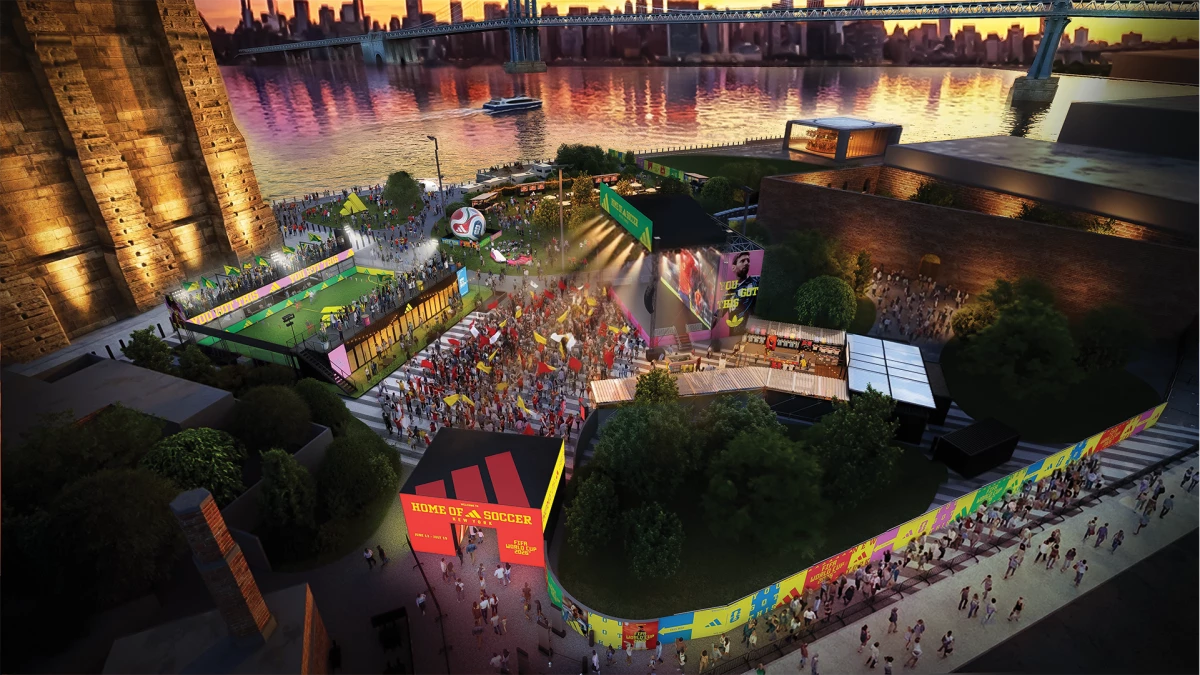

Adidas has unveiled its "Home of Soccer" hubs ahead of the FIFA World Cup 2026, turning parks, retail spaces, and stadiums into large-scale fan destinations.
The effort runs across major North American cities, including New York, Toronto, Los Angeles, Houston, Atlanta, Mexico City, Guadalajara, and Monterrey.
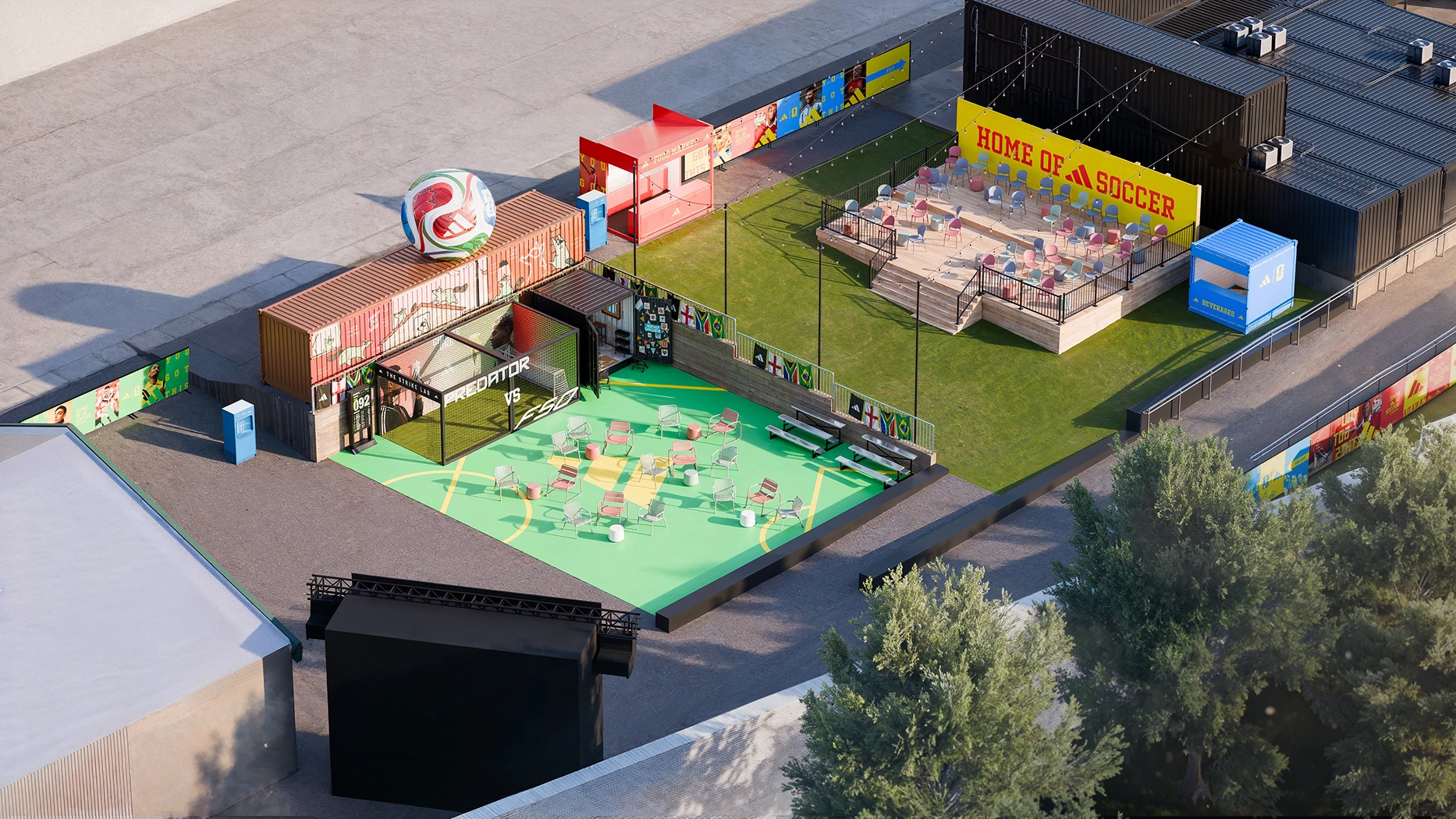
The biggest installations will land at Brooklyn Bridge Park in New York and STACKT Market in Toronto.
The campaign comes as part of Adidas’ efforts to cement itself as the defining football brand throughout the World Cup cycle.
And it's doing so by combining entertainment, retail, community programming, and experiential marketing into one connected ecosystem.
"It’s been more than three decades since the United States last hosted the World Cup," Chris Murphy, senior V of brand marketing at Adidas North America, said in a press release.
"Through our 'Backyard Legends' campaign, extensive activations and product launches this summer, we’re looking forward to being part of the sport’s sustained, rapid expansion."
As the official FIFA partner and supplier of the tournament, Adidas has more invested in this World Cup than any other apparel brand on the field.
Nike sponsors 12 national teams and holds home-field advantage as a U.S.-based brand.
This summer is a direct test of which label North American fans end up associating with the tournament.
Football, Music, and a Few Surprises
In New York, Adidas will operate a 25,000-square-foot public hub inside Brooklyn Bridge Park from June 13 to July 19.
The space will include free match screenings, live performances from PinkPantheress and Larry June, retail zones, creator studios, and limited product drops.
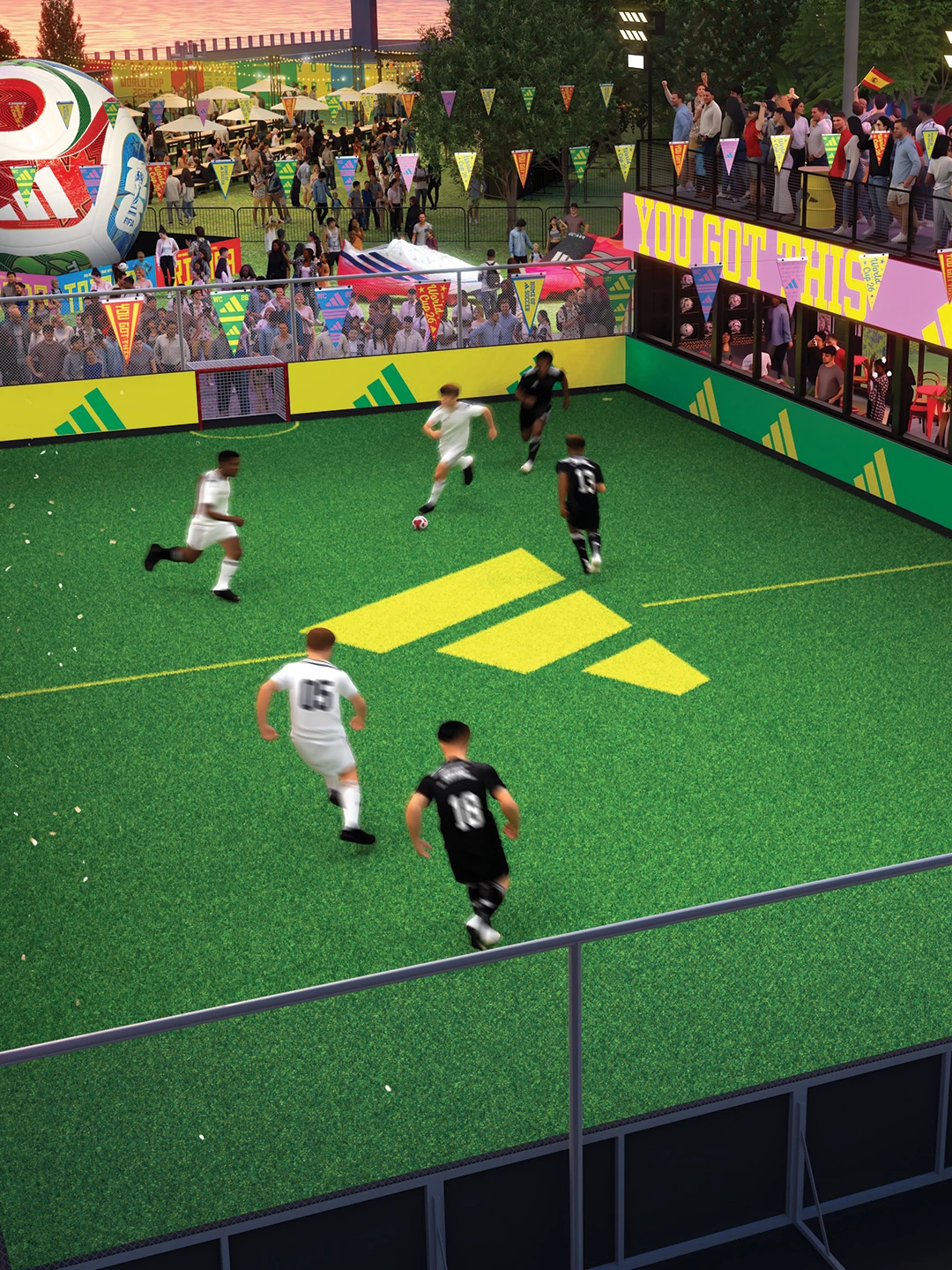
A Panini customization station and football pitches round out the New York experience.
Toronto's version takes a family-focused approach, with outdoor viewing, football skill games, food vendors, athlete appearances, and a dedicated Predator vs. F50 activation.
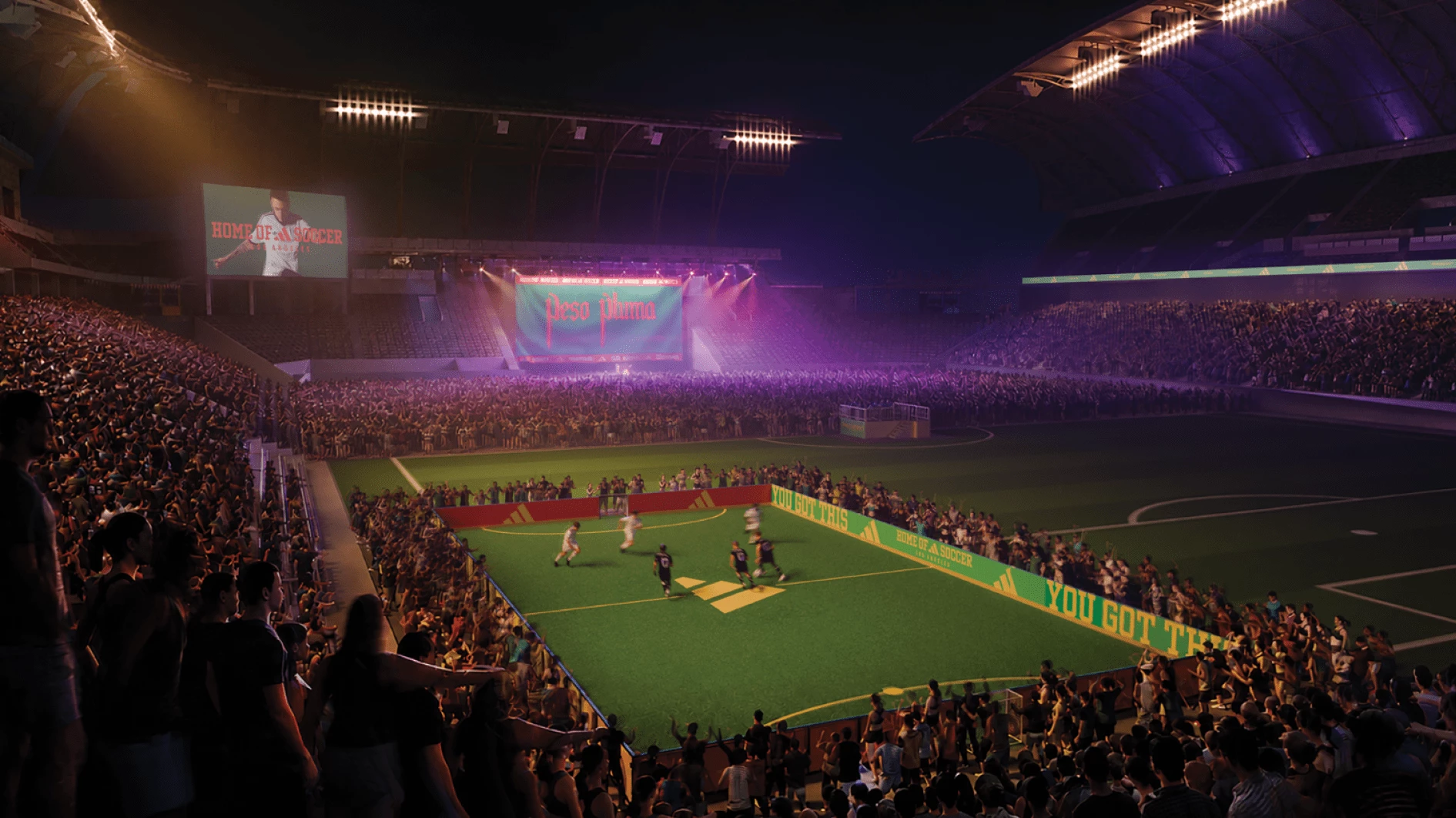
In Los Angeles, Adidas will launch the campaign at BMO Stadium with a watch party for Mexico vs. South Africa, followed by performances from Noodles and Peso Pluma.
"Our team’s efforts for FIFA World Cup 26 signal our commitment to the game and belief that this summer’s tournament will forever change the sport globally," Adidas North America President John Miller shared.
The best part? These are just a few of the brand's city-specific programs.
Each hub is designed to keep people inside the brand experience for hours at a time.
In retail, the sports giant is also set to launch collaborations with A Ma Maniére in Atlanta and Sneaker Politics in Houston, rounding out the campaign.
"With 14 federations, the Official Match Ball, extensive in-stadium presence, and next generation product technology, we are the defining soccer brand that’ll be visible on every pitch this summer," Miller added.
These brand activations give Adidas a physical presence in every major World Cup market across North America before a single match is played.
A Brand You Can Walk Into
Adidas' initiative shows that it's not holding back in maximizing brand presence during one of the biggest sporting events of the decade.
Ads now serve only as one component of the brand marketing strategy, and the sports brand understands this.
This is why it built physical destinations that cover all the bases: music, food, gaming, fashion, social content, and football in one connected environment.
Adidas even says demand for tournament-related merchandise has already exceeded expectations across North America.
Adidas' FIFA World Cup strategy highlights how sports brands are rethinking fan engagement ahead of major global tournaments:
- Physical fan hubs are meant to create longer consumer engagement windows than traditional sponsorship signage or video ads.
- Multi-city activations help brands localize global tournaments while maintaining a unified campaign identity across markets.
- Product integration works better when consumers can interact with merchandise inside entertainment-driven environments.
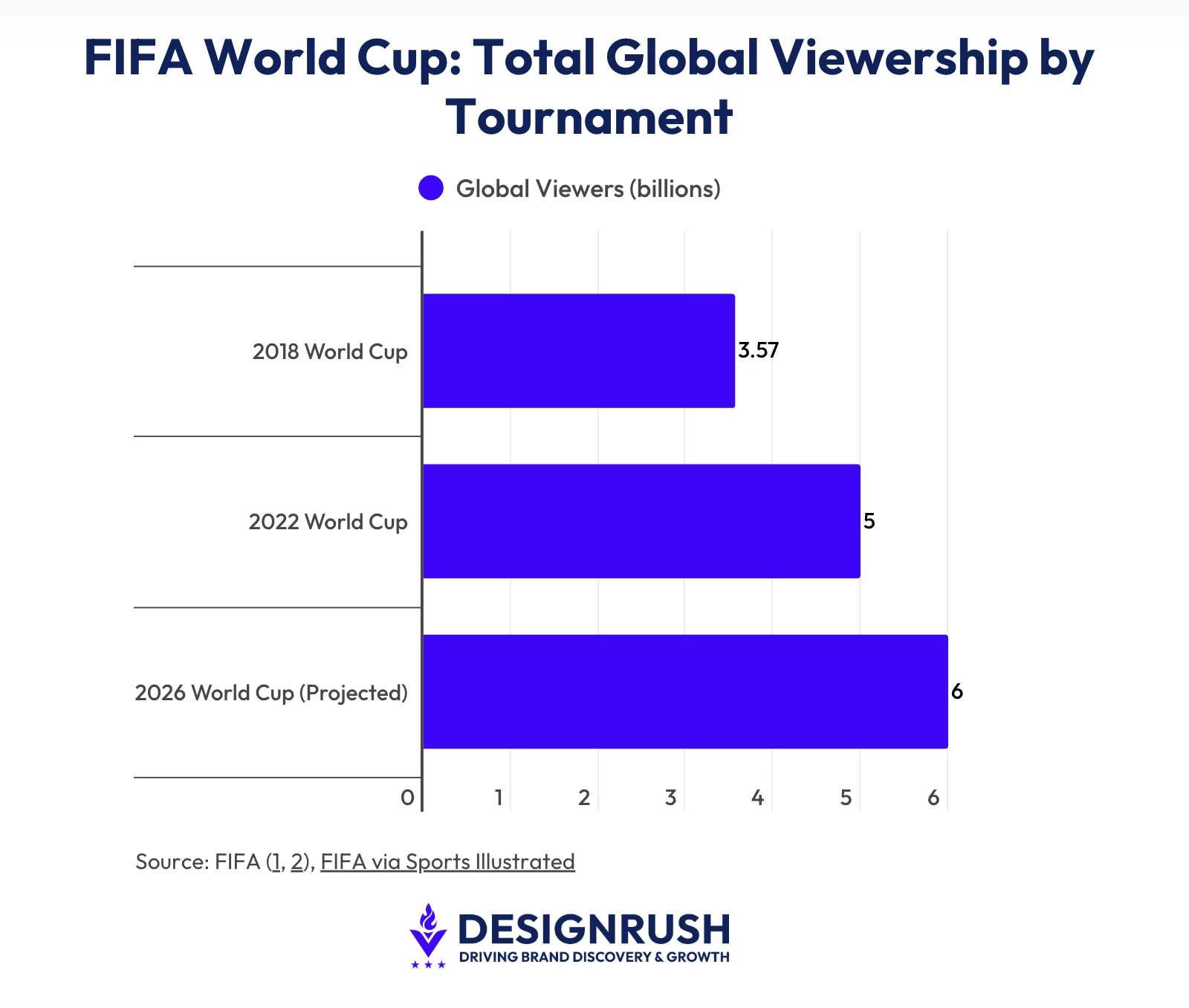
The FIFA World Cup 2026 is expected to surpass its previous viewership numbers, with over 6 billion people around the world interacting with the event in some way.
 For Adidas, the challenge now is maintaining momentum through it all.
Being omnipresent throughout the tournament is a good thing, but its long-term success will depend on whether these activations can build sustained consumer loyalty.
And this is crucial as other sportswear giants are also attempting to do the same.
Our Take: Can Brands Own the Fan Experience?
Adidas understands that modern sports marketing can't be limited to slapping your logo on the bleachers.
People increasingly remember where they watched the game, who they watched it with, and what they did around the match itself.
And the answer Adidas wants you to have? The Home of Soccer.
The brand built environments that people would likely want to visit, even without the heavy football branding attached.
Nike, Puma, and Adidas are all competing for attention beyond apparel now.
And whoever creates the strongest real-world fan experiences may end up winning the long-term loyalty battle.
Recently, Lay’s launched its own FIFA World Cup campaign featuring Lionel Messi, David Beckham, and Steve Carell, surprising fans during a staged watch party experience.
Brands need agencies that understand how to connect talent credibility with consumer and retail campaign objectives. Explore these top sports marketing agencies in our directory.