
The return of Bob the Builder comes with a career pivot.
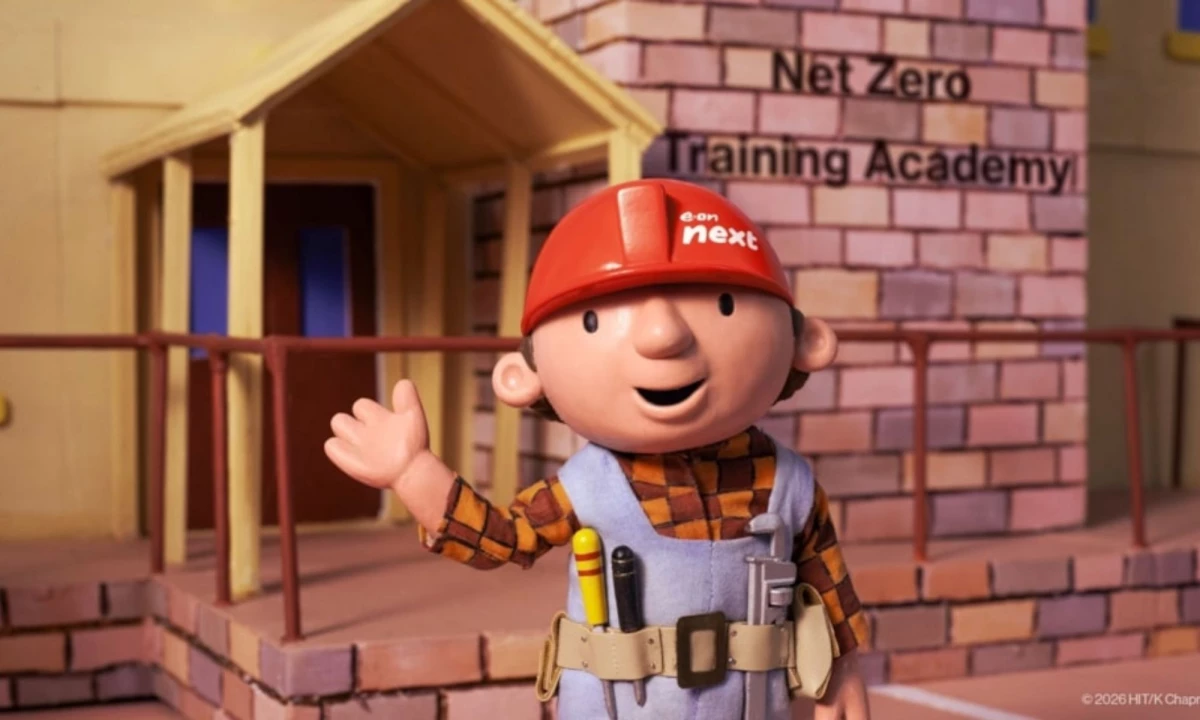
E.ON Next has brought the character back in his original stop-motion form for a 90-second social film.
Neil Morrissey reprises his voice role for the first time since 2011.
Studio La Plage, MHP Group's in-house creative studio, developed the campaign.
Televisual credits Alessandro Cino Zolfanelli as animation director and animator, with Florence Clapcott on additional animation.
Iona Inglesby served as creative director on a crew list running past 20 names across model making, cinematography, VFX, and sound.
Zolfanelli's work spans stop-motion, puppetry, and live action.
The campaign gives Bob a new job to do.
After years away, he returns from Australia and enrolls at E.ON Next's Net Zero Training Academy to learn new green skills.
"Bob the Builder has always inspired people to solve problems and build things that matter," Helen Bradbury, Chief People Officer at E.ON UK, said in a press release.
"Today, those same qualities are needed to help deliver the UK's transition to clean power."
The production makes the craft part of the story, showing how a legacy animation format can still support a modern brand brief.
Stop-Motion Puts Hand-Built Craft Back on Screen
The hero film follows Bob explaining what he did during his hiatus, including yoga, birdwatching, and a trip to Australia.
The Australia sequence does the setup work, with Bob walking past a kangaroo to stare at a solar farm.
He comes home to the U.K. wanting a job that involves the technology he just saw.
His interest in clean energy leads him to E.ON Next's Net Zero Training Academy.
The stop-motion then shows Bob learning how to work with technologies such as solar panels, home batteries, EV charging, and low-carbon heating.
Studio La Plage restored original puppet molds and pieces of the original sets, working with producers from the first series.
It also recreated Bob and built new physical assets, including an E.ON Next van and solar panels.
The format creates its own production constraints, since stop-motion remains labor-intensive.
The crew size tracks closely with what the original 1999 series required.
In 1998, HIT Entertainment opened HOT Animation, a £2 million Manchester facility staffed with 20 people.
Its first Bob order was 13 10-minute episodes, and E.ON needed a team of a similar size to produce 90 seconds of brand film.
Stop-motion never got cheaper, and the price to pay is the point now that anything smooth and fast reads as machine-made.
E.ON's Academy Supports 800 People a Year
The production's green-skills messaging framework sits inside a much larger workforce gap.
UK government research projects more than 400,000 additional clean-energy jobs by 2030.
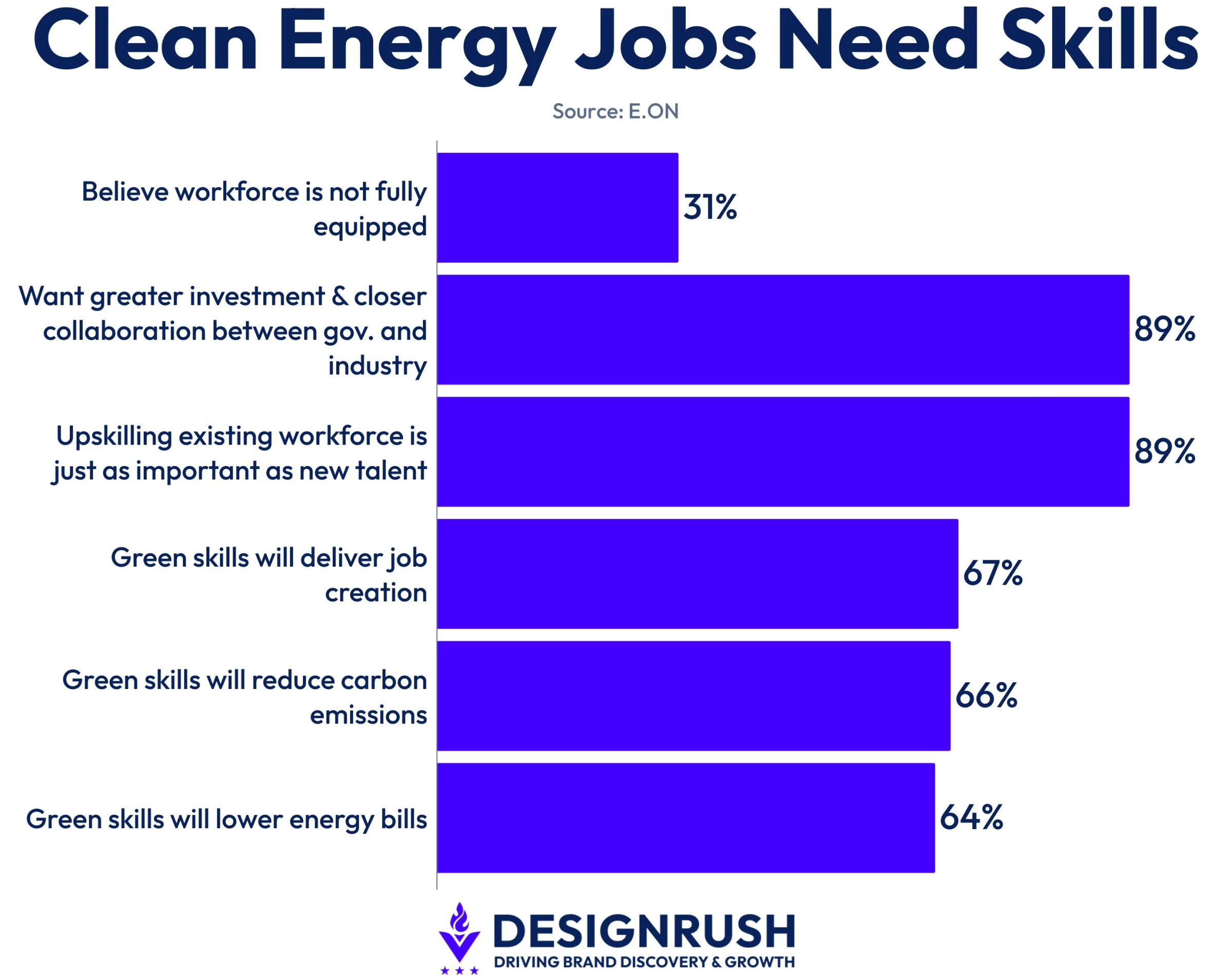
E.ON's own research was run by FocalData among 250 U.K. energy workers.
And it found that 31% believe the workforce is not fully equipped to install the technologies needed for the green transition.
The finding gives the campaign a practical problem to address through its training focus.
E.ON UK supports around 800 people a year through the Academy and its wider programs.
It has also put 1,200 apprentices through 100 programs since 2018.
Applications for its degree apprenticeships have more than trebled in three years, reaching roughly 165 candidates per role in 2026 against 45 in 2023.
The interest is arriving faster than the places available to absorb it.
Three implications stand out for marketers working on complex workforce stories.
- Demand needs a human face. Brands should attach abstract skills needs to familiar characters to make the issue easier to understand.
- Reskilling needs visible pathways. Brands should connect awareness campaigns with specific courses and careers to make action easier.
- Legacy IP can explain new categories. Teams should match recognizable properties with practical expertise to make technical messages more accessible.
When a workforce story has a recognizable character and a real training pathway, creative can make an abstract labor issue easier to grasp.
Our Take: What Makes Nostalgia Useful for New Messages?
The restored animation gives E.ON a physical link to Bob's original identity, and the story gives him a new reason to exist.
Nostalgia marketing swallows the whole proposition when the character's old identity has nothing to do with the new brief.
E.ON dodges this by handing Bob a problem that fits his character, with the same job but with upgraded tools.
We think the sharper test comes after the film, because E.ON never asks anyone to buy anything.
A campaign telling people to retrain has to point at places that can take them, and the Academy supports around 800 a year.
Apple's Mac mini M6 claymation with TBWA made the same craft argument for a product launch, where the ask ends at a purchase.
Recruitment marketing has a longer tail, and the follow-through is where this E.ON campaign gets judged.
Need animation talent that can give a campaign a distinctive physical style?
Explore these top animation production agencies in the DesignRush directory.