


Key Findings:
- Dover is the #1 U.S. city for solopreneur profitability, with $66,263 in post-expense annual income.
- Solo founders in Dover average $110,652 in annual revenue, with costs held to $44,389.
- Delaware also ranks #1 among all U.S. states, with a statewide average solopreneur profit of $47,838.
- The state offers no sales tax, strong internet infrastructure, and entrepreneurship incentives like grants and tax credits.
- Founders in Dover enjoy nearly 4× the U.S. national average profit of $18,508.
Quick listen: Dover, Delaware, is the top U.S. city for solo founder profits. Here’s why, in under 2 minutes.
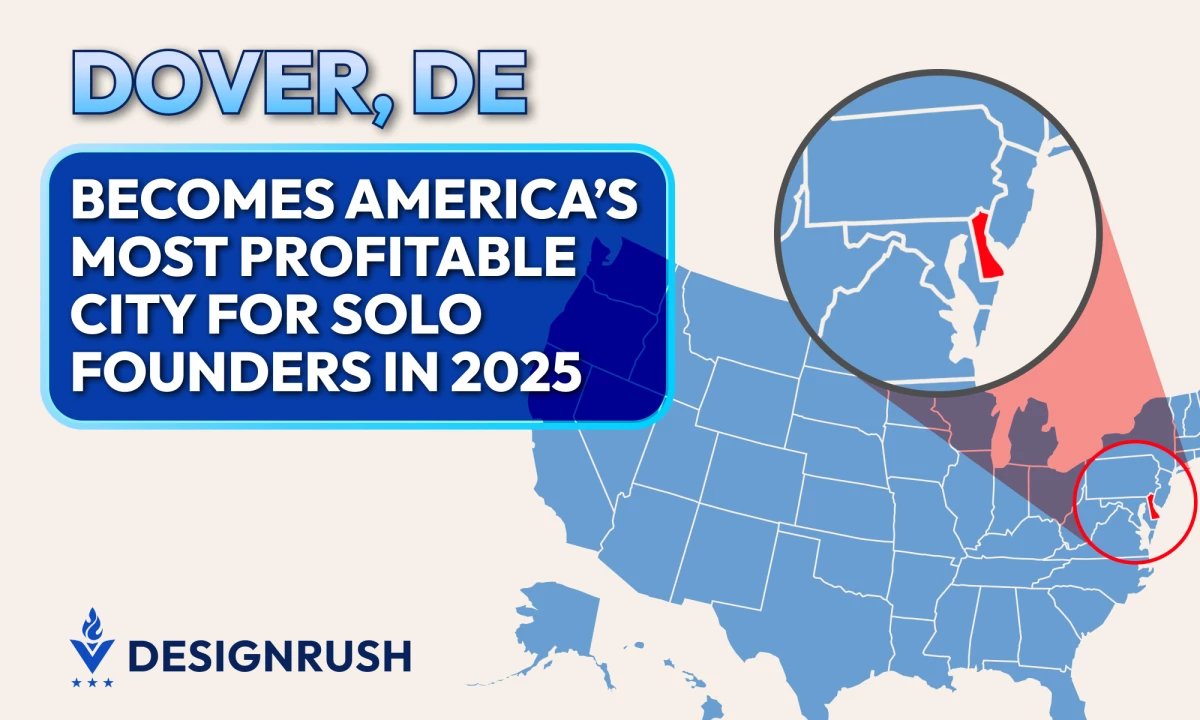
Dover, Delaware, has officially become the most profitable U.S. city for solopreneurs, and the solo economy is taking notice.
DesignRush’s 2025 Solopreneur Profitability Report analyzed 385 cities.
And results reveal that Dover founders earn the highest average post-expense profit compared to all other cities.
Located in the #1 most profitable state for solo business owners, Dover’s success is driven by:
- Zero sales tax
- Low operating costs
- A policy ecosystem optimized for lean founders
This mix of financial advantages and founder-friendly regulations makes the city a standout destination for those building businesses on their own terms.
Why Dover Leads the Nation in Solopreneur Profitability
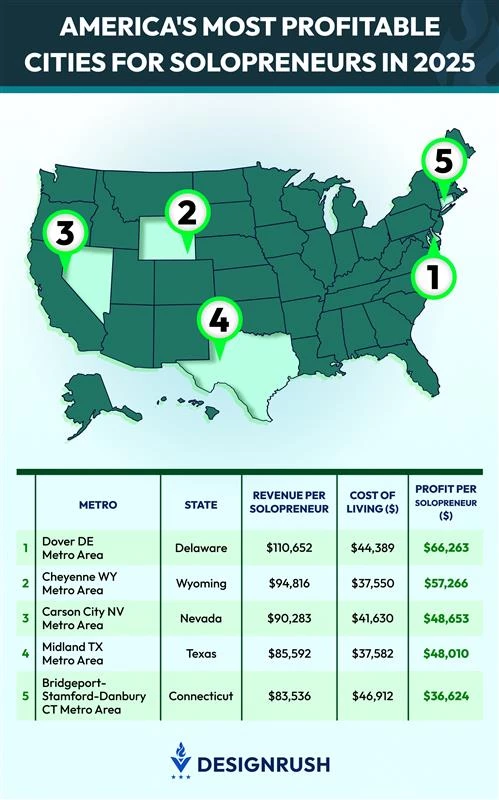
According to DesignRush’s 2025 Solopreneurs Report, the average solopreneur in Dover earns $110,652 in revenue each year.
Annual expenses total just $44,389, leaving a post-expense profit of $66,263, the highest in the nation.
Statewide, Delaware reports an average revenue of $92,227 for solo founders.
After applying Delaware’s average cost of living across all its cities, the adjusted statewide profit comes in strong at $47,838.
But Dover’s edge comes from more than numbers.
Founders benefit from higher local earnings and a responsive city government.
They also have easy access to nearby metro markets like D.C., Philadelphia, and Baltimore without paying premium costs.
Affordability and Infrastructure Fuel Solo Growth
Dover is fast becoming a destination for founders fleeing expensive coastal hubs.
Lower living costs and modern infrastructure help solo operators extend their runways and operate sustainably.
Key factors driving solopreneur migration:
- Housing costs in Dover are 30% below national urban averages.
- Healthcare and utilities cost 1.4 to 4% less than national averages.
- High-speed broadband access is expanding, with 97% coverage and funding from a $56 million federal grant.
Education and workforce training resources, including bootcamps and small business certifications, are also offered by institutions like the Delaware Technical Community College and the University of Delaware.
Business-Friendly Policies Power Founder Profit
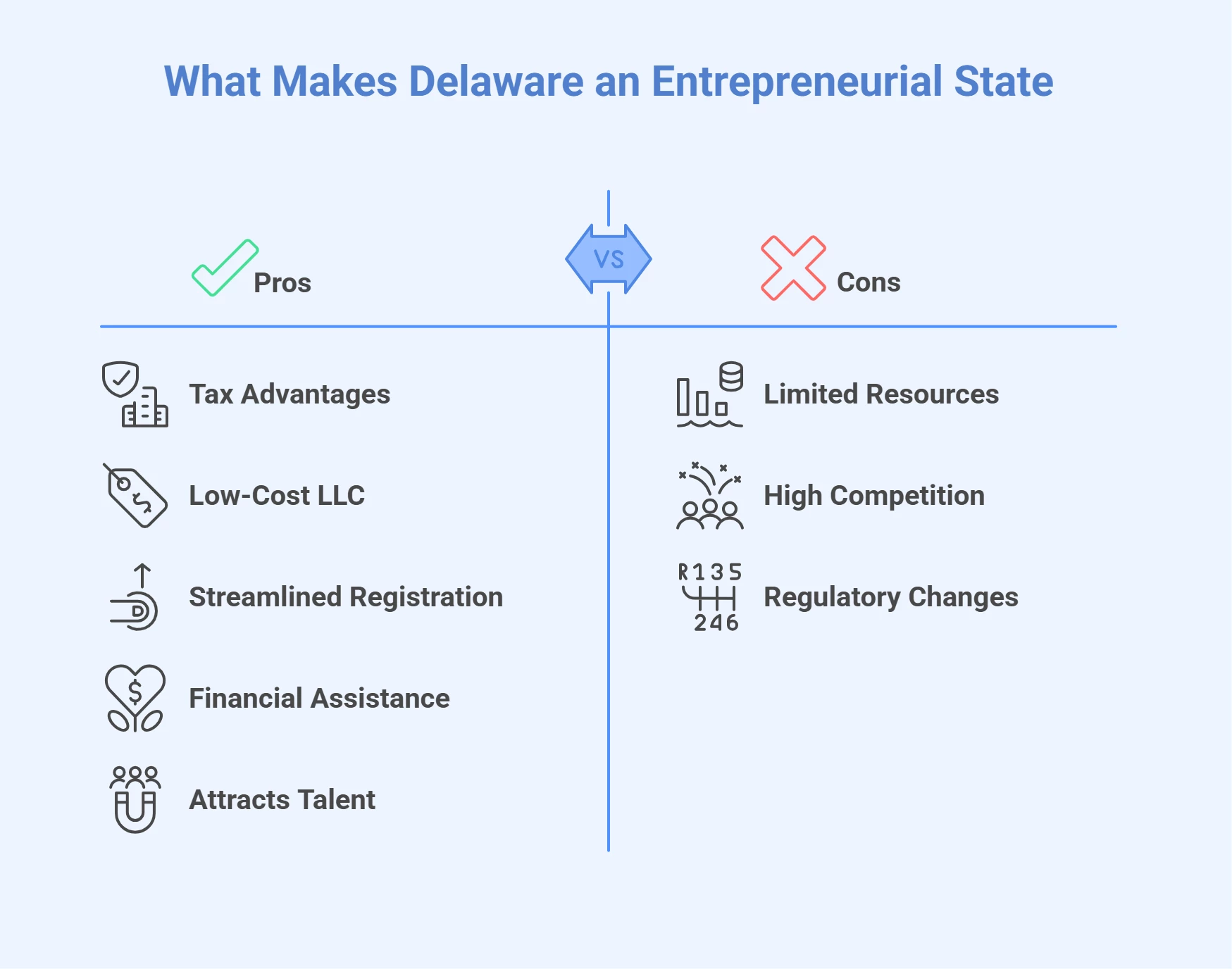
Delaware's legal and tax system is globally known for its business advantages, and solo founders benefit just as much as large corporations.
Key incentives for Dover-based solopreneurs:
- No state-level sales tax on goods or services
- No tax on intangible assets like software licenses, digital goods, and consulting retainers
- Low-cost LLC formation with franchise taxes typically under $300 annually
- Quick business registration through the One Stop portal
- Tailored grants, loans, and tax credits for self-employed and microbusiness owners further reduce startup friction and increase profitability
A Thriving Solo Business Ecosystem
Dover’s support systems for solo founders are gaining national attention for their accessibility and equity-forward approach:
- In 2025, Delaware launched $14 million in small business credit programs, many of which support non-employer businesses.
- Initiatives like Start in Dover and Launch DE provide free legal templates, marketing support, and access to mentors.
- Delaware Innovation Space and First Founders Accelerator support solo entrepreneurs without requiring equity.
- Dover directly benefits from Delaware’s $2 billion investment surge, including Site Readiness Grants and Opportunity Zones that stimulate founder-focused real estate and infrastructure development.
Dover’s Profitability vs. Other U.S. Cities
Dover outpaces even other top-ranked cities when it comes to solopreneur profitability.
Cheyenne, Wyoming, ranks #2, where solo founders bring in an average profit of $57,266 per year.
Carson City, Nevada, comes in at #3, with solopreneurs earning $48,653 after expenses.
 Access Full City Ranking
Other top-performing cities include Midland, Texas (#4) at $48,010, and Nashville, Tennessee (#5) at $33,820.
At the bottom of the rankings, Elmira, New York, ranks last, with solo founders reporting a net loss of $7,796 annually.
It's among 22 cities in the study with negative profitability.
The Road Ahead: Sustaining Dover’s Lead
Dover’s profit-driven ascent is supported by deliberate investment and smart policy:
- $2B in state-wide capital investmentand 7,425 new jobs created in 2024 signal strong public-private alignment.
- Startup302, Delaware’s pitch competition, awards equity-free funding and mentorship to underrepresented founders.
- Foreign Trade Zone 99, which covers all of Delaware, including Dover, provides additional import/export tax advantages.
- 25 federally designated Opportunity Zones, including some in Central Delaware, offer tax incentives for investors and founders looking to scale.
With robust infrastructure, low costs, and expanding capital access, Dover is positioned to remain the nation’s most profitable launchpad for solo entrepreneurs.
Methodology
This report analyzes the profitability of solopreneurs across all 50 U.S. states and major metro areas in 2025.
DesignRush calculated the post-expense income of nonemployer businesses, individuals who run a business with no paid employees.
Data Sources:
- Solopreneur Count & Revenue:
Sourced from the U.S. Census Bureau's Nonemployer Statistics Survey, which tracks the number of nonemployer establishments and their total revenue by state and metro. These figures represent individuals operating as sole proprietors, freelancers, consultants, and solo agency owners. - Cost of Living Data:
Sourced from Forbes’ 2025 Cost of Living Index, which estimates average annual expenses required for a modest lifestyle in each U.S. state and metro, including housing, utilities, food, transportation, and healthcare. - Revenue Per Solopreneur:
Calculated by dividing the total solopreneur revenue by the solopreneur count in each region. - Estimated Profit Per Solopreneur:
Calculated by subtracting each state’s or metro’s cost of living from its average solopreneur revenue, providing a practical estimate of what a solo business owner might retain after covering basic living expenses.
These agencies help businesses understand which markets are truly built for growth. Discover research partners who turn regional data into strategic insight here:






-Stressful-States-for-Male-Employees-in-2024-V2---details-preview-webp.webp)
-preview-webp.webp)
-preview-webp.webp)
-preview-webp.webp)