
Marketing budgets are under more scrutiny than in years.
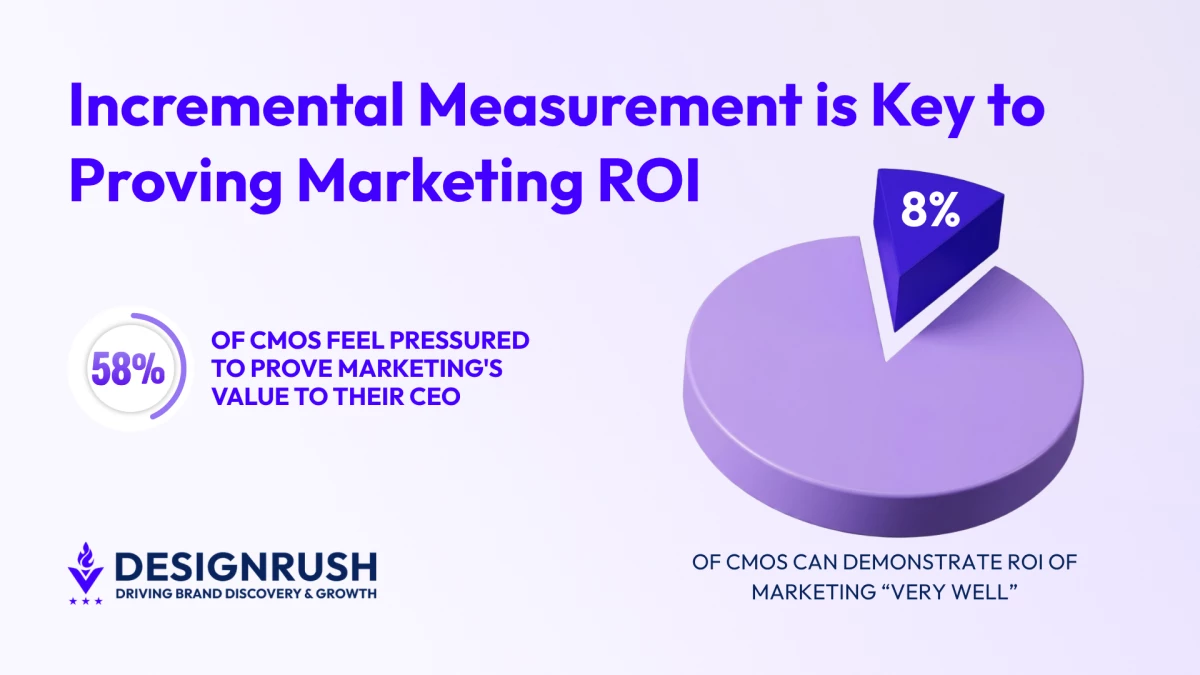
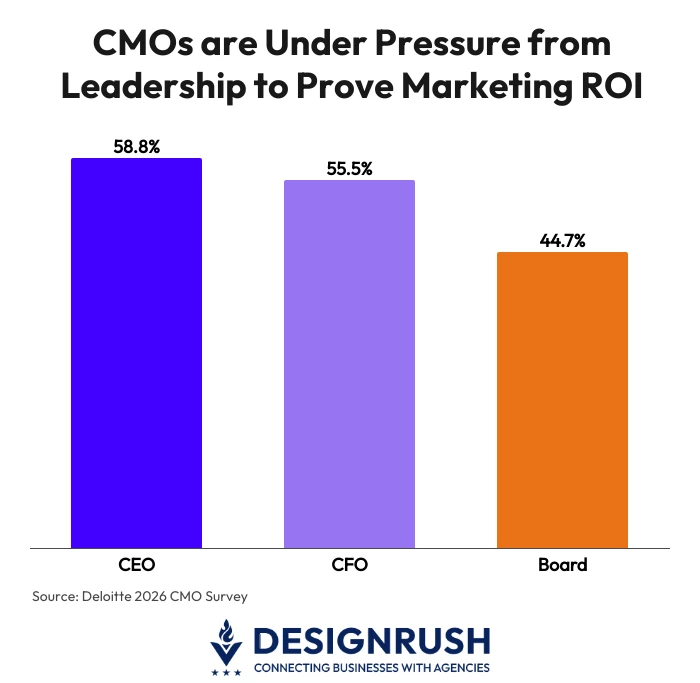
In fact, 58.8% of CMOs reporting greater pressure to prove marketing ROI to their CEOs, per Deloitte’s CMO survey.
 And with many enterprises investing more into their tech stacks and AI, every dollar spent elsewhere is being scrutinized.
The problem is that attribution models that assign credit to last-click or multi-touch interactions were designed for a simpler channel mix.
They do not account for the growing influence of newer channels like AI search or how online consumer behavior has changed over the last few years.
Why Traditional Attribution Is Failing CMOs
Attribution models were built to answer which channel gets credit for the conversion.
That made sense when the customer journey was shorter and the channel mix was simpler.
Meanwhile, consumers now move across social platforms, search engines, retail media networks, and physical retail before making a purchase decision.
Channels compete for credit, and marketing budgets get allocated to what looks good in a dashboard.
But more often than not, this setup keeps the actual drivers of revenue growth hidden.
Silverback Strategies founder and CEO Neil Welsh says the shift toward incremental measurement starts with the number the business needs to move.
"Attribution is a credit allocation problem dressed up as a measurement problem. Solving it with better rules still gets you the wrong answer," Welsh adds.
"Since incrementality measures the actual impact that a marketing activity has in relation to established KPIs, it offers a more accurate view of what, how, and why marketing efforts work."
The Fragmentation Problem
AI search and retail media have added another layer of complexity that traditional models were never built to handle.
That’s because the channels multiplied faster than the measurement did.
Now, each added a new surface where consumers could be influenced and a new platform claiming credit for outcomes it may have had little to do with.
A Divide Between Digital and Physical
Thanks to AI search, users are increasingly getting answers inside AI platforms without clicking through to brand websites.
That shift removes a conversion signal that attribution models relied on, making it harder to measure the influence of search investment on downstream revenue.
Retail media networks add a similar complication. A consumer sees a brand on a retail media platform, searches organically, and converts in-store.
Unfortunately, standard attribution doesn’t capture any part of that journey accurately.
"A consumer who saw your ad on a retail media platform, searched organically, and bought in-store will never show up in your attribution report," Welsh says.
Multi-Channel Campaigns Need a New Scorecard
A campaign running simultaneously across paid search, social, streaming audio, and retail media generates a lot of data.
In most cases, more data is a good thing. However, more data can also make it difficult to paint a clear picture of what moved the business.
Traditional attribution distributes credit based on touchpoint rules. That is a different exercise from measuring revenue impact.
Two approaches address that directly:
- Incrementality testing measures whether a specific investment changed behavior by comparing exposed and unexposed groups.
- Media mix modeling analyzes historical spend against business outcomes to identify what drove profitable growth.
A great example of this is the work Silverback Strategies did for CroppMetcalfe.
The home provider approached Silverback Strategies because it was allocating 10% of its entire budget towards branded search.
However, it wasn’t clear if branded search was actually bringing in new business or just clicks.
So, Silverback Strategies performed incrementality testing to figure out whether their efforts were bringing in new business or if it was only attracting customers who would visit their site regardless.
To do this, the agency:
- Matched markets statistically
- Kept ads running in some markets and turned them off in others
- Measured the lift in new customers and revenue
Through these efforts, the agency was able to prove what was truly incremental demand and what was revenue CroppMetcalfe would’ve captured anyway.
Branded search proved 100% incremental, driving new revenue the business would not have captured otherwise.
This gave CroppMetcalfe the confidence to invest even more into branded search.
The Measurement Problem Is Also a Political One
Switching to incremental measurement means admitting that previous numbers were built on a flawed model.
For CMOs already under scrutiny, that admission can accelerate budget cuts before better measurement has a chance to prove its case.
It can also reveal that channels long treated as essential were taking credit for customers who would have converted regardless of whether the ad ran.
That finding alone can reframe a budget conversation.
Yet most CMOs are defending budgets with metrics that were designed to distribute credit, rather than demonstrate impact.
The system rewarded channel optimization over business outcomes, and that is what got measured.
Changing that starts with agreeing on the number that matters before a dollar gets spent.