
Did you know nearly one-third of American adults consider the ethical implications of their decisions at least occasionally?
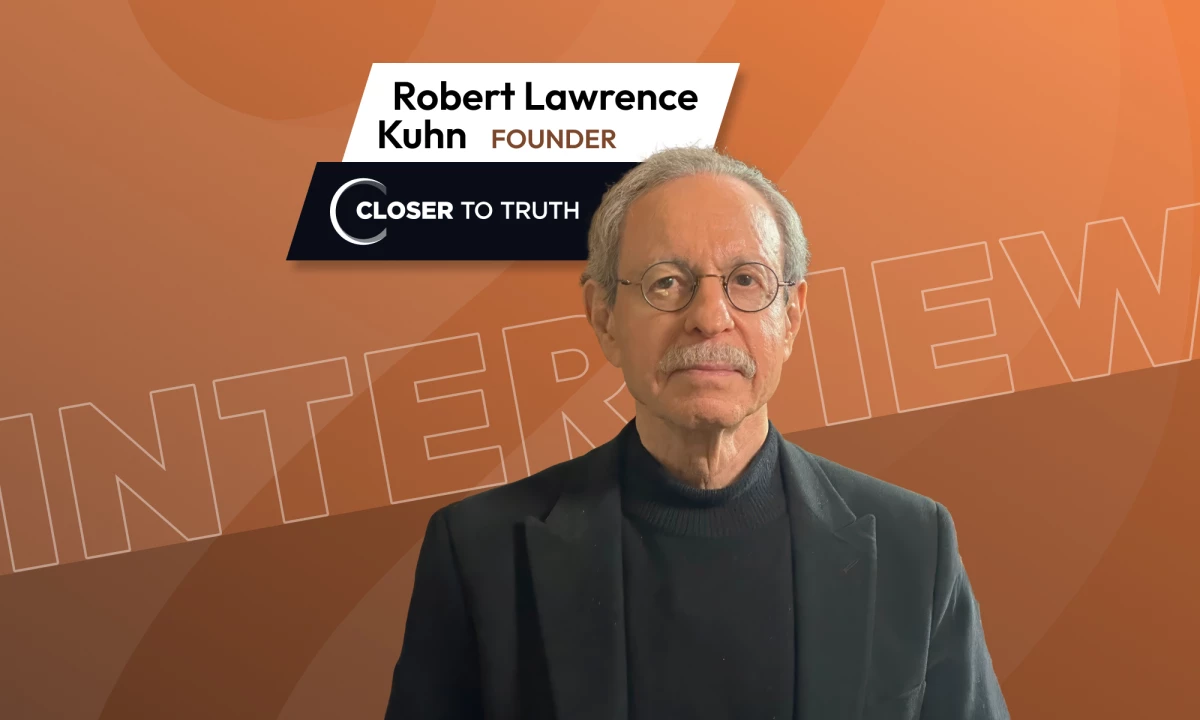
This statistic points to a growing curiosity in society about deeper philosophical questions — an interest that Robert Lawrence Kuhn, the mind behind the acclaimed PBS series “Closer to Truth,” has tapped into with remarkable success.
Closer to Truth bridges complex topics like cosmology, consciousness, and ethics, translating them into thought-provoking discussions with leading thinkers. These discussions mimic the challenges faced by business and industry leaders, who must weigh strategic decisions against broader ethical and philosophical implications.
In our interview, Kuhn shares how his multifaceted career has informed his approach to these universal questions — questions that lie at the heart of leadership, innovation, and personal growth.

Who is Robert Lawrence Kuhn?
As the creator of the PBS series “Closer to Truth”, Robert Lawrence Kuhn has garnered recognition for his exploration of life’s existential questions. He also serves as an adviser to the Chinese government and was awarded the China Reform Friendship Medal, gaining recognition as “one of the Western world’s most prolific interpreters of Beijing's policies.”
The Foundation of Passion
Robert's career has been driven by a singular passion for learning and understanding.
“Passion is the foundation of all that I do — all emerges from passion and all is energized by passion — a passion to learn and understand, innovate and implement, persist and progress,” he said.
This very passion is also what drives Closer to Turth’s nearly three-decade popularity and has made it a trusted platform for tackling profound questions in ways that inspire new ways of thinking.
Robert also quotes Ecclesiastes 9:10, “Whatever your hand finds to do, do it with all your might,” as one of his guiding principles, driving him to confront and overcome obstacles — no matter their size — that stand in the way of achieving critical objectives.
Storytelling as a Powerful Tool
One of the cornerstones of Closer to Truth's success has been the show's mastery of storytelling. "When Closer To Truth co-creator/producer/director Peter Getzels joined me in 2006, we re-created the format to tell a narrative story in each episode, which is to Peter’s credit", Robert told us.
Robert believes that narratives are crucial for connecting with audiences, whether in business or media, and The Closer to Truth brand has built its reputation by consistently delivering high-quality productions that make sophisticated content accessible to the general public.
“The Closer To Truth brand has developed gradually, over almost 30 years, winning the trust and appreciation of viewers by consistently providing high-quality productions that present sophisticated content that is accessible to general audiences.” Robert explained.
He describes the series as “the greatest thinkers exploring the deepest questions,” providing a platform for diverse viewpoints that engage audiences in an ongoing journey toward understanding.
He explains that Closer to Truth does not provide simple answers. Instead, it seeks to get closer to the truth by presenting a narrative arc that explores conflicting expert opinions. This fosters a deeper connection with audiences, encouraging them to think critically about fundamental questions.
Such an approach offers a valuable lesson for brands: authentic engagement comes from inviting stakeholders into a dialogue. By embracing complexity and acknowledging diverse viewpoints, brands can build trust, encourage loyalty, and position themselves as thought leaders in their industries.
Building Trust and Credibility
Robert says his experience in public intellectualism has also taught him the importance of building trust through authenticity.
“Be genuine and be consistent. Do not overreact to current fads or seek what may appear to be shortcuts but might undermine credibility. Take seriously the old adage that trust takes years to build but only moments to destroy. Always do your best or don’t do it at all.”
This principle is evident in Closer to Truth, which has maintained its integrity by prioritizing intellectual honesty and accuracy over pandering to audience expectations.
Sean Carroll (@seanmcarroll) discusses the rise of scientific atheism in this interview series. Click here to watch: https://t.co/7xzAUpkeFA#atheism#meaning#skepticpic.twitter.com/rhzPsMEE68
— Closer To Truth (@CloserToTruth) May 26, 2018
For businesses, this means focusing on quality and reliability, creating a foundation of trust that can weather changing trends.
Global Perspectives and Economic Insights
Robert's experience advising the Chinese government and interpreting its policies has equipped him with a distinct global perspective, which he channels into developing the Closer to Truth brand. This international lens enriches the show’s exploration of complex ideas, underscoring the value of integrating diverse perspectives to create a brand that resonates with a broad, sophisticated audience — a critical takeaway for leaders building globally relevant brands.
He emphasizes the importance of understanding China the way the Chinese themselves understand China.
Highlighting the country’s remarkable economic growth over the past few decades, Robert illustrates the shift in living standards.
“Disposable personal income in China rose from 171 yuan in 1978 to nearly 40,000 yuan in 2023 — a leap of about 228 times in yuan terms. During this period, China lifted over 850 million people out of extreme poverty, with hundreds of millions entering the middle class.
Although many may not like aspects of governmental controls, never forget that the Chinese people are intensely proud of their country’s heritage and achievements,” he explains.
These insights are critical for Western businesses navigating the complexities of the global economy, particularly as they engage with Chinese markets.
Robert stresses that businesses must adapt to shifting landscapes, remaining vigilant and responsive to customer needs while avoiding complacency.
Lessons in Leadership
Reflecting on his multifaceted career, Robert shares a vital lesson in leadership applicable to both corporate strategy and intellectual media.
“Always do the best you can do. Always prioritize how to serve your customers better. Always ask why your customers are buying your product or service and what could affect those buying decisions,” he says.
He also encourages individuals to learn from their mistakes without becoming overly self-critical. This mindset fosters resilience and continuous improvement — qualities essential for success in any field.
“I’ve tried to apply a lesson my father taught me, ‘Don’t worry about what the other guy gets. Worry about what you get,’” Robert recalls.
Experts in corporate strategy and brand storytelling can help you forge deeper connections with your audience.
Consider working with a digital marketing agency specializing in these areas to enhance your narrative and build lasting trust.