

China Market Key Findings:
- Success in China requires strategy, not shortcuts. Brands must deeply engage with local culture, platforms, and behaviors.
- Commitment matters more than speed. Sustained presence and brand-building are essential for traction and credibility.
- Trends can help, but values lead. Winning brands resist trend-chasing and stay anchored in a clear brand purpose tailored to the Chinese consumer mindset.
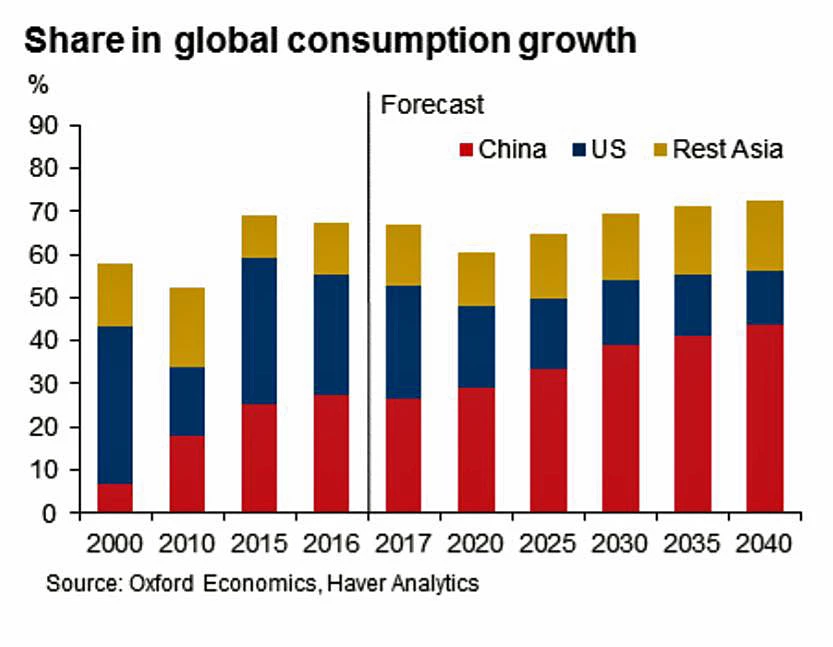
China is projected to overtake the U.S. as the world’s largest consumer market by 2034, according to Oxford Economics.
And by 2040, it’s expected to drive 44% of global consumption growth — more than triple the share of the U.S.
Editor’s Note: This is a sponsored article created in partnership with Kopi Studio.
The opportunity is enormous. But so is the complexity.
Despite the market’s potential, many global brands continue to misfire in China.
This is often because they apply Western assumptions to a market that operates on entirely different cultural, digital, and strategic terms.
Insights from on-the-ground agencies like Kopi Studio reveal a consistent truth: brands that succeed in China treat it not as a localization task, but as a distinct market with its own priorities, platforms, and pace.
Here are five common mistakes international brands make when entering China, and the mindset shifts required to avoid them.
1. China Is Not an Afterthought — It Needs to Be in the Strategy From the Start
Translating your website or swapping out global campaign assets isn’t enough.
Many brands fail because they treat localization as a checklist, rather than a deep cultural engagement.
In China, consumers respond to brands that reflect local values, aesthetics, and context — not just language.
Similarly, Chinese consumers are highly brand-aware and deeply influenced by cultural cues.
If your messaging feels foreign, generic, or out of sync with local tastes, it risks being ignored — or worse, rejected.
In a market where brand perception spreads fast via social platforms like RED and Douyin, tone-deaf content can quickly undermine credibility.
What to do instead: Invest in creative and messaging that are culturally attuned, not just adapted.
This includes understanding local storytelling preferences, seasonal behaviors, and even symbolism and visual cues that hold meaning in Chinese culture.
Real-world example: When Four Seasons launched a campaign for the Chinese market, Kopi Studio didn’t repurpose global assets.
Instead, the team built a fully localized creative concept that highlighted seasonal ingredients, chef inspirations, and experiences unique to China.
“Everything we captured was tailored and thought for the Chinese market. It wasn’t just a translation. It was built from the ground up with cultural nuance,” said Iris Xu, creative director at KOPI Studios.
The result? A campaign that felt authentically Chinese, and not like a foreign brand trying to fit in.
2. Don’t Expect Quick Wins Without Long-Term Commitment
Many global brands enter China with short-term expectations: hoping for fast growth, viral traction, or immediate ROI.
But China isn’t a plug-and-play market. It rewards consistency, patience, and sustained brand-building.
China’s market is highly competitive and often skeptical of new foreign entrants. Without long-term commitment, brands struggle to build credibility with both consumers and local partners.
Worse, an early exit due to unmet expectations can damage the brand's reputation if they decide to re-enter later.
What to do instead: Treat China as a core market, not an experiment. Plan for at least 12 to 18 months of sustained effort before expecting measurable results.
This includes budgeting for:
- Platform presence
- Local partnerships
- Content creation
- Brand education
All of which take time to gain traction.
KOPI Founder Jeremy Koh flags this expectation gap early in its engagements with international clients.
“It’s one of the first questions that we ask when dealing with foreign brands, if you cannot commit for a year without even seeing results then do not do China.”
This level-setting helps clients avoid wasting time and budget on initiatives that are doomed from the start due to unrealistic timelines.
3. Deliver Clear Value in a Fragmented Digital Ecosystem
It’s easy to get dazzled by China’s digital ecosystem, from WeChat to Bilibili, and everything in between.
But too many brands jump into these platforms without understanding how their audiences behave or what role each channel should play.
A misstep in platform choice or content format can mean missing your audience entirely.
Unlike Western markets where omnichannel consistency often works, China demands precision.
In other words, brands must deliver the right content, on the right platform, at the right moment.
What to do instead: Start with a clear strategy.
Define your target audience, objectives, and brand positioning first, then select platforms based on where your customers spend time and how they interact with content.
Avoid spreading yourself thin across too many channels. Prioritize depth over presence.
Fergie Gu, strategist at KOPI, advises that brands entering the Chinese market should consider the following questions when deciding which platform to use.
“Within the different social media spaces like RED and Douyin, which platform should be higher in priority and why? What are we going to do within these platforms that would be relevant to consumers? …”
Each platform in China serves a distinct purpose and attracts a different kind of user behavior.
RED, for example, thrives on aspirational, peer-led discovery, while Douyin leans heavily into entertainment and viral trends.
Without a clear plan, brands risk creating content that either doesn’t resonate or doesn’t reach the right people.
A focused platform approach aligned with brand and audience goals makes it far more likely to break through the noise and create lasting engagement.
4. Balance Long-Term Brand Building With Short-Term Wins
A common mistake global brands make is viewing marketing in China purely through a performance lens and expecting every campaign to immediately drive sales or conversion.
But in a market where trust and brand equity take time to build, this mindset can lead to poor decisions and premature pivots.
When executives focus only on short-term ROI, they often undervalue the role of brand-building.
Chasing quick wins can lead to generic campaigns, platform misalignment, and ultimately, missed opportunities for lasting brand loyalty.
What to do instead:
- Define both performance and brand KPIs from the start.
- Set clear expectations around what marketing can realistically deliver in the first 6 to 12 months.
- Track metrics like awareness, engagement, and sentiment alongside sales and understand how they work together over time.
- Koh shares how they often help clients reframe success metrics based on market maturity and campaign objectives.
“A lot of clients see marketing as a magic machine, a dollar goes in and 3 dollars comes out. Yes and no, we need to find a balance of both, measuring both short term and long term goals.”
This balance allows teams to make better decisions and stay aligned with long-term brand ambitions instead of reacting to short-term data spikes or dips.
5. Don’t Follow Trends Without Brand Fit
From AI-powered campaigns to livestream eCommerce and virtual influencers, China sets the pace for global marketing trends.
But many international brands rush to adopt these tactics without asking a critical question: Does this trend actually serve our brand?
Trend-chasing can dilute brand identity and confuse your audience.
In China’s market, the brands that endure are those that stay consistent, not those that reinvent themselves every quarter just to stay “relevant.”
If a tactic doesn’t align with your core value or long-term vision, it’s more distraction than innovation.
What to do instead: Use trends selectively to amplify your brand, not redefine it.
Be clear on what your brand stands for, and evaluate each new tactic based on whether it enhances your customer experience or solves a real business problem.
“They mostly tend to distract brands from their longer-term success. I think instead of chasing trends, most brands need to focus on understanding the real value they bring to consumers and double down on that,” says Koh.
Win With Clarity, Commitment, and Cultural Intelligence
China isn’t a market you can afford to treat like a side project. That’s why the brands that have succeeded prioritized:
- Investing in cultural relevance
- Committing to the long haul
- Platform strategy
- Balancing brand and performance goals
- Resisting the temptation to chase trends at the cost of clarity
As Kopi Studio’s work shows, the difference between failure and traction often comes down to mindset.
Brands that lead in China aren’t simply adapting — they’re deeply aligning with what matters to Chinese consumers.