

Chinese Market Entry: Key Findings
- Brands that treat China as a single market or focus solely on promotion often fail before they begin. Tailored, region-specific strategies are critical.
- Lack of trust in local teams and unclear expectations derail more Chinese market entries than external competition ever could.
- Sustainable growth depends on agility & adaptability, not solely on impact. Focusing on meaningful KPIs, iterative execution, and AI that drives real business outcomes matter but in the world of business, its rarely ever so linear.
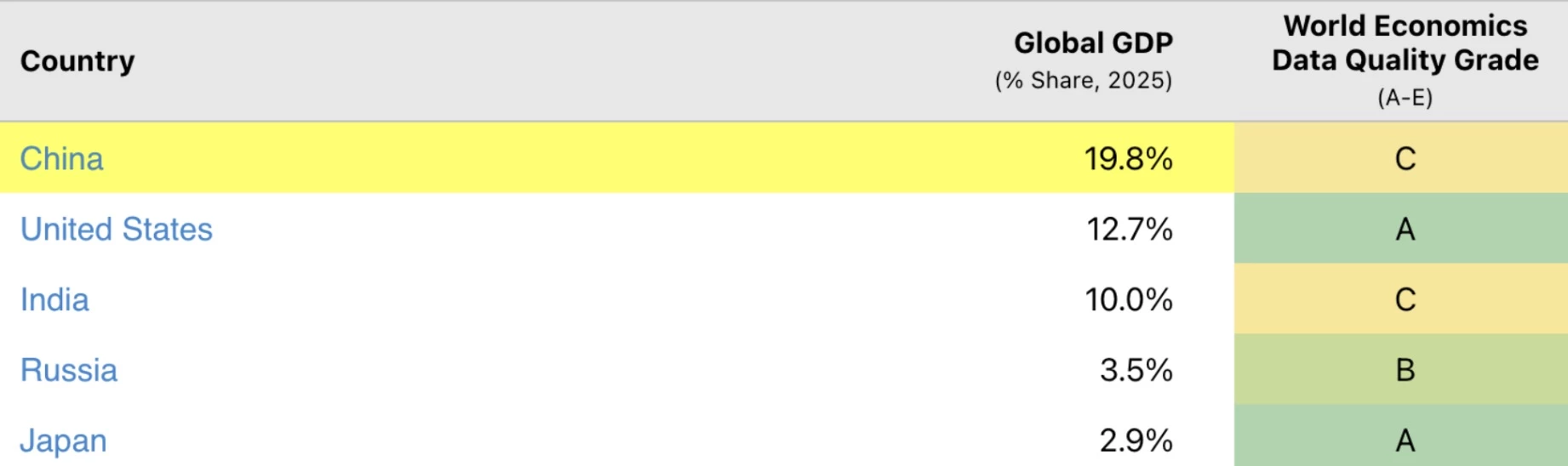
China’s role in the global economy is far from waning. In 2025, it accounted for 19.8% of global GDP, according to World Economics. And that number is projected to rise to 21.7% by 2030.
Even amid shifting U.S. trade relations and rising competition from Southeast Asia, China remains a vital and complex market for brands looking to expand internationally.
Editor’s Note: This is a sponsored article created in partnership with KOPI Studio.
And yet, many global brands continue to misstep when entering or exiting China.
Poor localization, lack of strategic clarity, and internal misalignment often undercut otherwise sound ambitions.
I spoke to Jeremy Koh, CEO and co-founder of KOPI Studio, who shared how brands can better navigate this environment and why success in China depends more on mindset and execution than budget or brand legacy.
Quick listen: 4 proven ways to win in China’s complex market — in under 2 minutes.

Who is Jeremy Koh?
Jeremy Koh is the co-founder and CEO of KOPI Studio, a cross-border marketing agency focused on helping brands navigate China’s complex market dynamics. With over a decade of experience in the region, he has worked with brands like Starbucks, Shake Shack, and Skechers, expanding both into and out of China.
1. Build the Right Strategy Before Entering China
Many companies still underestimate how much foundational work is required before entering China.
Jeremy says failure often stems from a narrow view of what marketing actually is. Too often, brands fixate on promotions without addressing the deeper levers that influence business success.
“Most of marketing departments today look at marketing through a single lens of Kotler’s 4Ps — namely promo,” he says, “but marketing needs to effect change so much more than that.”
In other words, without the ability to shape reach, pricing, or product-market fit, no amount of advertising will move the needle.
Brands must see marketing as a driver of business strategy, not just a communications function.
Another common mistake is treating China as one monolithic market. With vast regional and cultural differences, a single national campaign rarely works.
“A country that large needs tailored strategies by region,” Jeremy explains.
“The sharper your strategy, the more successful you can be within a region.”
Finally, Jeremy emphasizes the importance of agility.
Success in China isn’t about getting everything right the first time; it’s about learning quickly and adapting in real time.
“There is no such thing as ‘consistently winning’,” he says. “There will be mistakes, there will be bad judgement, but be quick to correct, learn from it and readapt it. Most markets reward agility and not perfection.”
2. Avoid the Internal Missteps That Derail Market Entry
Despite China’s massive opportunity, many global brands stumble not because of external market forces, but due to internal misalignment.
Jeremy has seen this play out repeatedly and says that the biggest issues often start from within the organization.
One of the most underestimated problems is a lack of trust in local teams. Companies may hire market experts, but then override them with top-down directives.
“Most times, clients are unable to fully understand the market’s culture yet they micro manage,” Jeremy says.
“You don’t hire to tell someone what to do, you explain your vision and allow your team to make it happen.”
Another recurring failure point is stakeholder alignment.
Brands launch without getting everyone on the same page, leading to inconsistent messaging, unclear goals, or mismatched expectations.
“A lot of companies fail before they even start because expectations were not set right,” he warns.
Commitment is also crucial. Some companies enter China just to “test the waters,” hoping for quick wins.
That mindset rarely works in a highly competitive environment.
“In a brutal market like China, one would have to stay committed to succeed,” Jeremy says.
He points to brands like Starbucks and Pepsi that failed multiple times before finally breaking through.
And then there’s the regulatory maze, which is a factor often overlooked until it becomes a blocker.
Jeremy stresses that compliance, especially in areas like consumer data, can slow down or derail an entire strategy if not planned for early.
“Red tape in each market can slow your speed to market and also kill certain segments of your business,” he says. “Make a clear plan and mark those boundaries so you can avoid those mistakes.”
The takeaway? Most failures are avoidable, but only if companies approach China with humility, long-term vision, and alignment from day one.
3. Focus on Business Outcomes, Not Vanity Metrics
For global brands entering China, defining success can be surprisingly difficult.
While most companies aim for growth, the real question is how to measure progress at different stages of market entry.
Jeremy cautions against a one-size-fits-all approach to KPIs.
“It really depends on the client’s goals and needs,” he says. “Is it leads? Is it growth of reach? Is it community engagement?”
Rather than chase generic benchmarks, KOPI works closely with clients to align on goals and build measurement frameworks around them.
Jeremy believes this is where many agencies fail: by promising too much, too fast.
“A lot of agencies promise the world but never ever deliver,” he explains.
Instead, he advocates for building momentum through consistent small wins and staying realistic about what’s achievable.
What ultimately distinguishes a strategic partner is accountability.
“Your marketing is only as effective as the results it creates,” Jeremy says.
Agencies that focus on outputs instead of outcomes often lose sight of what the client actually needs.
In China’s competitive and fast-moving market, impact matters more than awards. The strongest partnerships are built on clarity, discipline, and shared responsibility for results.
4. Use AI and Agility to Stay Ahead in Cross-Border Marketing
As cross-border marketing evolves, one trend is impossible to ignore: the integration of AI across creative and operational workflows.
Jeremy says both agencies and clients are now experimenting with AI tools, but full adoption still comes with growing pains.
“The challenge is to be able to use AI seamlessly,” he says. “There are still many issues to be resolved.”
Staying ahead means more than just using AI tools; it means adapting how the entire team works.
The goal is to integrate automation where it creates value while continuing to rely on human insight for strategy and storytelling.
Another shift Jeremy observes is how global brands are rethinking the client-agency model itself.
As Chinese brands expand abroad and Western brands deepen their China strategies, agility and cultural fluency are becoming non-negotiable.
Jeremy believes the best ideas will increasingly come from inside the region, not just outside of it.
How KOPI Helped Magmag Drive Growth in China
One of the clearest illustrations of KOPI Studio’s approach comes from their recent work with Magmag, a Thai snack brand looking to break into the Chinese market.
KOPI was brought in to develop both immediate market entry tactics and a long-term brand roadmap.
“We recently helped a Thai snack brand called Magmag take their first step into the Chinese market,” says Jeremy.
“Our role was to not just help them set up a presence but also build their longer term brand strategy.”
That strategy began with establishing a strong digital foundation across major Chinese platforms, including Douyin, WeChat, and Xiaohongshu.
But presence alone wasn’t the goal. The team focused on aligning messaging with regional taste preferences, while simultaneously strengthening product distribution.
“One such strategy was helping them with driving distribution and place of product,” Jeremy explains.
“We engaged multiple partners and platforms to help drive sales and reach via media channels.”
The result? A measurable leap in engagement and conversion.
Since launch, Magmag has seen 9x growth in brand engagement and a 3x increase in lead generation within its core regions.
While the results were impressive, Jeremy is quick to point out that this kind of success requires close collaboration, speed, and an iterative mindset, qualities many brands overlook when trying to scale across borders.
The Future Belongs to Brands That Listen and Adapt
Most brands don’t fail in China because of the market. They fail because they underestimate what the market demands.
They arrive with a global playbook, under-resource their local teams, and treat nuance as a secondary concern.
Jeremy’s advice isn’t meant to be a magic bullet solution. His advice, however, offers something more durable: the discipline to clarify strategy, align internally, and listen before acting.
That’s not as headline-grabbing as a bold launch, but in China, it’s what separates the brands that thrive from the ones the market quietly rejects.