
AI and Conversational Marketing: Key Findings
- OpenAI launched a new in-chat apps feature, changing the way brands can now meet users inside AI conversations.
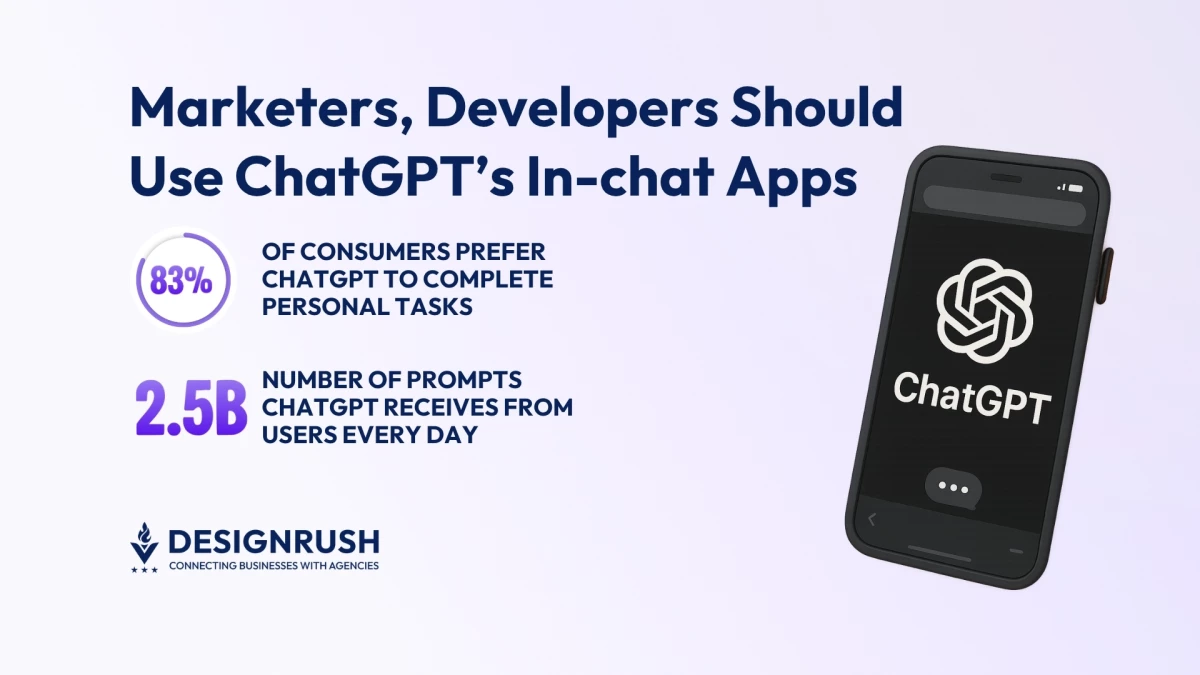
- ChatGPT receives 2.5 billion daily prompts and is now the fifth most-visited website in the world.
- AI can cut web clicks by as much as 34.5%, so marketers must start designing conversational experiences instead of relying on traditional methods.
OpenAI announced the rollout of in-chat apps for Spotify, Zillow, Canva, and others, all powered by its new Apps SDK.
The new feature allows users to access these apps directly in ChatGPT and use them for queries, requests, and more.
Other apps featured in the pilot include:
- Booking.com
- Coursera
- Figma
- Expedia
More apps are expected to launch throughout the rest of 2025.
The new feature launched last October 6, 2025 and developers can start reworking their apps to take advantage of this feature using Apps SDK.
This development marks a turning point for many brands and marketers.
For the first time, major brands are no longer relying on users to come to them. They’re showing up inside the conversation itself.
This should come as no surprise, given how ChatGPT and GenAI as a whole have progressed in the last few years.
According to a report from Exploding Topics, ChatGPT now ranks fifth among the world’s most visited websites, trailing only Google, YouTube, Facebook, and Instagram.
ChatGPT also receives roughly 2.5 billion prompts every day, meaning what was once owned by search engines is now being captured inside AI-driven conversations.
According to digital experts like WebFX, this shift in user preference means that the playbook for online discovery needs to be rewritten:
“We’re entering a moment where marketers can no longer rely on clicks and impressions. The future of visibility lives inside intent-driven conversations. The brands that adapt first will control the narrative… literally,” said WebFX Founder and CEO William Craig.
Why This Shift Redefines Marketing Strategy
For marketers, the implications are profound.
Both organic and paid search depend on triggers like keywords or links. However, AI assistants bypass this, relying instead on conversations and context.
This means AI delivers curated results to users instantly, without the need for a search page, ads, and the like.
All of this leads to a shift from being “seen” online to being selected by AI. There’s no second page, no scrollable feeds.
Your brand is either part of the answer or completely invisible to billions of users worldwide.
That’s why optimizing content for trust and brand authority has started to become more important than optimizing for traditional ranking signals.
“What AI is really doing is collapsing the buyer journey. Instead of awareness, research, and conversion happening across different platforms, those stages now occur within a single interaction,” said Craig.
“This is forcing both brands and agencies to restrategize around a new truth: campaigns must be designed for decisions made in moments, instead of results measured months down the line.”
How Marketers Can Prepare for the AI Chat-Integrated Future
How can marketers and brands adjust to this new reality?
WebFX suggests taking the following steps:
1. Integrate Early, Experiment Fast
Brands with apps should begin by experimenting with SDK integration, even in limited use cases. The goal here isn’t perfection. Instead, it’s about participating early and getting eyes on your app.
Early adopters can also gain critical insight into how customers behave in conversational flows and can refine their strategies before the field becomes crowded.
2. Rethink UX for Conversational Discovery
Marketers must design content and interaction models to ensure both are structured, scannable, and ready for natural language interpretation. Instead of optimizing for clicks, optimize for clarity and contextual relevance.
Similarly, don’t overfocus on just text-based conversations. Voice search is also steadily increasing as AI assistants on mobile devices become more prominent.
3. Remeasure Attribution and Performance
Click-based attribution is obsolete in chat-driven environments. This is evidenced by an Ahrefs study, which revealed that AI search results, particularly AI Overviews, reduced clicks by 34.5%.
As such, marketers will need new ways to track user intent and measure conversion journeys that begin on ChatGPT and other AI tools.
This may include CRM integrations or post-conversation analytics.
4. Align Creative and Technical Teams Around AI Presence
Conversational ecosystems demand collaboration across disciplines.
Creative teams must learn to think in prompts and responses, while technical teams architect integrations that preserve brand identity inside third-party AI platforms.
Regular “conversation audits” can help both sides refine how the brand appears and performs in chat-based environments.
Prepare Before This Becomes Baseline
Conversational interfaces represent the next layer of digital infrastructure, one where interaction replaces navigation and intent replaces search.
Within a year, being discoverable inside a chat interface will matter as much as ranking on Google.
The brands that start integrating now won’t just keep up with the curve. They’ll define it.