

The 2024 State of Consumer Media Spending Report by Reviews.org has revealed that a U.S. household shells out an average of $272.90 per month — amounting to $3,274.80 annually — on internet, TV, mobile, and streaming services.
As digital connectivity becomes a necessity, these figures underline Americans' growing financial commitment to staying connected in the modern world, presenting a significant opportunity for businesses to connect with audiences.
The report details key expenses contributing to the overall monthly, yearly, and lifetime (60 years) totals:
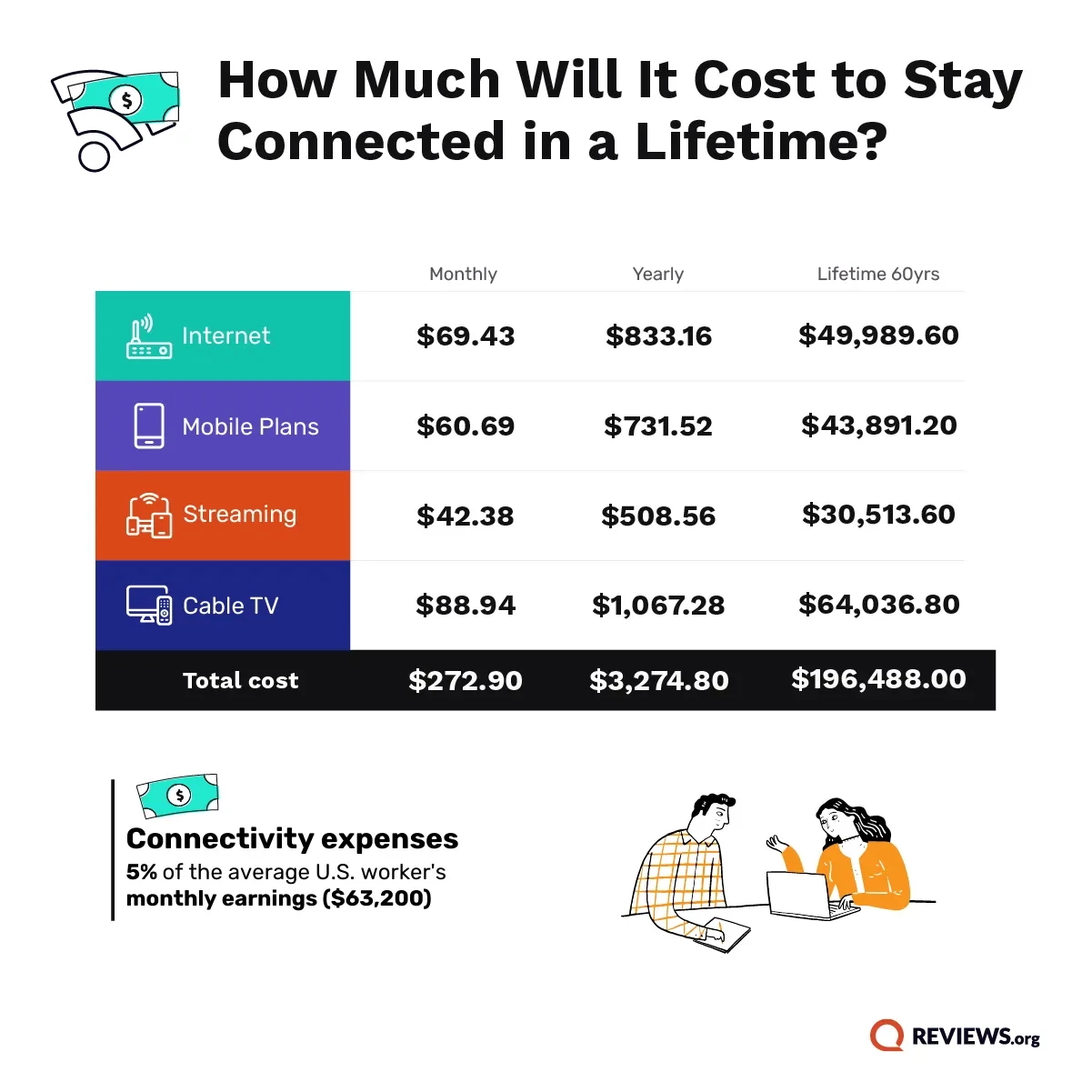
Cable TV remains the largest single expense; however, rising costs in streaming and internet services reflect changing consumer habits as more people opt for multiple platforms to meet their entertainment and connectivity needs.
The report also dives into the varying costs of internet services depending on connection types and providers. Fiber internet, while often faster and more reliable, tends to cost more than DSL or cable options.
However, advances in 5G technology present an opportunity for consumers to save money while maintaining high-speed connections.
New year, new internet? Home internet can total to $833 per year for the average American. 💸 Make sure you're getting the best deal by checking for new offers in your area, downgrading your speed, or finding a bundle deal. pic.twitter.com/SJr4MVXNHX
— Reviews.org (@reviews_org) January 1, 2025
This spending data highlights the growing demand for engaging and accessible content.
Businesses that tailor their offerings to align with consumer preferences — whether digital or traditional marketing through CTV or PPC advertising, partnerships, or exclusive user experiences — can tap into this thriving market.
By understanding how people allocate their connectivity budgets, marketing and advertising agencies can also position their clients to build trust and loyalty with their target audiences and drive long-term growth.
Streaming Fatigue and the Rise of Ad-Supported Plans
As consumers juggle an increasing number of subscription services, many are turning to ad-supported streaming tiers to reduce costs.
These ad-supported options often offer the same content as premium plans at significantly lower prices, allowing consumers to stretch their budgets while keeping access to their favorite shows and movies.
Again, as the number of ad-supported streaming subscribers increases, businesses can take this as an opportunity to connect with their audiences with engaging content.
For mobile services, consumers are increasingly shifting to Mobile Virtual Network Operators (MVNOs) like Mint Mobile and Visible, which offer lower-cost alternatives to major carriers while using the same networks.
View this post on Instagram
For consumers, these plans can often cut mobile expenses significantly without sacrificing quality, while related businesses can also partner with these providers to enhance their offerings.
To combat rising connectivity costs, the report outlines several strategies:
- Switching to 5G Home Internet: Many providers now offer affordable 5G Internet options that rival traditional broadband in speed and reliability.
- Downgrading Streaming Plans: Opting for ad-supported streaming services or reducing the number of active subscriptions can save households hundreds annually.
- Leveraging MVNOs: Switching to budget-friendly mobile carriers can significantly cut monthly expenses without compromising service quality.
- Bundling Services: Many providers offer discounts when customers bundle internet, TV, and mobile plans together.
Reviews.org also provides insights into how providers are adapting to changing consumer behavior.
For instance, cable TV providers are beginning to offer more flexible packages, while streaming platforms are focusing on retaining customers by introducing bundled or discounted options.
View this post on Instagram
With the average U.S. household spending nearly $3,300 annually on connectivity, the 2024 report serves as a wake-up call for consumers to evaluate their digital expenses and take proactive steps to reduce costs while staying connected.
On the other hand, it serves as a guide for businesses so they can allocate their marketing and advertising budgets more effectively.
Meanwhile, digital marketing agencies can also stand to gain actionable insights from DesignRush's research that outlines the five U.S. states that will offer the most benefits when the 2025 corporate tax reform is implemented.