
Burger King U.K. Trolling McDonald's Takeaways:
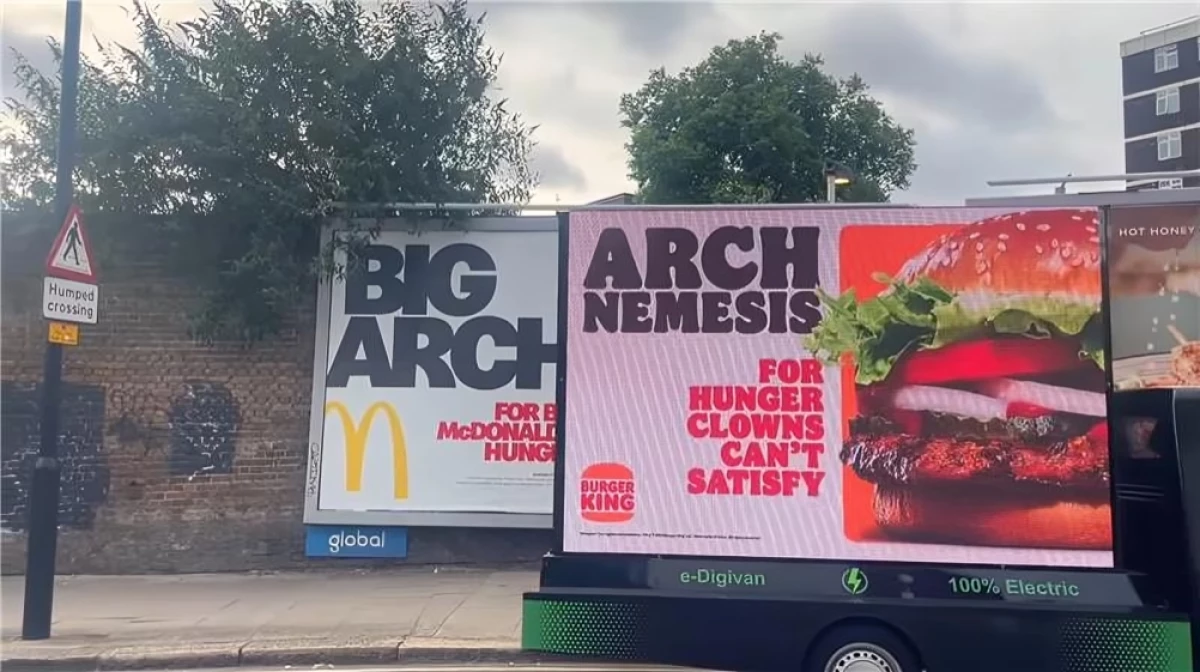
- Burger King U.K. launched an ambient OOH ad called “Arch Nemesis”, positioning the Whopper as the villain to McDonald’s Big Arch burger.
- A branded digital van physically blocked McDonald’s Big Arch billboard to display a cheeky message: Whopper’s been “ruling the grill since 1954.”
- This stunt continues BK’s long tradition of rivalry campaigns, from Whopper Island to the Whopper Detour.
One burger launched. The other blocked it with a van.
McDonald’s recently introduced its Big Arch burger across the U.K., supported by a high-profile campaign from Leo Burnett.
In a timely counteraction, Burger King introduced “Arch Nemesis,” a creative effort that positions the Whopper as the veteran rival to McDonald’s latest offering.
To deliver this message, Burger King deployed a digital advertising van to a key McDonald’s outdoor site.
Rather than a passive placement, the screen was strategically used to obstruct the Big Arch billboard with a direct comparison, underscoring the Whopper’s longer heritage and identity dating back to 1954.
Creative agency BBH London led the activation, adding to Burger King’s series of marketing stunts aimed directly at its top rival.
As noted in an article analyzing the long-running feud, Fernanda Bürgel, creative director at agency PeterMayer, explained the contrasting approaches:
“McDonald’s was the leader for the longest time, so they spoke with a voice of someone who is a leader in the market.
They don’t engage in the rivalry, they were always very stable.
Burger King, on the other hand, being the underdog, got to have all the fun — they got to poke at them and do things that felt irreverent and innovative.”
The Big Arch includes two beef patties sourced from the U.K. and Ireland.
It’s topped with white cheddar, both crispy and fresh onions, shredded lettuce, pickles, and a signature new sauce.
Its launch campaign focused on large-scale visibility through out-of-home media and coordinated international creative.
Fast-Food Feuds Continue
This isn’t the first time Burger King has chosen confrontation as a brand strategy.
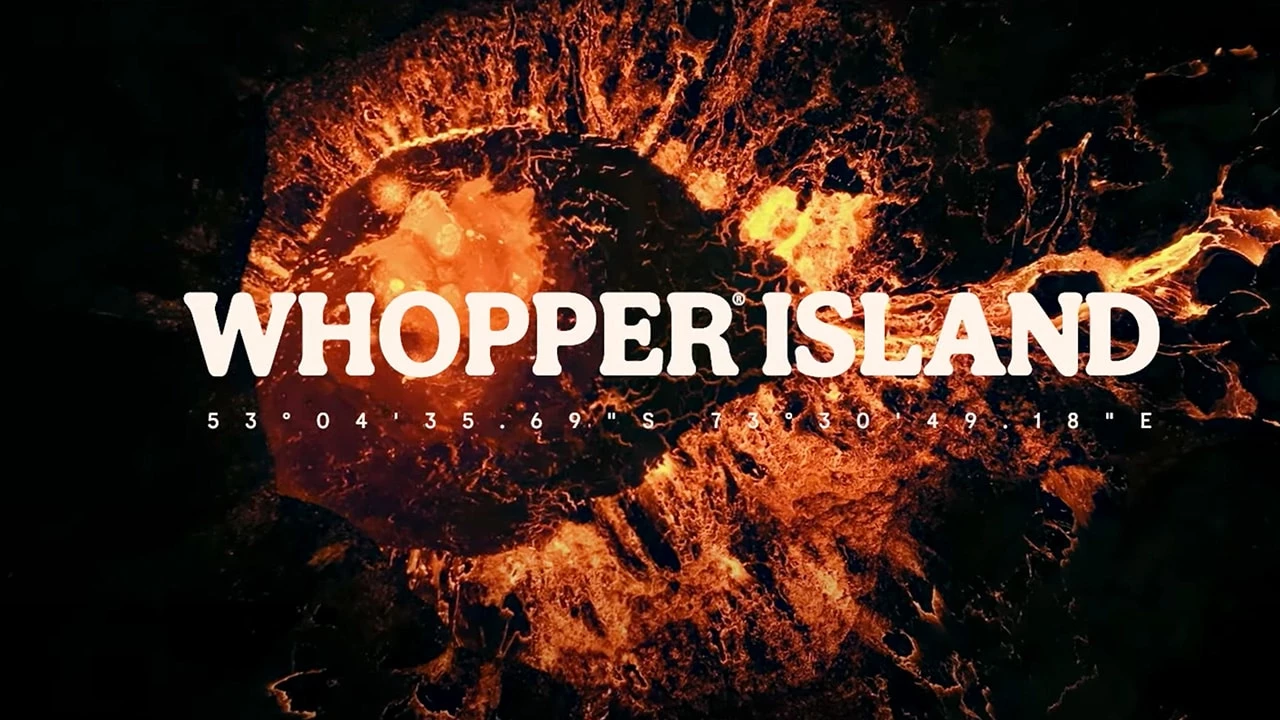
In early 2024, the company suggested renaming the isolated McDonald Islands to “Whopper Island,” pointing to the area’s volcanic activity as a closer match to its flame-grilled identity.
Another standout example of Burger King’s competitive strategies came in 2019 with the "Whopper Detour" campaign.
By using geofencing technology, the brand offered customers a Whopper for just one cent, but only if they ordered it while physically near a McDonald’s location.
The stunt drove over a million mobile app downloads in just nine days.
This demonstrates how a direct challenge combined with digital execution could generate both attention and measurable business results.
In 2018, Burger King was in a pickle.
— Tim Carden (@timjcarden) October 13, 2024
McDonald's had 14,000 US locations. Burger King? Just 7,000.
They couldn't compete on convenience. So they decided to compete on creativity.
Enter "The Whopper Detour campaign": pic.twitter.com/B6JQHucmwG
Rather than introducing new products, the brand draws from its history and headline product to insert itself into its rival’s news cycle.
That consistency not only supports the Whopper’s market penetration strategy but also keeps Burger King top of mind during key moments in the fast-food calendar.
Our Take: Is Burger King's Strategy Still Effective?
I think it is, but only because Burger King knows exactly who it’s talking to.
These campaigns aren’t about selling more burgers overnight.
They’re about reinforcing brand identity in moments when the competition tries to claim attention.
It’s a smart way to remind the public that the Whopper is a legacy item, especially when McDonald’s is pushing something new.
For agencies, the takeaway is simple: reactive doesn’t mean random.
You need timing, placement, and a brand voice that is sharp enough to cut through the noise.
See how McDonald’s flipped the narrative in Canada with a “tasty heist” campaign created by Cossette.
From billboards to transit ads, these agencies help brands stand out in real-world environments: