-details-webp.webp)

Brand Action Campaign: Key Findings
- Partnering with Sean Evans and First We Feast gave Bulleit instant cultural credibility, showing how trusted voices accelerate brand relevance.
- A unified tone, visual system and message made “Doing Over Dreaming” stick, proving consistency drives stronger recall across channels.
- Rooting the campaign in Bulleit’s frontier identity allowed it to modernize without losing its edge, showing how legacy brands can evolve without eroding trust.
Brand trust isn’t built on bold statements anymore; it’s earned through proof.
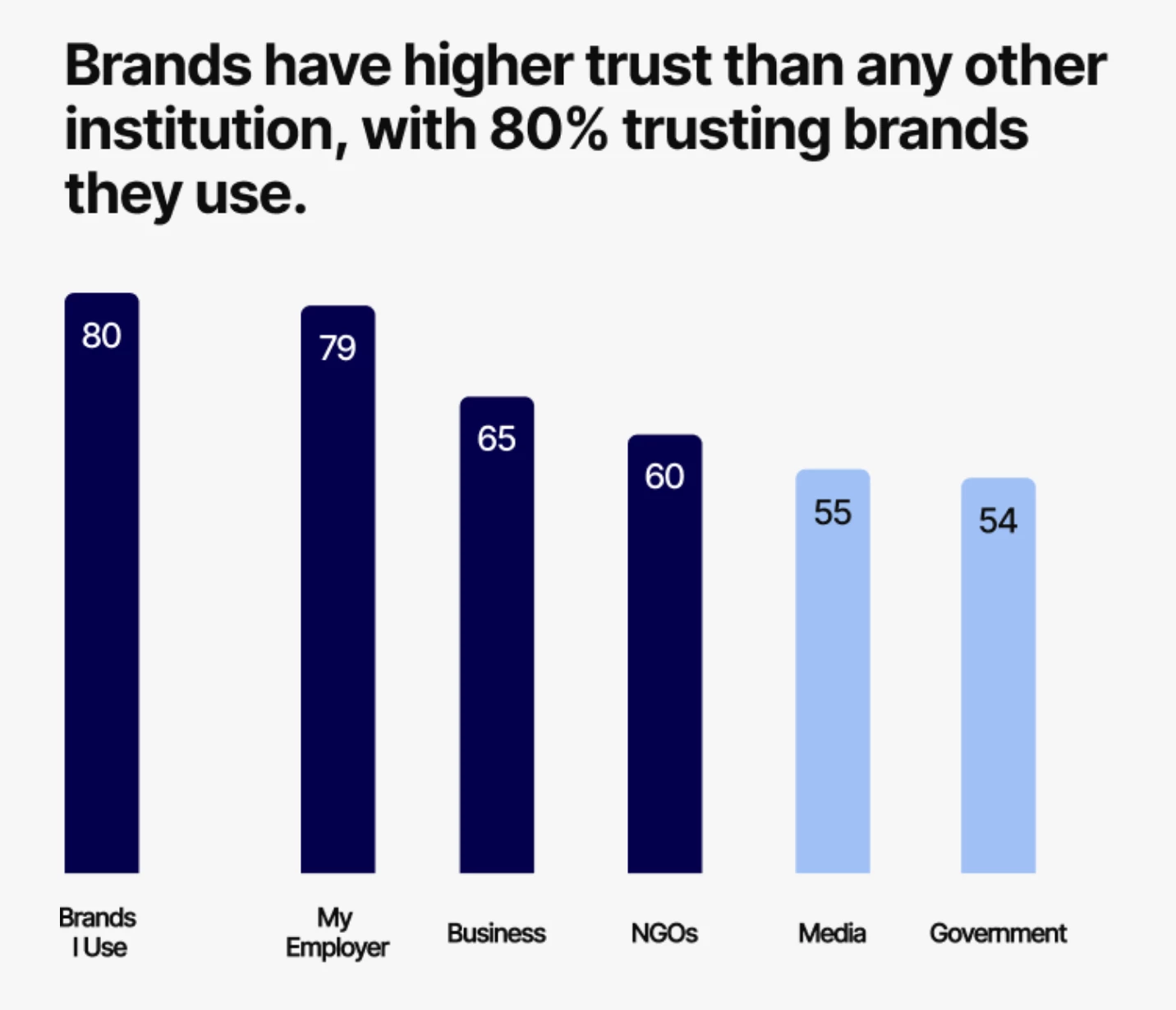
According to Edelman’s 2025 Trust Barometer, 80% of people trust the brands they personally use, more than they trust media, employers, or government.
But what consumers want now isn’t just bold words. They want economic optimism, stability, and real outcomes.
That shift is challenging legacy brands to show up with something more tangible.
For Bulleit Frontier Whiskey, that meant turning mindset into action.
Its campaign, Doing Over Dreaming, replaced abstract ambition with real-world collaboration and cultural clarity.
In this DesignRush interview, Johannah Rogers-Omishore, brand director at Bullet Frontier Whiskey at Diageo, shares how the campaign redefined the brand’s identity.
The focus? Tangible action, cultural collaboration and a creative voice as bold as the whiskey itself.

About Johannah Rogers-Omishore
Johannah Rogers-Omishore is the Brand Director for Bulleit Frontier Whiskey at Diageo, where she leads brand strategy and innovation to deepen consumer connection and drive growth. With a proven track record across brands like Crown Royal, Smirnoff, and Captain Morgan, she brings a passion for storytelling, culture, and purposeful brand building to the whiskey category.
1. How Trusted Voices Build Instant Brand Credibility
To bring its Doing Over Dreaming message to life, Bulleit looked for collaborators who live the “get up and get sh*t done” mindset.
This search led to First We Feast and Sean Evans, the face of Hot Ones, to launch a new content series: “One More Round.”
The show spotlights cultural trailblazers who turn ambition into tangible impact.
Each conversation explores how creativity, risk, and resilience fuel meaningful work.
“These are people known for shaking up their industries,” says Rogers-Omishore. “They bring big ideas to life, never pausing to turn ambition into action.”
By aligning with creators who already have credibility, Bulleit ensured its message felt authentic.
For brands, cultural trust starts by meeting people where credibility already exists.
2. How Grounding in Purpose Keeps Campaigns Cohesive
Every strong campaign starts with intent. For Bulleit, Doing Over Dreaming was a distillation of the brand’s purpose: to inspire people to turn bold ideas into bold action.
Working closely with its creative agency, Anomaly, the team focused on clarity, confidence, and grit, stripping the brand back to what made it unmistakably Bulleit.
“For us, the process started with making sure the campaign was grounded in Bulleit’s purpose,” Rogers-Omishore explains.
“Consistency came from collaboration. We worked hand-in-hand with our partners to ensure the look, feel, and storytelling always laddered up to the same message.”
That alignment ensured that every touchpoint delivered one unified statement: “Stop talking. Start doing.”
For marketers, this shows how clarity of purpose drives creative cohesion across formats and teams.
3. Why a Bold, Minimal Visual Language Cuts Through
When brands compete for attention, simplicity becomes power.
Bulleit’s creative direction leans on its signature orange backdrop, bold black typography, and straightforward messaging that captures its confident, frontier spirit.
Headlines like “Smooth and Full of Grit,”“No Rest for the Restless,” and “Y’ALL” deliver punchy clarity that reflects its character.
“We’re a brand of few words, and we let our whiskey do the talking,” says Rogers-Omishore.
“Nothing lengthy or convoluted here, because we’ve got sh*t to do and bourbon to drink.”
Putting the bottle at the center and keeping visuals pared back let Bulleit create a distinctive visual signature that commands attention through restraint.
It shows that clarity often outperforms complexity in brand design.
4. How Cultural Relevance Turns Awareness Into Affinity
Bulleit’s audience is defined by energy.
The campaign was built for creators, entrepreneurs, and makers who move with intent: people who see progress as a daily practice.
“One of the biggest decisions was choosing to lead with partners who already have deep cultural credibility,” Rogers-Omishore says.
“By aligning with voices that audiences already know and trust, we were able to cut through in a really authentic way.”
That authenticity helped the campaign transcend whiskey advertising, turning Doing Over Dreaming into a mindset that resonated with modern hustlers and creative communities.
The insight for brands? Cultural relevance means showing up where trust already exists.
5. Why Brave Collaboration Creates Breakthrough Work
Bulleit’s creative partnerships reflect one consistent truth: great work happens when teams push each other beyond comfort.
“It wasn’t just about finding an agency with great ideas,” Rogers-Omishore says. “It was about finding a partner who understood and embodied our brand to their core.”
Her team looks for collaborators who:
- Challenge conventions and inspire action-driven storytelling
- Connect brand purpose to real cultural conversations
- Balance heritage with forward-looking creativity
- Keep collaboration strategic and purpose-led
- Deliver visually striking work that invites participation
And the one dealbreaker? Playing it too safe.
“Bulleit’s not about sitting on the sidelines,” she adds.
For agencies, that’s a reminder that progressive brands reward boldness, not caution.
Balancing Frontier Identity with Global Scale
As part of Diageo’s global portfolio, Bulleit benefits from the company’s reach and insight while preserving its independent edge.
“For Bulleit, our uniqueness comes from our frontier identity and our focus on ‘doing over dreaming,’” Rogers-Omishore explains.
“While we leverage Diageo’s expertise, we make sure every creative stays true to Bulleit.”
This balance helps the brand stay rooted in authenticity while scaling globally. It’s proof that legacy brands can evolve and still feel real.
What This Means for Brands
Bulleit’s Doing Over Dreaming is a blueprint for purposeful creativity.
Why? Anchoring its storytelling in action, collaboration, and visual confidence allows the whiskey brand to show how doing builds lasting cultural relevance.
It’s a shift that reflects a broader truth about where brand trust is heading.
In 2025, dreaming gets attention, but doing earns trust.