
The New Year's Eve Ball Upgrade in Times Square: Key Findings
- The largest redesign in the event’s history reflects a renewed investment in visual impact and craftsmanship.
- The new ball includes 5,280 Waterford crystal panels, nearly doubling the surface detail of previous versions.
- Organizers are reinforcing the ball’s role as a rare global live moment as shared cultural experiences continue to thin out.
Times Square’s New Year’s Eve Ball has grown larger, heavier, and more visually complex ahead of the 2025 countdown.
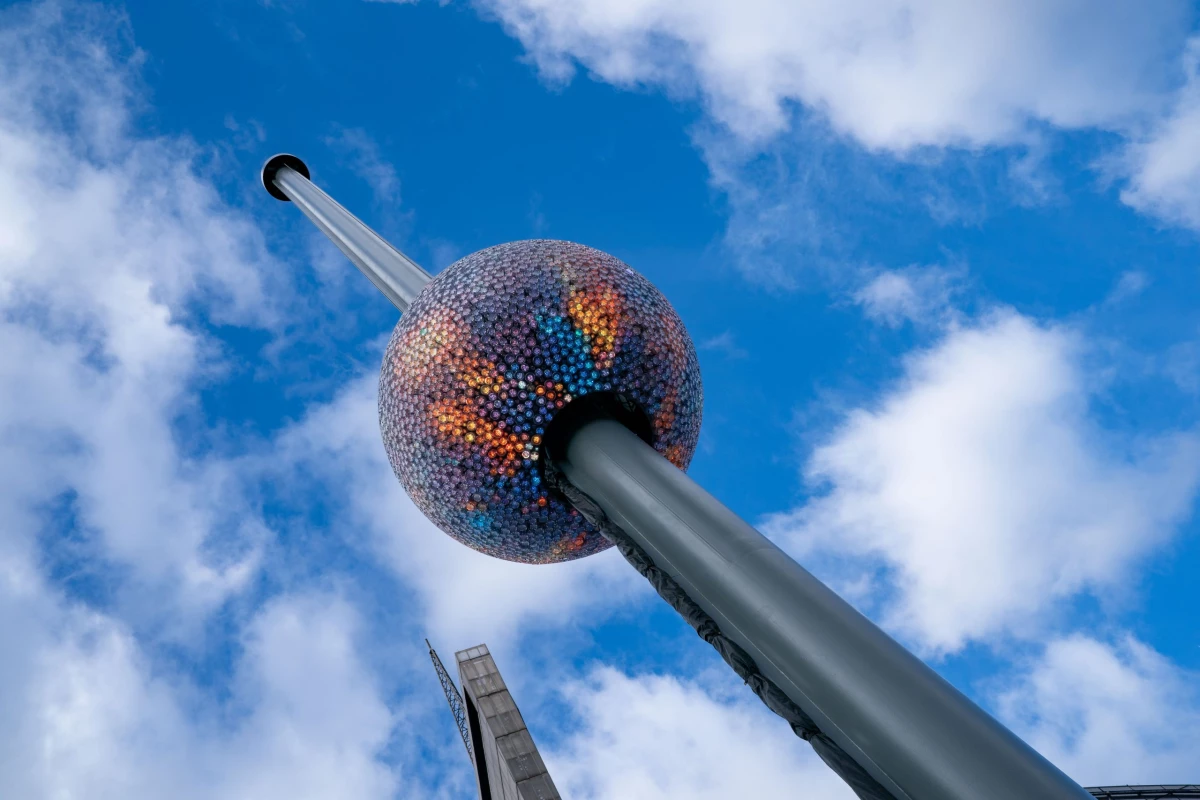
The new Constellation Ball features 5,280 handcrafted Waterford crystal discs, replacing the older triangular pattern with circular designs in three different sizes.
The structure now spans roughly 12 feet in diameter and weighs more than 12,000 pounds, making it the largest ball since the tradition began in 1907.
Each crystal was cut to intensify light refraction during the final seconds before midnight.
Organizers and city officials say the goal is to elevate the in-person and broadcast experience.
The redesign coincides with new year-round visitor attractions at One Times Square, including ticketed experiences that let visitors see the ball up close.
When fewer moments unite global audiences, legacy rituals strengthen their value by investing in visible craft and scale.
A Rare Live Moment in an On-Demand World
Live events with universal awareness have become increasingly rare.
According to Times Square, the ball drop reaches more than one billion viewers globally across television, streaming, and social platforms each year.
This scale places it alongside only a handful of remaining mass moments, including the Super Bowl and major Olympic ceremonies.
Broadcasters still plan around the event, and cities around the world benchmark against it.
During the pandemic, the ball dropped even in an empty Times Square, reinforcing its symbolic continuity.
The 2025 redesign stresses how much effort is now required to sustain this level of attention.
Cultural moments that people schedule their lives around gain durability precisely because they resist fragmentation.
Scale as the Design Choice
The Times Square Ball has changed steadily over more than a century, evolving from iron and wood into a dense light installation engineered for modern broadcast.
This year’s expansion continues this pattern, favoring visibility over subtlety as viewing habits fragment across platforms.
The structure was also reinforced to withstand wind, cold, and vibration from the crowd below.
The increased number of crystals creates sharper highlights for ultra-high-definition cameras.
Organizers designed the surface to hold visual clarity from street level to aerial shots.
Rather than altering the ritual itself, the update amplifies what audiences already recognize.
In doing so, it reinforces the ball as a stable piece of brand identity, where consistency and recognizability carry as much weight as spectacle.
Several lessons emerge from how this redesign was approached:
- Visible craftsmanship still signals importance. Audiences respond to effort they can see and feel.
- Consistency builds anticipation. Incremental upgrades keep rituals relevant without breaking memory.
- Live moments reward scale. Shared attention increases when the spectacle is unmistakable.
In live culture, refinement that preserves familiarity often carries more weight than reinvention.
Our Take: Does Magnitude Still Matter in Culture?
I think it does, because it gives shared moments more weight.
The larger ball reinforces a familiar reference point that people recognize instantly, whether they are watching in Times Square or from home.
The visible investment signals care and permanence, which helps the ritual feel dependable year after year.
Events like this hold attention by gathering people around the same experience at the same time.
Times Square continues to work because it treats continuity as part of its identity, not something to replace.
This logic has carried into other large-scale activations, including Timothée Chalamet’s Las Vegas Sphere takeover, where scale worked because it was grounded in a clear creative idea.
Want your brand to stand out without chasing gimmicks? Explore our Top Creative Agencies and find partners that build original, culture-led work that actually holds attention.