
Ben & Jerry's Identity Crisis: Key Findings
- Jerry Greenfield’s departure deepens concerns that Ben & Jerry’s can no longer protect its activist identity under new ownership.
- Magnum’s takeover introduces new operational and portfolio priorities that may shift how the brand manages products and market positioning.
- Governance disputes and stronger corporate oversight raise doubts about whether the brand’s mission can withstand commercial pressure.
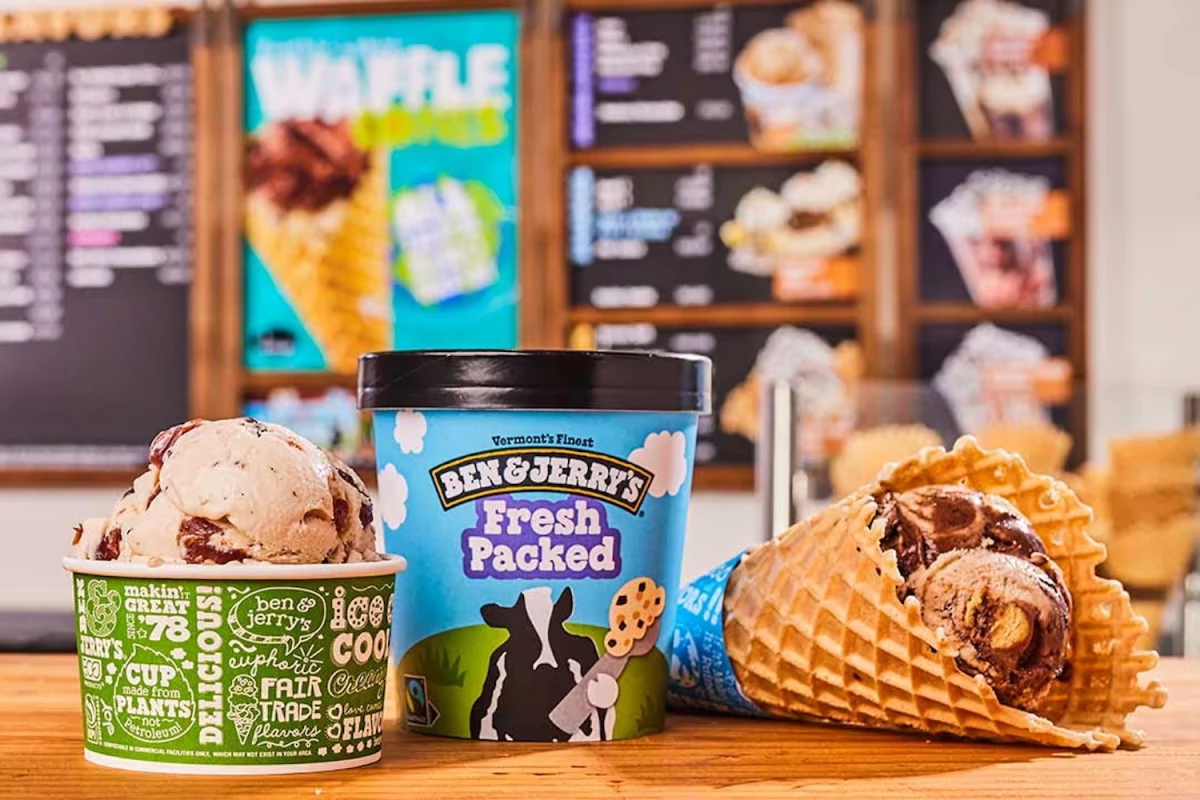
Ben & Jerry’s is facing its most significant identity test in nearly 50 years.
Co-founder Jerry Greenfield stepped away from the company in September, citing concerns that its social mission was losing protection under corporate oversight.
His departure follows escalating friction between the founders and the brand’s parent companies.
The tension began under Unilever and has continued with the newly spun-off Magnum Ice Cream Company (TMICC).
Ben Cohen, the brand’s other co-founder and its most visible spokesperson, told the BBC that Ben & Jerry’s “will be destroyed as a brand if it remains with parent company Magnum.”
His warning highlights the widening disconnect between the brand’s activist identity and the priorities of its new corporate owner.
For decades, Ben & Jerry’s was celebrated as a rare example of a global brand that fused business with outspoken social activism.
Today, supporters say the structure protecting the mission is beginning to erode.
This incident exposes how vulnerable purpose-led brands can be when their long-term vision depends on owners whose incentives follow a very different timeline.
Questions Around Who Sets the Brand Direction
Greenfield’s resignation marked a pivotal moment, leaving Cohen as the sole founder still involved in public advocacy.
The conflict escalated again last month when Magnum declared that Anuradha Mittal, chair of Ben & Jerry’s independent board since 2018, “no longer meets the criteria to serve.”
Mittal replied that the company was attempting to discredit her by undermining the board.
Unilever’s ice cream business has said Ben & Jerry’s chair Anuradha Mittal 'no longer meets the criteria' to serve in her role. It did not disclose why https://t.co/kAaZuK8IHcpic.twitter.com/mSyJaohW1A
— Financial Times (@FT) November 5, 2025
Cohen criticized Magnum’s move, saying the company “has no standing to determine who the chair of the independent board should be.”
He also added that Magnum is “not fit to own Ben & Jerry’s.”
With Greenfield gone and the board’s authority under pressure, the brand’s guardrails have weakened, raising new doubts about whether its mission can endure.
Irreconcilable Priorities
The governance battle unfolds amid major structural change.
On Monday, Magnum began trading as a standalone company after its spin-off from Unilever, becoming the world’s largest independent ice cream business.
This places Ben & Jerry’s inside a company now accountable only to its own commercial targets.
It also effectively removes the broader Unilever framework that once balanced profit with protections for the brand’s mission.
The NYSE welcomes The Magnum Ice Cream Company to celebrate its debut as an independent, publicly listed company on NYSE! $MICC@MagnumIceCream | #LifeTastesBetterWithIceCreamhttps://t.co/aCKYo4eCtt
— NYSE 🏛 (@NYSE) December 10, 2025
Cohen argues the company is already drifting from Ben & Jerry’s original purpose and risks reducing the brand to what he called “just another piece of frozen mush.”
For a brand built on emotional loyalty, this risk stretches far beyond financial performance.
And this concern surfaces as the ice-cream division continues to operate steadily, even as questions grow about Ben & Jerry’s long-term direction.
Ben & Jerry’s now faces several serious threats to its brand equity:
- Loss of credibility among values-driven consumers who expect outspoken commitments
- Erosion of trust if governance decisions diminish the independent board’s authority
- Weakening of its activist legacy, a defining asset in a crowded category
The dispute also threatens the internal clarity that allowed the brand to act quickly on issues, a capability competitors have rarely matched.
Our Take: Can a Legacy of Activism Survive Corporate Pressure?
I believe it comes down to whether the company keeps the mechanisms that once gave the brand room to act on its principles.
With one founder gone and the other deeply critical of current corporate governance, the conditions that supported that mission are already strained.
It now depends on transparent governance, steady values, and a board structure that can operate with real autonomy.
If these elements fade, the brand risks losing the purpose that distinguished it long before corporate ownership changed.
Read more about Unilever’s ice-cream spin-off and its plan for up to 7,500 job cuts.
A legacy holds only if the brand stays true to itself.
These top branding agencies build frameworks that keep values intact during periods of transition.