
Competing for Marketing Attention: Key Findings
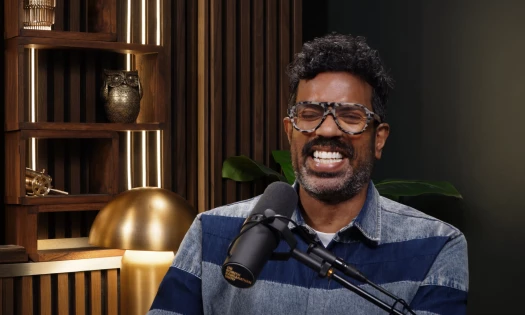
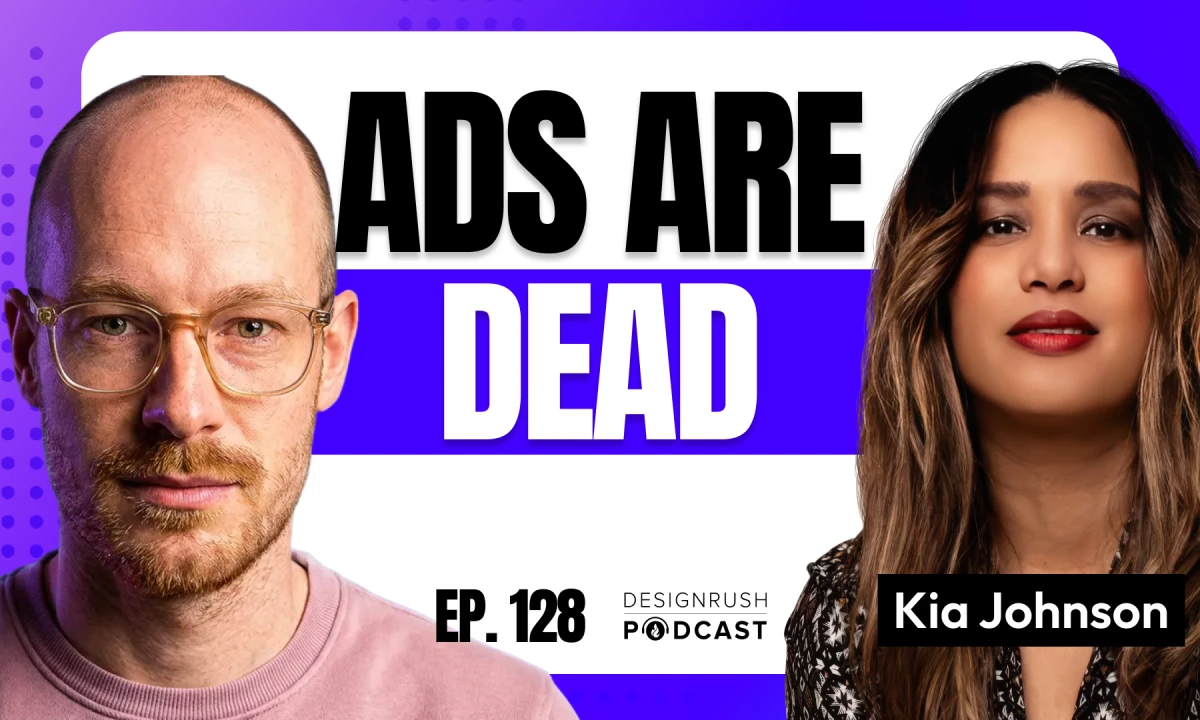
- Favoured CEO and Co-Founder Andy Willers joins the DesignRush Podcast to unpack why attention is a scarce resource brands must compete for.
- Willers argues that viral moments are short-lived performance spikes that fail to drive growth without a clear plan for what happens next.
- Brands should not choose between entertainment and performance, but instead, integrate both to turn attention into revenue.
Today’s marketers have more tools than ever to capture attention.
But with so many players vying for that attention, turning views into revenue often isn't easy.
“Even Netflix is competing with creators and influencers and platforms because they all want one finite resource, which is time. You know, people have only got so much time, right?” says Andy Willers, co-founder and CEO of Favoured, a performance-led growth agency.
The limited time is what brands must compete for. But how can they come out on top?
In Episode No. 128 of the DesignRush Podcast, Willers explores whether marketing is truly becoming entertainment.
He also explains why garnering attention is not a complete strategy for sustainable growth.
Willers also covers:
- Competing for the same minutes as creators and streaming platforms in an attention-first market
- Why viral spikes rarely sustain growth without a clear plan for what happens after the click
- How entertainment and performance work together to turn attention into measurable revenue
Watch the full podcast episode now on YouTube or listen on Spotify.

Who Is Andy Willers?
Andy Willers is Co-Founder and CEO of Favoured, a growth marketing agency focused on scaling brands through performance strategy and creative testing.
His work centers on turning brand storytelling into measurable growth.
Under his leadership, Favoured works with global consumer brands and high-growth startups across ecommerce, technology, and consumer markets. Clients include Durex, Snapfish, and Snag Tights, combining creative campaigns with clear commercial results.
Everyone Is Competing for the Same Finite Resource
That resource, according to Willers, is time.
This means the platform isn't the issue. Instead, the goal is to lock in engaged users and get them to stay.
Willers points to Netflix as an example:
“If you're Netflix, your financial standing relies on how many minutes people view your content for," he says.
"And if people are spending more time on TikTok watching content creators, that's a threat to the Netflix model.”
In reality, Netflix isn't worried about impressions.
Instead, the platform's concerned with minutes watched.
“They're all competing against each other really, because content creators want your views and Netflix wants your views and Duolingo wants your views and you know, all that kind of stuff."
"So they're all competing for the same thing.”
For marketers, that changes the framing. The real competition is not the brand in the next ad slot. It is anything that holds attention longer.
Minutes Matter More Than Impressions
For Willers, this is not a surface change.
“I think when it comes to entertainment, you got to think it's not so much a clean shift what's happened over the last decade or more," Willers says.
"I think it's more of a forced evolution."
On platforms like TikTok and Instagram, people scroll because they want to be there.
“And that's what people want when they're on these platforms. They want to be entertained and they don't want to be sold to," Willers says.
That changes how brands should show up.
“It’s not an ad spot on TV where they've got 30 seconds to sell a proposition because people are forced to sit there and watch it in between a program they're watching.”
On social platforms, attention is earned, not guaranteed. Brands that perform well understand this.
“Brands have had to become more like creators than advertisers because the brands that winning these days on social actually have a personality," Willers says.
"It's not just a faceless corporation. They need to have a voice. They need to have a sense of humor.”
This is less about chasing trends and more about building presence in environments designed for entertainment.
Why Viral Isn’t a Growth Plan
Reach can spike overnight. Revenue usually does not.
“I think I bring it back to that viral moment. If you can trigger a viral moment, it's a spark, but it's not a long-term strategy," Willers says.
High view counts can create the impression of success.
“A million views or a hundred million views doesn't always equal conversions," he adds.
This is where many brands go wrong.
When they strike gold on a viral moment and performance spikes, they aren't prepared.
As a result, they can't sustain the growth, and it fades away quickly.
How do you keep the boost going? You need to have a plan.
“They have the right setup to capitalize on that attention. They've got the right automated email flows… they've got the ability to continue that conversation off social," Willers says.
The difference comes down to whether a brand is ready to act on that attention.
Not Every Trend Fits the Brand
Going viral is not the same as building a brand.
Willers says trends aren’t for every brand, and brands shouldn’t jump on them blindly.
“I think a brand can't just jump on a trend just because it's trending. It has to fit in a relevant perspective with their brand and how their brand fits into it," he says.
So how do you choose which trends are worth chasing?
It depends on the brand, what it stands for, and how it wants to be perceived.
It also matters whether the trend reinforces that position rather than distracts from it.
Cultural Relevance Requires Speed
Brands also have an interesting, unique point of view.
“You have to have a point of view. You can't just be bland,” Willers says.
On top of this, brands have to move fast.
Why? Having a point of view is not enough if it takes too long to act on it.
“The conversation will have moved on by the time you made the piece of content,” Willer adds.
If content sits in approval loops or waits on sign-off, the moment passes. By the time it goes live, it no longer feels relevant.
This is where structure and agility intersect.
Teams that cannot move fast enough miss the moment entirely.
And the same rules apply to brands that are not B2C:
“B2B are still talking to people, and people like content," Willers say.
"A B2B sales approach is still talking to a real human being who's got to engage with your product or service and buy it at the end of the day."
So, yes. It's a different category, but the same psychology.
“Just 'cause you are a B2B buyer, it still means you have a sense of humor. It still means you want to be part of the conversation," he adds.
For niche markets, Willers says this can even be an advantage.
“You've almost got a micro community there. How can you build on the fact that all the 10,000 people that you're trying to speak to share something in common?”
The audience may be smaller, but the expectation is the same.
“The content should give back as much as it demands from people," Willers says.
This same principle applies in B2B, where content that feels like an experience stands out:
The Choice Isn’t Between Entertainment and Value
So, which matters more, entertainment or clearly communicating value?
Willers rejects either as absolutes.
“I think ultimately it's both, right? The winners will be the brands that do both simultaneously,” Willers says.
“It's almost like entertainment can be the delivery mechanism for value communication,” he adds.
And with that in mind, attention is only the beginning.
“If you can't communicate the value post that, or you can't capitalize on the views that the entertainment brings, then you're not going to convert that attention into ultimate company value, which is revenue,” Willers says.
His point?
Entertainment may drive the first click, but what happens next determines whether that interest leads anywhere.
“You've got to make sure that you've got the right email flows, the right landing pages, the right ongoing social strategy,” Willers adds.
Once you start thinking this way with every aspect of your strategy, you'll level the playing field.
And it’s how brands compete for the same time people might otherwise spend on major streaming platforms, such as Netflix.
Don’t miss the full episode!
Watch now on YouTube or listen on Spotify.