

Async Work Key Findings:
- Start building an asynchronous culture from day one. Retrofitting async onto traditional office workflows creates friction that compounds as you scale.
- Meetings should serve decisions, not status updates. Treat them as high-signal moments, not default habits.
- Hire for autonomy. Exceptional people don’t need to be managed closely, and async cultures thrive when trust replaces control.
68% of employees say they don’t have enough uninterrupted focus time, according to Microsoft’s 2023 Work Trend Index.
And business leaders cite inefficient meetings as one of the biggest barriers to productivity.
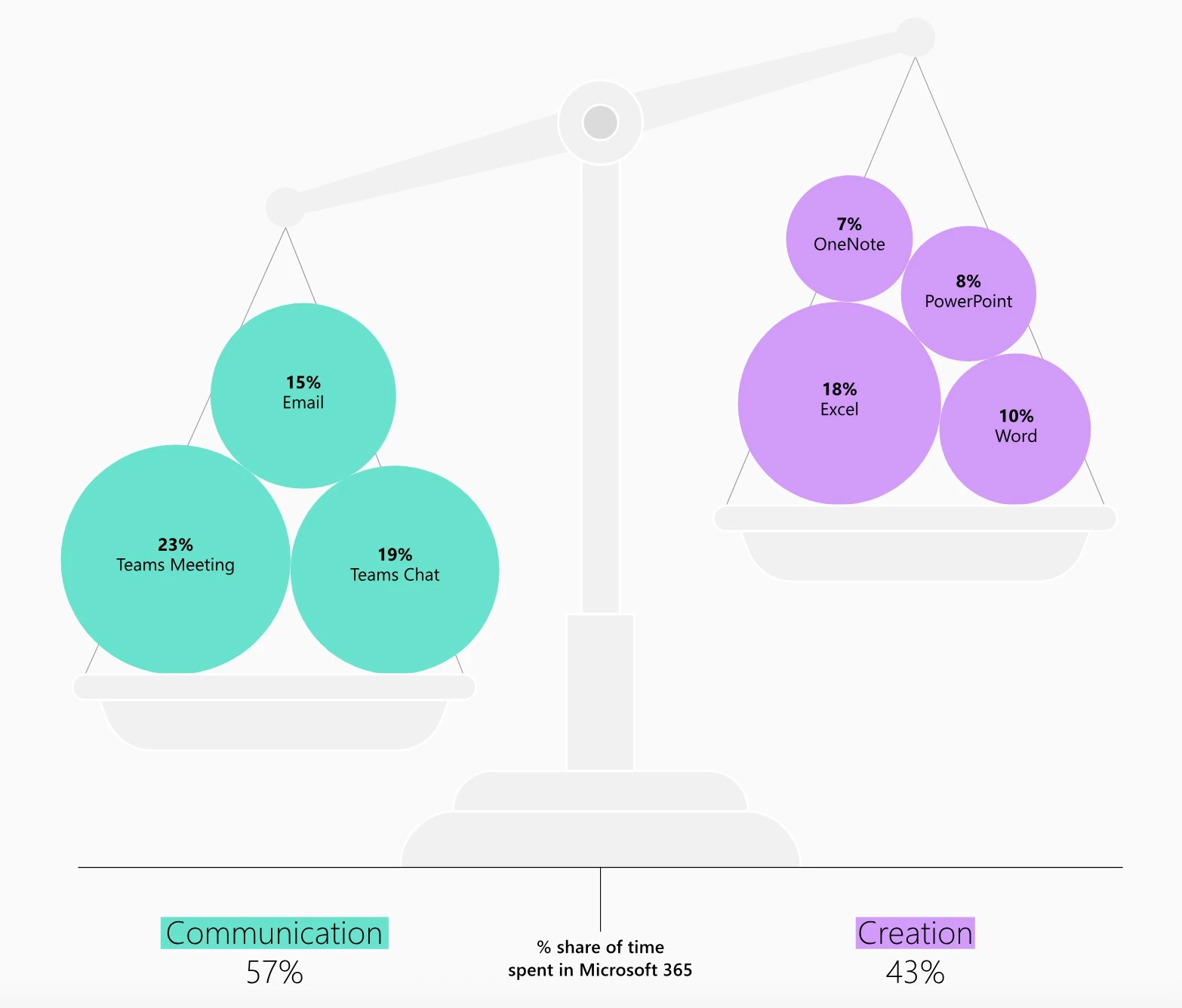
Despite this, many B2B teams still rely on meeting-heavy workflows designed for office environments, not today’s hybrid and global work realities.
Sync Labs, an AI company working at the intersection of video and workplace collaboration, has built its entire model around asynchronous work.
Backed by Y Combinator and Google, the team operates across time zones without relying on constant syncs and shares what they’ve learned about scaling with speed, clarity, and fewer meetings.
I spoke with Founder and CEO Prady Modukuru about the most common mistakes teams make when shifting to async workflows, what’s at stake if they don’t adapt, and how modern teams can build processes that actually work.

Who is Prady Modukuru?
Prady Modukuru is the co-founder and CEO of Sync. Before launching Sync, he led applied machine learning efforts at Microsoft Security, where he helped scale a real-time threat detection engine into a $350M ARR business. He’s also built and shipped products at companies like Cisco, GE, and IBM. At Sync, Prady is focused on building state-of-the-art tools for generating and editing humans in video while proving that asynchronous work cultures can outpace traditional team structures.
Many of the problems teams encounter when trying to shift to async work stem from three common mistakes:
- Replicating traditional office structures in a remote or hybrid setting
- Letting meetings become the default way to collaborate
- Assuming remote workers need more oversight to stay productive
To avoid these traps, Prady recommends three principles to operate successfully across time zones without slowing down:
- Adopt async workflows from the ground up, not as an afterthought
- Use meetings strictly to make informed decisions
- Hire for ownership, not oversight
1. Build Async Into Your Culture From Day One or Risk Slowing Down at Scale
Many companies struggle with async because they try to layer it onto existing in-office systems, but without rethinking how people communicate and execute, those efforts often backfire.
"It's really hard to go from a full IRL team to a remote one. If you start as hybrid/remote from day [one], you establish a culture and systems (and more importantly attract the right people) that simply work when you are async,” Prady says.
Without that foundation, teams tend to default back to meetings, pings, and fragmented communication, which only gets worse as you scale.
Sync avoided this trap by designing for async from the beginning. That clarity of intent is what enables the team to operate globally and continuously.
"We have a team that works 24/7 around the clock, executing while the other side dreams. It's great, hard to maintain, but a very powerful advantage that we've built,” Prady shares.
The risk of not doing this?
Every new hire, timezone, or product sprint adds friction, and async becomes chaotic instead of empowering.
The companies that get it right start with async principles baked into their workflows, tools, and culture, not patched on after the fact.
2. Use Meetings Only to Make Decisions, Not to Feel Busy
One of the biggest blockers to effective async work isn’t the absence of meetings — it’s having too many of the wrong kind.
When teams rely on meetings for updates, alignment, or “just in case” conversations, productivity suffers and decision-making slows.
Async doesn’t mean no meetings. It means meetings should earn their place on the calendar.
"Lots of meetings suck, unless the meetings are run well. If they are used simply to make informed decisions then all of a sudden every meeting forces your company/product forwards,” Prady says.
At Sync, the only meetings that happen are ones that directly move the product forward.
Everything else happens in structured, asynchronous systems that scale better across time zones.
"If meetings that suck are called out to suck, we tend to schedule fewer of them. I'd like to believe organizations self-correct if the culture is set up right."
The key is intent. A meeting isn’t inherently bad, but using them as your default mode of collaboration in a distributed team creates drag.
3. Hire for Ownership
A common misconception about async work is that remote employees need to be closely managed to stay productive.
This belief often leads to unnecessary oversight, micromanagement, and ultimately, underperformance.
But Prady is clear that the issue isn’t the format; it’s who you hire.
They say people who want to work remotely are lazy and need to be micromanaged, but that mindset, he says, misses the point entirely.
"The game of hiring is always about finding the most exceptional person, and exceptional people are self-managing regardless of whether they're in person or not."
Async work doesn’t fail because people aren’t in meetings.
It fails when teams hire for control instead of capability, and create environments where trust isn’t the default.
To avoid this, companies should hire people who:
- thrive on autonomy
- build for scale
- don’t need calendar babysitting to do their best work
The result is a lean team that moves fast and delivers consistently, not because they’re being watched, but because they’re trusted to deliver.
Async Work is How Modern Teams Scale
As companies grow, the gap between how they work and what they need to achieve becomes harder to ignore.
Relying on constant meetings, fragmented communication, and legacy workflows simply doesn’t scale, especially across time zones and distributed teams.
That’s why async-first practices are no longer just a nice-to-have. They’re becoming essential infrastructure for fast-moving, AI-native teams.
Sync’s approach shows what’s possible:
- A 24/7 operating rhythm without burnout
- Fewer meetings, but better decisions
- A team culture built on trust, not micromanagement
And Prady says the metrics for assessing effectives are simple.
"Are you hitting deadlines? Ask them, honestly."
Async work is about working smarter, with fewer blockers and more focus.
The teams that embrace it early are already seeing the benefits: faster execution, better collaboration, and the ability to scale without adding chaos.
The question for B2B leaders isn’t if async will reshape how high-performing teams work.
It’s how soon they’re willing to adapt.


-preview-webp.webp)