
Apple's March 2026 Launches: Key Findings
- The tech giant launched the iPhone 17e and iPad Air M4, opening a three-day product stretch with MacBook announcements still expected.
- The iPhone 17e doubles base storage to 256GB and adds MagSafe at the same $599 price as its predecessor.
- The iPad Air upgrades from M3 to M4 at the same starting price, with roughly half of holiday buyers being first-time iPad customers.
Apple opened its biggest product week of the year on March 2 with two new devices, the iPhone 17e and a refreshed iPad Air powered by M4.
More announcements are expected this week, with MacBook Air M5 and MacBook Pro M5 Pro and M5 Max models, plus a lower-cost MacBook, likely on the agenda.
Apple is holding a media experience in New York, London, and Shanghai on March 4, where journalists will get hands-on time with the new products.
Pre-orders for both March 2-unveiled devices open March 4, with in-store availability starting March 11.
This week's announcements are likely to affect audience reach estimates, creative specs, and on-device capability assumptions.
iPhone 17e Adds MagSafe at No Extra Cost
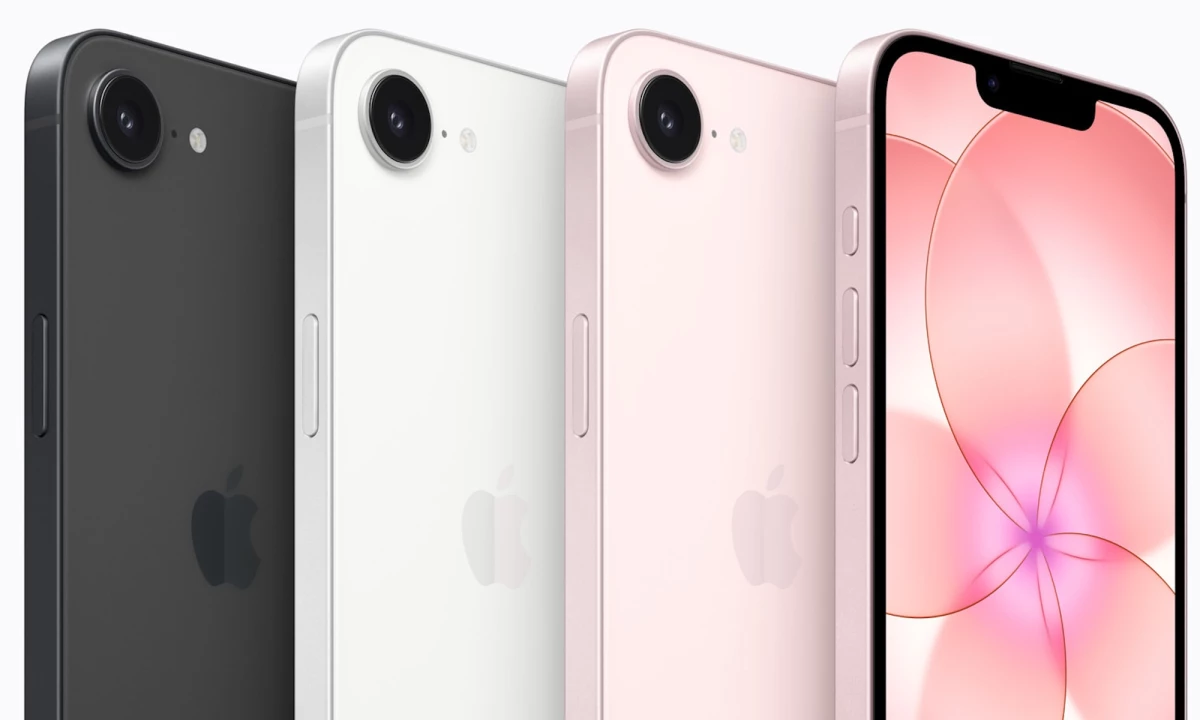
The iPhone 17e keeps the same 6.1-inch display and $599 starting price as the iPhone 16e, but brings meaningful hardware upgrades across the board.
Base storage doubles from 128GB to 256GB, while the A19 chip replaces the A16.
And for the first time on an entry-level iPhone, the device supports MagSafe wireless charging at up to 15W.
A 48MP fusion camera supports an optical-quality 2x telephoto and portrait mode, which automatically detects people, dogs, and cats, and saves depth data for post-capture edits.
Available in black, white, and soft pink, the phone represents Apple's most feature-complete entry-level device yet.
iPad Air M4 Keeps Its Price, Gains More Speed
The new iPad Air starts at $599 for the 11-inch model and $799 for the 13-inch.
It also swaps the M3 chip for M4, which Apple says delivers up to 30% faster performance.
Memory gets a 50% bump over the previous generation.
The M4 chip's Neural Engine is also faster, making the tablet more capable for on-device Apple Intelligence tasks.
CNBC noted that roughly half of iPad buyers during Apple's last holiday quarter were first-time customers.
This suggests strong category momentum that Apple is sustaining with chip updates instead of redesigns.
The iPad Air M4 is now a more capable creative and productivity device at the same price point that brands and agencies already budget for.
Both devices also follow predecessors that performed well at their respective price points, showing why Apple had little reason to change the formula.
Apple’s latest hardware rollout creates a few practical planning signals:
- Premium features broaden reach. Entry pricing now includes capabilities once reserved for higher tiers.
- First-time buyers justify device-specific creative. Continued adoption supports investment outside phone-only formats.
- Stronger on-device processing raises expectations. Faster local intelligence enables richer in-app experiences.
Hardware updates move fast, and campaign specs should reflect the devices people are actually holding this year.
Our Take: Does Any of This Move the Needle for Marketers?
We think the iPhone 17e is the announcement with the clearest implications for brands.
MagSafe on an entry-level device widens the audience for accessory campaigns, point-of-sale tap interactions, and any activation built around Apple's magnetic ecosystem.
The iPad Air M4 matters more for agencies than for consumer campaigns.
Faster on-device processing and better Apple Intelligence support make it a more practical production and creative tool for teams that work in the field.
We think the products confirmed so far suggest Apple is prioritizing accessibility and performance continuity over hardware reinvention.
Brands integrating Apple hardware into campaigns, retail activations, or agency workflows need partners that understand the full Apple ecosystem.
Check out the top app development agencies in our directory.