

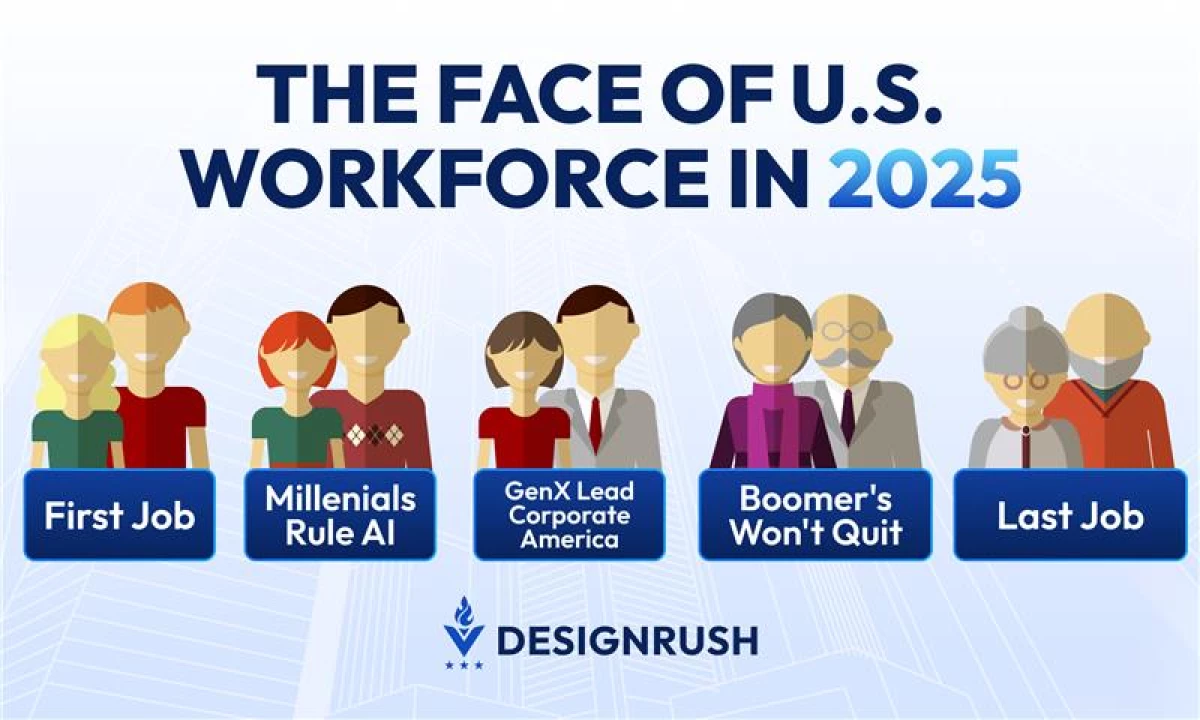

Key Findings:
- Cashier is the #1 first job in America, employing 1.28 million workers aged 16–24.
- Retail Salesperson is both a top first and last job, with 739,000 Gen Z and 627,000 older workers (55+).
- Teen labor force participation has dropped to 56.3%, the lowest in decades — yet over 4 million young Americans are employed in just five core jobs.
In April 2025, only 56.3% of Americans aged 16 to 24 were in the labor force, the lowest in years. That’s a steep drop from over 65% in the early 2000s.
This shift reflects changing priorities among Gen Z: more are staying in school longer, working online, or delaying traditional employment.
Still, millions of young Americans are working.
To understand where, DesignRush analyzed new BLS data to find the top five jobs for workers aged 16–24, and how these roles are evolving.
Top 5 First Jobs for Young Americans
-(1)-content-large-webp.webp "America's Most Popular First Job")
Explore the full dataset here.
This section covers the country's youngest workforce aged 16-24 years.
These are the most popular jobs for people starting their careers in 2025.
1. Cashiers
Total Employed: 1,283,000
Cashier is the most common first job in the U.S. It’s flexible, easy to get, and works well for students. But the role is shrinking fast.
Stores are moving to self-checkout and automation. Over the next decade, 355,000 cashier jobs are expected to disappear, an 11% drop by 2033. It remains a key entry point — but may not be one for much longer.
2. Waiters and Waitresses
Total Employed: 877,000
Waitstaff jobs remain a popular first step into the workforce. More than 877,000 young Americans are serving tables in 2025, according to DesignRush’s analysis of BLS data.
The national median wage is $31,940, but pay varies significantly. In states like Vermont ($60,200) and Washington ($57,960), tips and demand drive earnings much higher. Flexible hours and the potential for cash tips keep this job attractive.
3. Retail Salespersons
Total Employed: 739,000
Retail jobs are where many Gen Z workers first interact with customers, learn to use POS systems, and handle real-time problem-solving.
DesignRush also found that retail is one of the most common last jobs. 627,000 older Americans (age 55+) are working in retail, too.
But retail is changing. Despite America’s retail boom, 1,800 jobs were lost in April 2025, and unemployment in retail rose to 865,000, up from 725,000 a year earlier.
4. Customer Service Representatives
Total Employed: 621,000
Over 620,000 young Americans are working in customer service in 2025. DesignRush data shows it remains one of Gen Z's top five first jobs, especially as more companies shift support roles online.
But the future may be less secure. The field is expected to shrink by 5.45% over the next 10 years, as AI and automation take over more tasks.
5. Cooks
Total Employed: 592,000
Cooking is still a common first job, with nearly 600,000 young workers in kitchens today.
Most start as line cooks, but some go on to become chefs, sous chefs, or kitchen managers. You usually need a high school diploma, and training or certification (like ServSafe) can help you grow in the field.
What This Means for Employers and Policy
- Entry-level jobs still matter. Despite declining teen labor rates, millions of young Americans are entering the workforce through just a handful of key roles.
- The top jobs — cashier, waiter, retail — are evolving fast. Employers in these sectors will need to adapt training, technology, and retention strategies to engage Gen Z workers.
- For policymakers and workforce planners, understanding these participation trends is essential for shaping youth employment programs, vocational training, and education-to-career pipelines.
Methodology
Data is based on the U.S. Bureau of Labor Statistics (BLS) Current Population Survey (CPS) 2024 annual averages (Table 11b: Employed persons by detailed occupation and age).
- We analyzed jobs held by workers aged 16–24
- Additional labor force and wage data from the Federal Reserve, U.S. News, OysterLink, and Data USA
- Occupations were ranked by total youth employment and categorized by age bands for broader workforce trend insights



-Stressful-States-for-Male-Employees-in-2024-V2---details-preview-webp.webp)
-preview-webp.webp)
-preview-webp.webp)
-preview-webp.webp)