
Amazon Fire TV Redesign: Key Findings
- The updated interface runs 20% to 30% faster on existing hardware after Amazon rebuilt the underlying software stack.
- More than 300 million Fire TV devices have been shipped globally, with smart TVs now being Amazon's fastest-growing segment.
- A Nutrafol campaign on Fire TV drove a 58% new-to-brand purchase rate, with return on ad spend between $1.63 and $2.97.
Amazon rolled out its most significant Fire TV interface redesign in five years this week.
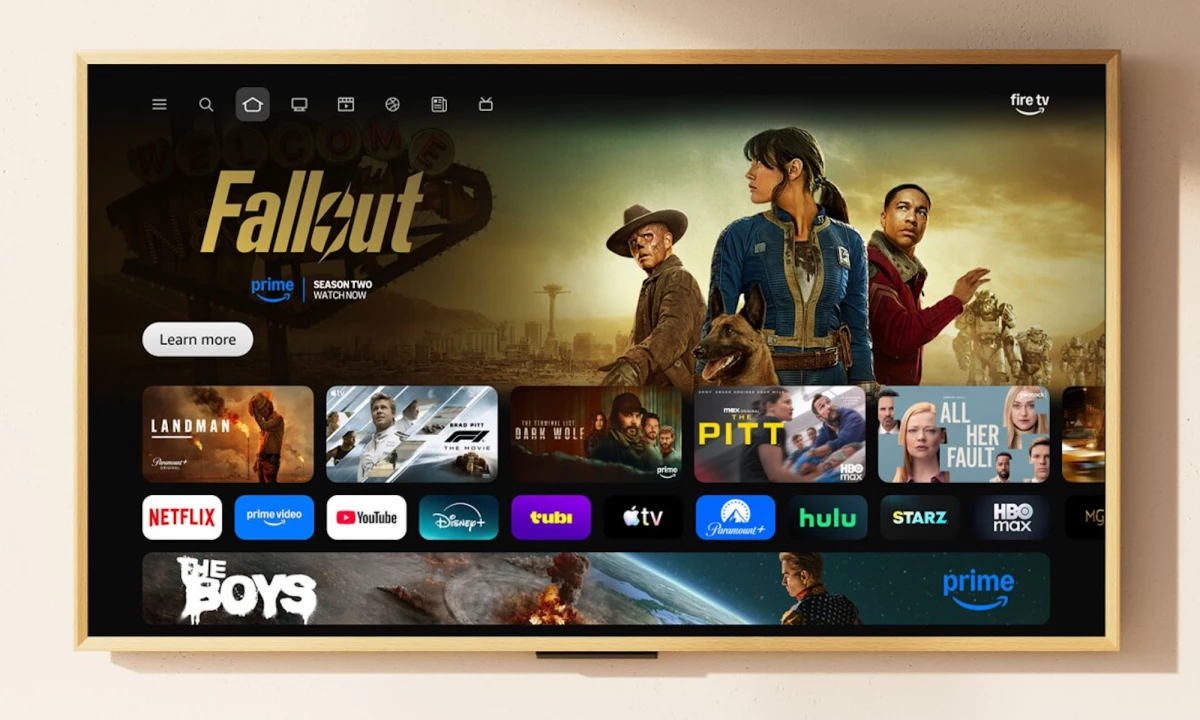
The new platform features faster navigation, a cleaner visual layout, and expanded advertising placements across its connected TV (CTV) platform.
The rollout started last week on the Fire TV Stick 4K Plus, Fire TV Stick 4K Max, and Fire TV Omni Mini-LED Series in the U.S., with broader availability expected this spring.
Amazon also rebuilt the Fire TV mobile app at the same time, adding full browsing and a synced watchlist to a product that used to do little more than serve as a backup remote.
Taken together, the two updates make clear that Amazon sees Fire TV as an ad-supported discovery platform, and the redesign is built around that commercial logic.
A Platform Built Around Discovery Speed
Amazon rebuilt the underlying software stack to speed up processes, squeezing 20% to 30% faster performance out of existing hardware with no upgrade required.
The goal, according to the company, is to help viewers find something to watch faster.
The new interface adds new personalized recommendation rows, a "continue watching" section, and fresh discovery feeds.
Navigation moves to a top bar with tabs for movies, TV shows, live content, and sports.
Recommendations also now pull from across all installed apps, and users can pin up to 20 of them to the home screen, up from six previously.
Smart TVs are now Fire TV's fastest-growing hardware segment, ahead of streaming sticks.
This puts Amazon's ad inventory inside the operating system of an expanding share of living room screens.
Advertising Placements Tied to Intent Moments
Ad placements run through the feature rotator, recommendation rows, and screensaver surfaces.
The placements are embedded in the browsing flow, showing up as viewers decide what to watch next.
Buyers can now purchase Fire TV inventory programmatically through Amazon's demand-side platform, folding it into the same campaign as Prime Video and other CTV buys.
U.S. CTV ad spend is projected to reach $36 billion in 2026, up from $28 billion in 2024, and Amazon's redesign positions Fire TV to capture a larger share of this growing pool.
The broader pitch rests on logged-in user data.
Amazon can connect viewing behavior to purchase history, giving advertisers a closed-loop attribution path that most platforms don't have access to.
For brands already running CTV ad campaigns on Prime Video, Fire TV inventory is now one DSP buy away.
A few things media buyers should keep in mind as this rolls out:
- Test programmatic Fire TV buys alongside Prime Video: Unified purchasing through Amazon's DSP lets advertisers measure incremental reach within a single campaign.
- Monitor the mobile app ad rollout: Ads are not yet in the companion app but may arrive, and early inventory could carry lower CPMs before demand builds.
- Treat smart TV growth as an inventory signal: Fire TV's expansion at the OS level puts the addressable audience well above the streaming stick install base.
The real opportunity for advertisers is using Fire TV to close the loop between streaming exposure and retail outcomes.
Our Take: Does a Faster UI Change Advertiser Behavior?
We think the UI improvements are real, and the faster navigation will genuinely help viewers.
However, the bigger story for advertisers is programmatic access to Fire TV inventory through Amazon's DSP.
If you're already running retail media programs on Amazon, there's now a cleaner path to extend that audience onto the TV screen without spending on a separate campaign.
At 300 million devices worldwide and with smart TVs now its growth engine, Amazon's CTV footprint is hard to ignore heading into 2026.
Connected TV campaigns require agencies that know how to plan across streaming, retail media, and device inventory simultaneously.
Explore the top media buying agencies in our directory.