
U.S. SaaS Market: Key Findings
- The global SaaS market is projected to reach $1.25T by 2034, signaling both a massive opportunity and intensifying competition.
- With over 30,800 SaaS companies worldwide, startups that validate ideas early through MVPs are more likely to survive and scale.
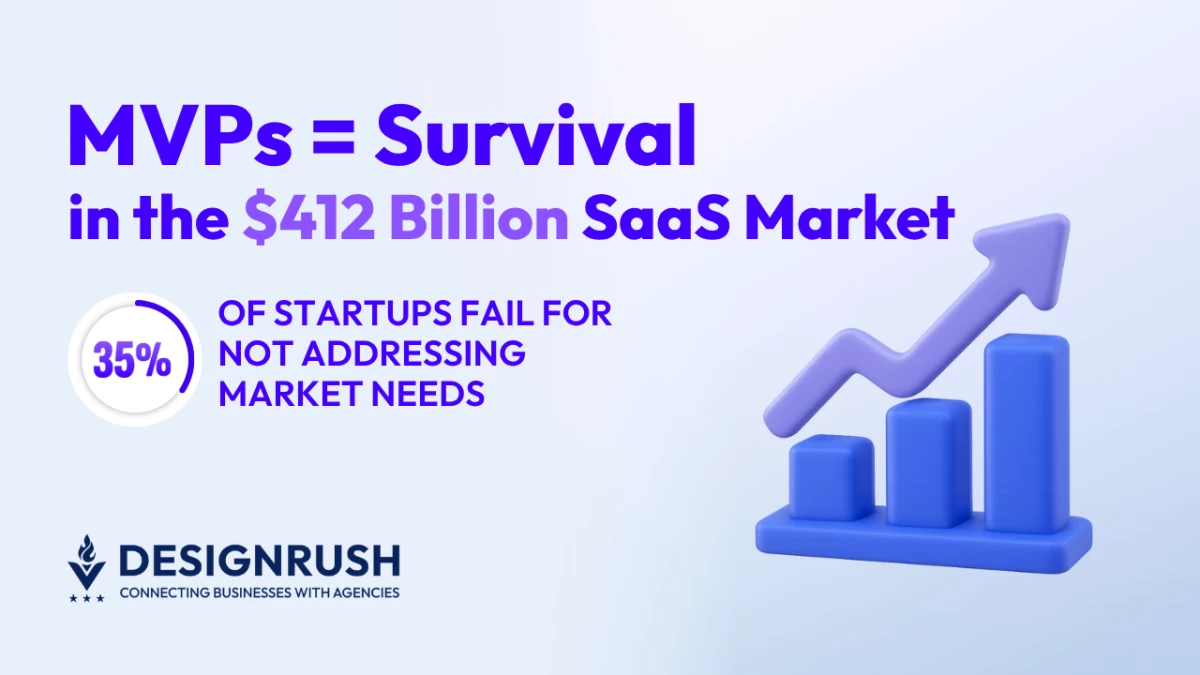
- 35% of startups fail because they do not address market needs, making MVPs the most effective starting point for sustainable SaaS growth.
It wasn’t too long ago that software was seen strictly as a product. Today, it’s the new operating system for how companies scale, hire, and serve customers.
And the numbers back this up.
According to statistics from Hostinger, the global SaaS market is expected to grow to $1.25T by 2034, with the U.S. SaaS market alone accounting for $412 billion of that total.
Growth at this scale is usually indicative of endless opportunities.
However, it can also signal upcoming saturation as more and more players enter the market in an attempt to get their share of the revenue.
In fact, the same Hostinger report showed that there are currently more than 30,800 SaaS companies competing for attention worldwide.
That number is only expected to grow exponentially.
View this post on Instagram
As such, agencies like Empat, which specialize in assisting SaaS startups, claim the next decade will not reward those who chase scale without proof.
“The SaaS race is no longer about who ships first. It’s about who learns faster, who has the discipline to test, validate, and iterate before launching."
"In other words, MVPs that validate real demand early are now the strongest predictors of sustainable growth,” said Dmytro Naumenko, Chief Business Development Officer at Empat.
Why MVPs Are the SaaS Startup’s Best Friend
“Speed to launch” has long been the goal of tech and SaaS startups. However, it’s now “speed to feedback” that will determine which startups will succeed.
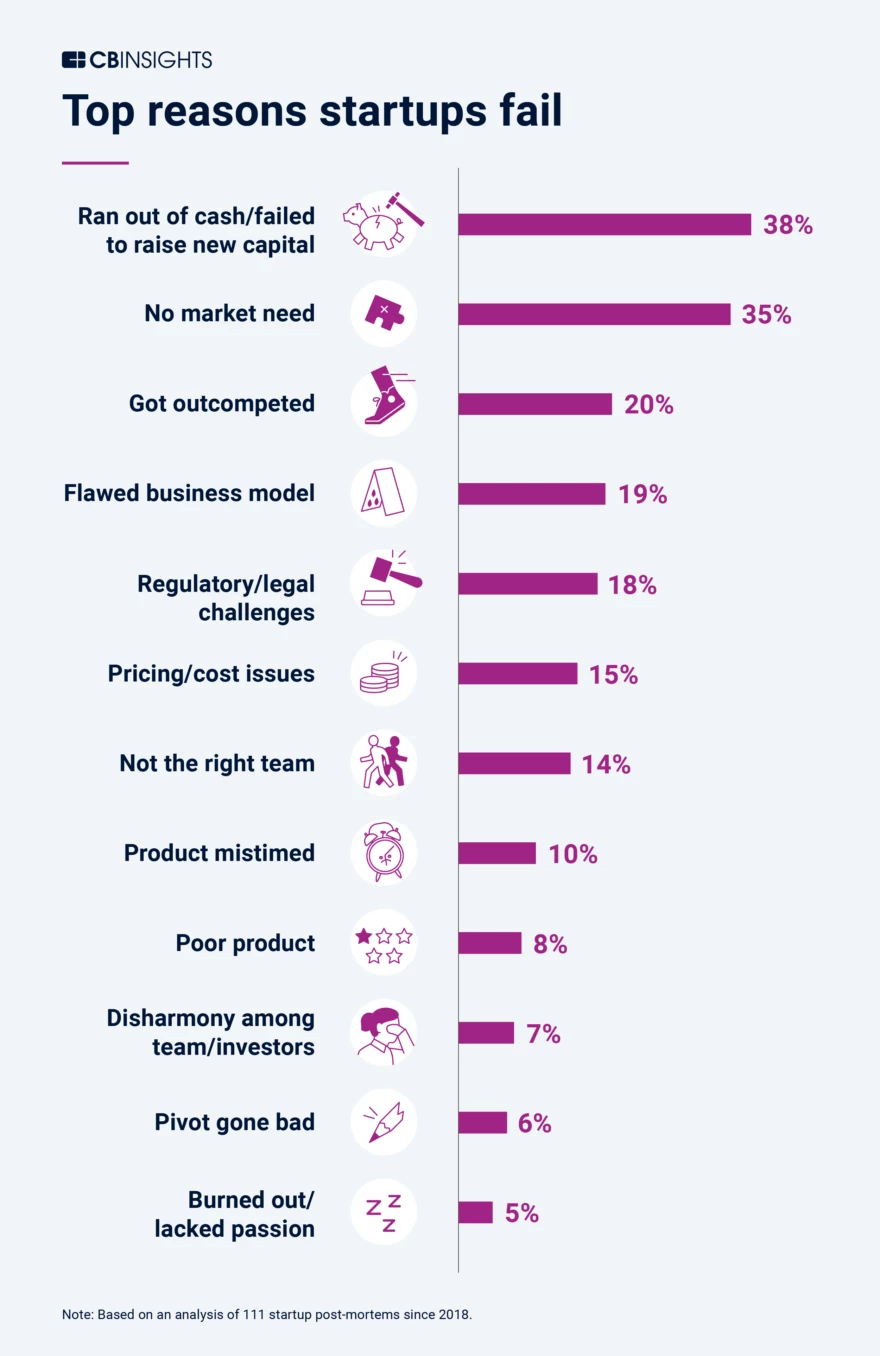
According to a CB Insights report, 35% of startups fail because they never addressed a market need. This is also the 2nd most common reason startups fail, trailing only capital and cash flow issues.
It’s easy to think that the failure to address market needs is due to poor tech/software. But the truth is, many of these issues stem from having built the software in isolation.
This is why many experts encourage SaaS startups to begin their journeys by building a minimum viable product (MVP).
An MVP is a trimmed-down version of a product that offers a small, core set of features. It’s designed to function as a learning engine that:
- Validates market demand before costly scale-ups
- Collects feedback from real users for new iterations
- Reduces risk exposure by surfacing flawed assumptions early
- Attracts investors with data-backed traction instead of optimistic projections
In other words, it’s a test that answers an important question: Does the market actually want this?
Startups that skip this step often end up scaling unproven ideas, which can easily lead to many of the leading reasons why startups fail, as reported by CB Insights.
Build the Perfect MVP
Creating an MVP is not about speed or minimalism. It’s about creating a compass that guides the clarity, discipline, and direction of a SaaS startup.
View this post on Instagram
To build the perfect MVP, SaaS founders should:
1. Craft a Sharp Problem Statement
SaaS founders should clearly know what specific problem their software is solving well before a single line of code is written.
That’s because every feature, interface, and metric for the MVP should point back to that one issue.
Broad value propositions slow learning and blur validation. A sharp problem statement forces teams to adopt the kind of focus that builds better products.
2. Define Success Metrics Before Building
An MVP should function like an experiment. If success cannot be measured, the test is already flawed.
Define activation, retention, and conversion goals early. A founder who measures learning knows whether progress is real or just busywork.
3. Choose Only The Essentials
It’s easy to fall into the trap of thinking every feature or UX/UI element is “essential.”
Starting with a problem statement and defining success metrics are key to avoiding this, allowing you to clearly identify which features address both.
After all, a smaller, sharper feature set delivers more usable feedback and faster validation.
4. Iterate Based on Data, Not Opinions
Never forget that it’s not about what your team thinks matters. Your MVP should be about what real users think. And the best way to identify that is to listen to feedback.
After users test the MVP, teams should go through the feedback and pit it against their identified success metrics. Likewise, study where they click, where they drop off, and which features keep them coming back.
All of this information is vital for when you reiterate the MVP for future testing.
Turn Validation Into an Advantage
The next decade of SaaS will not belong to those who raise the biggest rounds or hire the fastest. It will belong to those who can prove their ideas deserve to grow.
Because in SaaS development, the flashiest idea rarely wins. The ones that listen to and address the pain points of its future users do.