
The Best Brand Battles: Key Points
- Samsung vs. Apple proves humor makes rivalries unforgettable, with ads like “Growing Up” driving tens of millions of views and reinforcing Galaxy’s edge.
- Pepsi vs. Coca-Cola shows quick wit can move markets, with a 2025 taste test in Coke’s hometown boosting Pepsi Zero Sugar sales by 25%.
- Domino’s vs. Subway highlights how playful competition builds loyalty, as burning Subway’s cease-and-desist turned a legal fight into a marketing hit.
Everyone knows that humor sells, and it has become a powerful tool for brands to engage, entertain, and outshine their competitors.
In a 2022 Oracle survey of more than 12,000 consumers across 14 countries, 80% said they are more likely to buy again and recommend brands that make them laugh.
Even more striking, 91% preferred brands to be funny, and 88% actively seek experiences that make them laugh.
A 2016 James Allen commercial showed this in action, using humor to draw over 3 million views on YouTube and Facebook and boosting website traffic by 270%.
Despite results like these, few companies consistently use humor, giving those that do a rare chance to stand out and be remembered.
Brand battles take this a step further. Cheeky jabs and cultural callouts sharpen a brand’s personality.
And when paired with humor, they create marketing that captures attention and shifts perception.
Here are eight standout rivalries that show how brands use wit and boldness.
Samsung vs. Apple: The Tech Titans' Tussle
Samsung's "Growing Up" ad mercilessly mocked the shortcomings of Apple's iPhone while highlighting the benefits of the Galaxy Smartphone.
It became the most-watched commercial on YouTube in November 2017 with 23.9 million views.
This enduring rivalry, marked by comical yet ruthless campaigns, illustrates the power of humor in accentuating product strengths and consumer preferences.
Over the years, Samsung has repeatedly poked fun at iPhone users waiting in long lines or dealing with missing features.
It's a tactic that resonates with consumers who want to feel like they're on the winning side of innovation.
Pepsi vs. Coca-Cola: The Cola Clash
Pepsi’s Halloween ad cleverly dressed a Pepsi can in a Coca-Cola-like cape, delivering a playful yet competitive message.
This ad symbolized the ongoing soda skirmish, emphasizing the effectiveness of humor in engaging consumers and sparking viral conversations.
When Pepsi parodies Coke’s campaigns, it positions itself as the daring challenger, forcing the latter to defend its crown while generating buzz for both.
Just last May, Pepsi challenged Coke in its hometown of Atlanta with a taste test, boosting sales by 25% for Zero Sugar early in the campaign.
BMW vs. Audi: The Billboard Brawl
BMW and Audi's billboard war exemplified the use of outdoor advertising as a battleground.
It started with Audi’s "Your Move, BMW" and escalated to BMW’s "Checkmate" billboard and "Game Over" blimp.
This humorous exchange showcased the brands' creativity and competitive spirit.
The spectacle exploded online as people shared photos worldwide, multiplying the exposure.
By turning a single billboard into a global talking point, both brands demonstrated how witty rivalry can stretch advertising dollars further than traditional ads.
DHL vs. FedEx & UPS: The Delivery Duel
DHL's "Fed up" campaign took a humorous dig at FedEx and UPS, and FedEx’s painted van response showcased wit and agility.
This exchange underscored the significance of humor in differentiating services in a competitive industry, but DHL's creativity didn't end here.
In another stunt, DHL used heat-reactive boxes that looked plain black when cold but revealed the message “DHL IS FASTER” once delivered by competitors.
The trick made rival networks accidental promoters and earned viral attention, showing how clever formats can carry humor into the customer experience.
Mercedes-Benz vs. Jaguar: The Luxury Car Confrontation
Jaguar's "Jaguar vs. Chicken" ad humorously countered Mercedes-Benz's campaign, using "cat-like reflexes" to highlight product features.
This rivalry demonstrates how luxury brands use humor to enhance their appeal and engage with a broader audience.
Mercedes’ original chicken ad reached millions online, and Jaguar’s parody doubled the entertainment value.
The playful tone also made premium cars feel more accessible, showing that humor can cut through even in high-end markets.
Burger King vs. McDonald's vs. Subway: The Fast-Food Fracas
Burger King's use of AI to challenge McDonald's "most iconic burger" claim exemplifies the use of humor in fast food advertising, highlighting the brands' quick adaptability and wit.
However, Subway used the opportunity to segway (see what we did there?) their own ChatGPT take, which placed them at #1 in the battle of the sandwiches.
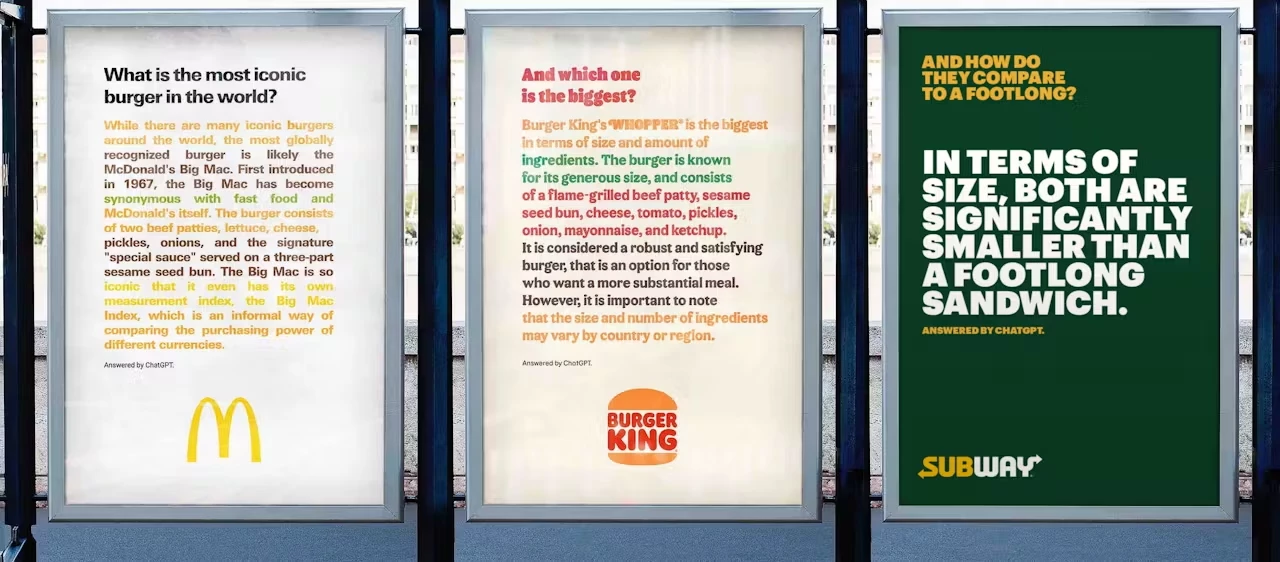
The entire exchange went viral, reinforcing how fast-food brands thrive when they act quickly and boldly in cultural conversations.
This fight shows that humor plus timing can outshine expensive campaigns, especially when competitors are willing to join the game.
Peacock vs. HBO: The Streaming Service Showdown
NBC's streaming platform, Peacock, seized a humorous opportunity with HBO Max's rebrand to "Max," questioning the logic behind dropping the well-known "HBO" part of its name.
This witty move not only played on the public's confusion but also enhanced NBC's image by cleverly engaging in the streaming service conversation.
I know you’re all very disappointed, but I will *not* be dropping the first half of my name any time soon 👀
— Peacock (@peacock) May 23, 2023
The viral tweet demonstrated the value of social engagement in an industry dominated by billion-dollar productions.
With one low-cost post, Peacock gained cultural relevance while HBO faced ridicule, proving that quick humor can sometimes rival big-budget marketing.
Domino's vs. Subway: Another Sandwich Scuffle
Domino's challenged Subway with a campaign favoring their sandwiches, leading to a televised legal spat.
The former even mocked the latter's cease-and-desist letter by burning it in an oven.
The stunt gave Domino’s the upper hand by making Subway look defensive while the pizza giant came across as cheeky and confident.
This strategy illustrates the power of humor in differentiating products in a competitive market.
The Power of Humor in Marketing
Humor in advertising resonates because it breaks the monotony of traditional marketing, allowing brands to connect with audiences on a more personal and relatable level.
Its impact shows up in different ways:
- Memorability. Funny ads are easier to recall and share.
- Affinity. Laughter builds warmth and trust toward a brand.
- Competitive edge. A smart joke at the right time can flip the conversation.
- Relevance. Quick humor tied to cultural moments keeps a brand top of mind.
Another great example is how Wendy's parked its own Frosty trucks in McDonald's locations that have broken ice cream machines.
SmartSites Co-Founder Michael Melen explains that while humor may spark quick engagement, its real value comes from the long-term loyalty and positive sentiment it creates.
"Sure, we all want to see if the humor brings in more sales, clicks, or shares — that's the immediate payoff. But the real question is: how does the humor make people feel about the brand? Are they more likely to talk about us, share the joke, or come back for more?
Tracking things like customer sentiment and loyalty helps us understand if we’re building genuine connections, not just a momentary laugh.
And when we talk about ROI, it’s not just about immediate sales, but the long-term value — the deeper relationships we’re building with our audience," he says.
A clever joke can shift market perception faster than a big budget. Work with marketing experts who understand timing, tone, and cultural relevance.