
Svedka's Svedphone Campaign: Key Findings
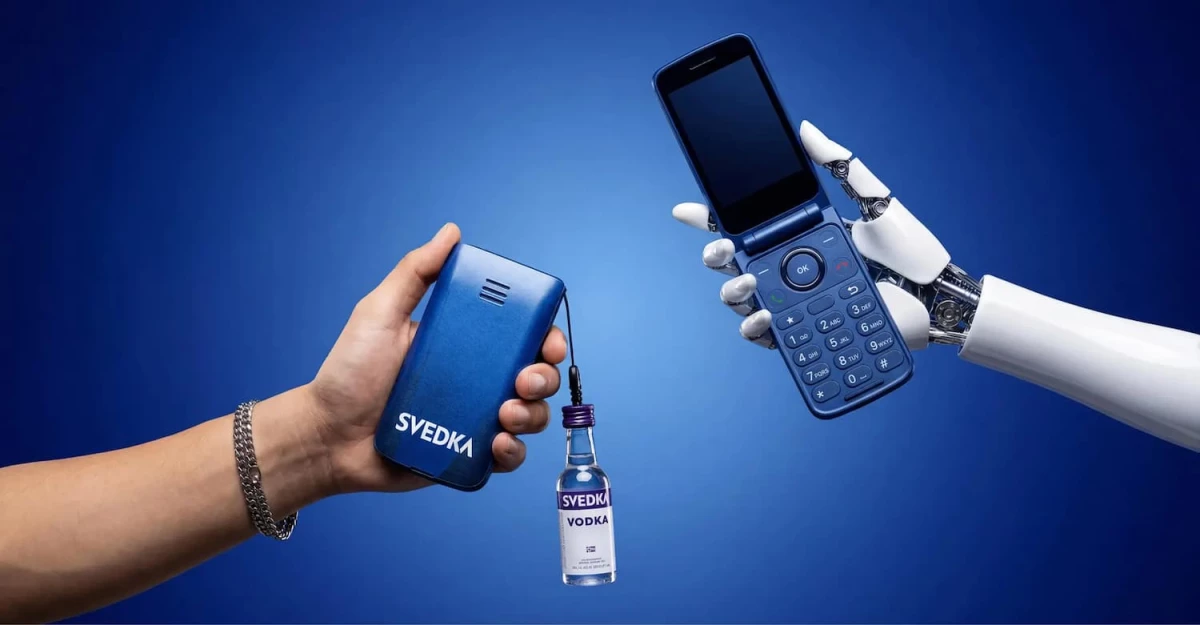
- Svedka Vodka launched the Svedphone on April 7, a $5 limited-edition flip phone that only calls and texts, bundled with a Svedka vodka shooter and pre-loaded minutes.
- 81% of Gen Z adults say they wish disconnecting from digital devices came more easily, per a 2025 Harris Poll conducted for Quad.
- The campaign is timed to festival season and extends the brand’s ongoing Fembot-led push to trade screen time for in-person connection.
Svedka Vodka launched the Svedphone on April 7, a limited-edition, chrome-blue flip phone priced at $5 that makes calls and sends texts.
And that's the full feature set.
No social feeds, no apps, and no notifications.
The phone draws on Y2K-era design cues, a chrome finish, and the satisfying snap of a flip hinge, something Gen Z has been pulling back into mainstream culture.
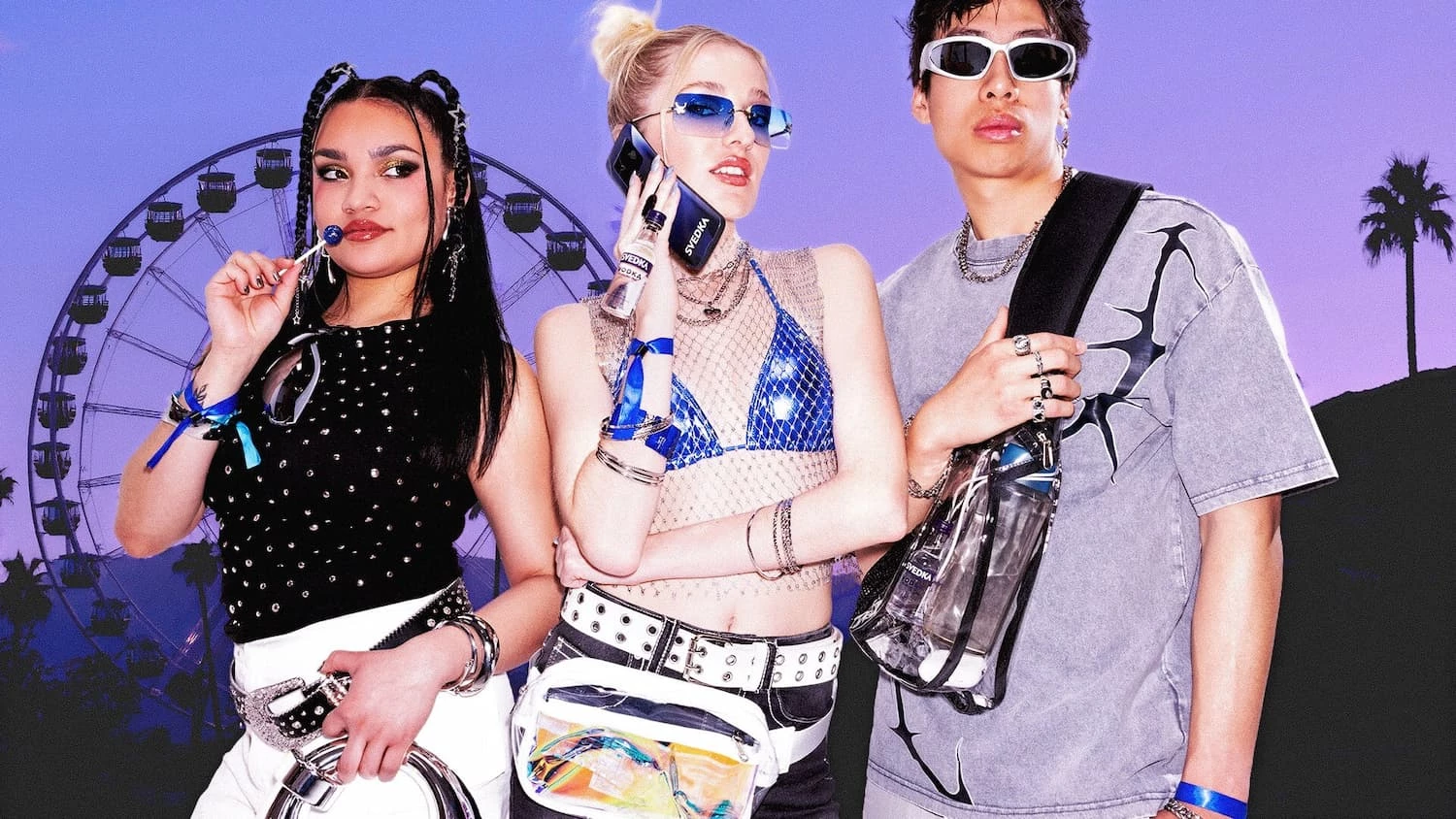
It also comes with pre-loaded call minutes, a 50-milliliter vodka shooter, and Svedka flavors ranging from Strawberry and Raspberry to Mango Pineapple and Cherry Limeade, alongside its 80-proof and 100-proof originals.
These reinforce Svedka's position as a mixer-first brand built for social settings.
David Binder, senior brand director at Svedka, touched on the design philosophy behind the phone:
"Summer is when people want to be present, with friends, with music, with the moment."
"The Svedphone is not anti-tech. It's pro-socialization and connection."
"From festival fields to rooftop parties, SVEDPHONE transforms real-world moments into playful, shareable experiences, eliminating the pressure to check your notifications every few minutes."
The timing is deliberate, as the campaign arrives in the middle of festival season.
And for a vodka brand positioned around social occasions, bundling the phone with a shooter is less a gimmick and more a direct product placement.
The device is available exclusively through Flaviar at svedka.com/svedphone in limited drops on April 7, 10, 14, and 17 at 9 a.m. ET.
The Fembot and the Broader Campaign Arc
The Svedphone campaign is part of a broader brand reset built around Svedka's Fembot mascot.
This Android character was retired in 2012 and revived following the brand's acquisition by Sazerac, the Louisville-based spirits company behind Buffalo Trace and Fireball.
The Fembot returned in 2025 with a campaign that challenged bar-goers to stay off their phones for 30 minutes in exchange for a free tab.
She made her Super Bowl debut last February in "Shake Your Bots Off," an AI-generated spot that invited fans to submit dance moves for inclusion in the final ad.
The Svedphone is her third act, a physical object that makes the brand's ongoing "put the phone down" message tangible.
Campaigning Against Digital Burnout
Although the Svedphone seems gimmicky at first glance, the decision to release the limited product is reinforced by shifts in consumer preference and behavior.
A 2025 study by Harris Poll and marketing firm Quad found that 81% of Gen Z adults wish that disconnecting from digital devices came more easily.
Our new research with Quad reveals a powerful shift: consumers want to unplug and connect IRL.
— The Harris Poll (@HarrisPoll) June 24, 2025
81% of Gen Z want to disconnect more often, and nearly 8 in 10 say brick-and-mortar feels like magic online can’t match.
Explore the report: https://t.co/HRTpVmXDtj
So what are they doing about this?
Not much.
An ExpressVPN study found that nearly half of Gen Z actively limit their screen time in some form. Seventeen percent do so most or all days.
Meanwhile, a cross-generational study from The Boar found that 73% of Gen Z report feeling digitally exhausted, yet willingly spend more than seven hours online daily.
Searches for "digital detox ideas" have climbed 72% year over year, according to Pinterest's 2025 Summer Trend Report. "Digital detox vision boards" are up 273%.
This gap between knowing the problem and doing something about it is exactly what Svedka aims to fill with the limited release of its Svedphone.
Gen Z knows the toll of constant connectivity, but their habits don’t reflect their concerns.
By tapping into this moment, Svedka isn’t just selling a quirky product. It's positioning itself as part of the broader conversation around digital wellness.
Our Take: Does This Campaign Actually Work?
The desire among younger consumers to spend time away from screens, at concerts, rooftops, and festivals, is documented and growing.
Svedka translated a cultural mood into a physical object that costs less than a bus ticket.
- What makes it work is specificity. The Svedphone is a concrete, cheap, shareable artifact built for a particular context: a night out where you want to be present. That is a narrower, more honest ask than a general "disconnect more" message.
- The campaign also has narrative continuity. The Fembot's arc (tab coverage, Super Bowl, and Svedphone) gives each activation a reason to exist beyond the headline. That coherence is harder to fake than a single stunt.
The weak point is that the flip phone trend reads stronger online than it performs in actual adoption. The Svedphone is a merch drop as much as it is a behavior-change tool.
Svedka likely knows this and is betting that the cultural conversation is worth more than the conversion rate.
For a brand in a crowded spirits category targeting consumers who are drinking less and spending more selectively, owning the "presence" conversation is a defensible position, and this campaign holds it cleanly.
Brands trying to break through festival season noise need partners who can turn cultural tension into something people actually engage with.
Explore top creative agencies building culturally resonant campaigns in our directory.