
Stablecoins are moving deeper into financial infrastructure.
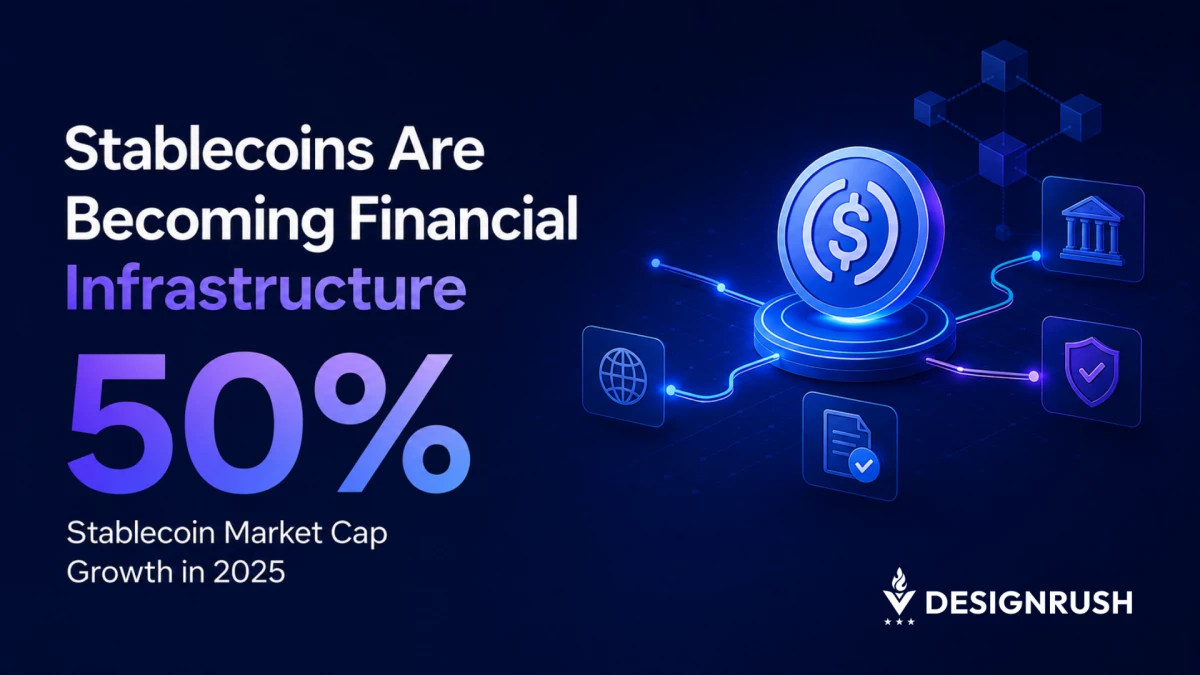
According to the Federal Reserve report, the value of the stablecoin asset class stood at around $320 billion in the past few months, whereas its research in April 2026 noted that the market cap of the stablecoin industry grew by approximately 50% in 2025.
At the same time, the GENIUS Act, enacted in July 2025, created a federal regime for payment stablecoins regarding reserves, redemption, and regulation.
It is an opportunity for FinTech companies in cross-border payments, treasury, merchant settlement, remittance services, and business-to-business transactions.
However, creating stablecoin rails goes beyond linking a wallet to the blockchain network.
A production-grade solution should integrate regulatory requirements, reserve management, custody services, KYC/AML procedures, wallet screening, smart-contract settlement, fiat on/off-ramps, and transaction monitoring.
CBS News discusses how the GENIUS Act regulates stablecoins:
Stablecoin Rails Are Becoming Part of FinTech Infrastructure
Stablecoins can provide a programmable settlement layer while the FinTech platform continues managing the customer experience, compliance, liquidity, and financial records.
Common applications include:
- Cross-border payments: Move value between markets before converting it into local currency.
- Merchant settlement: Provide stablecoin-based settlement options for eligible merchants.
- Treasury management: Move liquidity between approved wallets and financial accounts.
- Remittances: Use Blockchain for Settlement and Local Infrastructure for Payment.
- Business-to-business payments: Use Automation to Pay Suppliers and Contractors.
The objective should be to identify where stablecoins solve a genuine financial or settlement problem rather than adding blockchain functionality without a defined business purpose.
Start With the Regulatory and Reserve Model
Before development begins, a FinTech company needs to establish its licensing and operating model.
There is a significant difference between issuing a payment stablecoin, integrating an existing regulated stablecoin, providing custody, or building technology for a regulated issuer.
That decision affects the platform's compliance controls, reserve responsibilities, custody model, transaction monitoring, and reporting requirements.
The GENIUS Act establishes requirements for permitted payment stablecoin issuers, including reserve backing and redemption provisions.
As such, federal and state regulators are now developing rules to implement the framework.
Reserve management therefore needs to be considered as part of the product architecture. The technology may need to support:
- Reserve and treasury management
- Minting and burning controls
- Redemption workflows
- Reserve reconciliation
- Balance monitoring
- Approval controls
- Reporting and audit records
A regulatory framework needs to be set up first because it plays a direct role in affecting the way the platform will handle issuance, custodianship, clearing, and reporting.
Build Compliance Into the Transaction Flow
Stablecoin transactions still require financial controls. A platform needs to establish who is using the service, where funds are going, and whether a transaction creates a compliance concern before settlement.
A typical workflow can include:
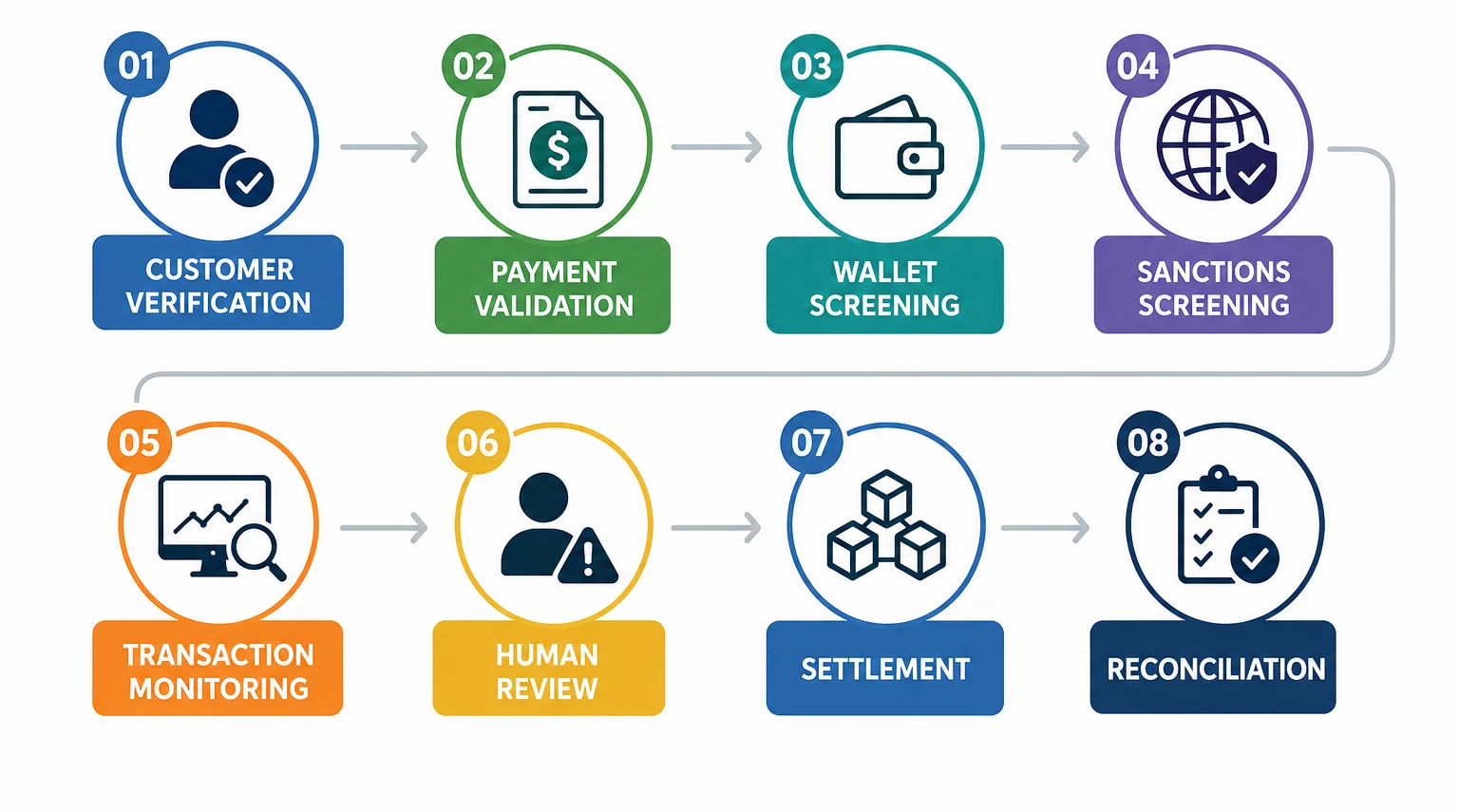
- Customer verification: Identification of the customer and determination of the risk profile.
- Payment validation: Verification of amount, beneficiary, currency, and payment limits.
- Wallet screening: Risk assessment based on source and destination wallets.
- Sanctions screening: Detection of sanctioned individuals, organizations, and locations.
- Transaction monitoring: Evaluation of transactions against the set risk criteria.
- Human review: Examination of suspicious and high-risk transactions.
- Settlement: Execute the approved blockchain transaction.
- Reconciliation: Match blockchain activity with internal ledger and fiat records.
The GENIUS Act framework also treats permitted payment stablecoin issuers as financial institutions for Bank Secrecy Act purposes, with regulators implementing customer-identification requirements.
Secure Wallets and Custody
A FinTech platform also needs to determine who controls private keys and how transactions are authorized.
Depending on the business model, the solution may use custodial wallets, non-custodial wallets, MPC infrastructure, or a third-party custody provider.
For custodial products, private keys should not be exposed directly to ordinary application processes.
Transaction signing can instead be isolated behind dedicated services with controls such as:
- Role-based permissions
- Spending limits
- Address allowlisting
- Multi-party approvals
- Key-management controls
- Transaction monitoring
Treasury wallets should also be separated from customer transaction infrastructure to reduce the potential impact of a compromised application or account.
Connect Stablecoin Settlement With Fiat Infrastructure
Stablecoins do not eliminate traditional financial infrastructure. Most users and businesses still need to move between fiat currencies and digital assets.
A stablecoin-enabled FinTech product may connect with banks, payment processors, foreign-exchange providers, on- and off-ramps, and liquidity providers.
For instance, the customer can pay for the transaction using a bank account. The platform can then convert this value into a stablecoin and settle the transaction on the blockchain, as well as converting to the currency used by the recipient.
The customer will have one payment experience while behind the scenes, there will be blockchain settlement, compliance, liquidity, and reconciliation.
Secure the Smart-Contract Settlement Layer
Smart contracts can automate stablecoin transfers, settlement rules, minting, and burning. But financial automation introduces additional security requirements.
Contracts may need controls for:
- Approved wallet addresses
- Transaction limits
- Treasury restrictions
- Minting and burning
- Emergency controls
- Multi-party approvals
Security testing should also consider compromised signing keys, unavailable external services, transactions exceeding predefined limits, and unexpected contract interactions.
Smart-contract security should therefore work alongside application security, infrastructure protection, and key management.
Make Every Transaction Auditable
A compliant stablecoin platform needs to maintain a clear record of what happened during a transaction.
This can include customer verification events, screening results, risk decisions, approvals, blockchain transaction hashes, settlement status, and reconciliation records.
These records help compliance teams investigate alerts, finance teams reconcile on-chain and off-chain balances, and engineering teams identify failed or unusual transactions.
The blockchain provides the transaction record, but the decisions surrounding that transaction also need to be traceable.
Build for Changing Regulatory Requirements
Stablecoin requirements can vary by jurisdiction, asset type, issuer structure, and financial activity.
Instead of hard-coding every compliance requirement into the transaction engine, FinTech platforms can use configurable policies for:
- Supported jurisdictions
- Transaction thresholds
- Customer risk levels
- Restricted assets and wallets
- Approval requirements
- Monitoring rules
- Reporting requirements
It becomes easier to make changes to the platform as and when the need arises. Current U.S. rulemaking around the GENIUS Act illustrates why this flexibility matters.
Stablecoin Infrastructure Is More Than a Wallet
The opportunity for financial companies is not simply to launch another crypto wallet.
Stablecoins can become a programmable settlement layer within broader FinTech software, including cross-border payment platforms, embedded finance applications, merchant settlement systems, treasury platforms, remittance products, and B2B financial solutions.
Building that infrastructure requires more than blockchain integration.
It requires technology that connects reserves, custody, compliance, identity, liquidity, smart contracts, fiat infrastructure, and auditability within one controlled financial workflow.
For financial companies exploring this model, the right architecture can provide the foundation for secure and scalable stablecoin-based fintech solutions.