
Selkirk Sport grew from a humble pickleball equipment manufacturing upstart with 10 employees to a major player in the sports equipment industry, adding over 100 team members and athletes to its professional lineup.
Today, the company has revolutionized more than 15 paddles and continuously participates in programs that support innovation and community growth.
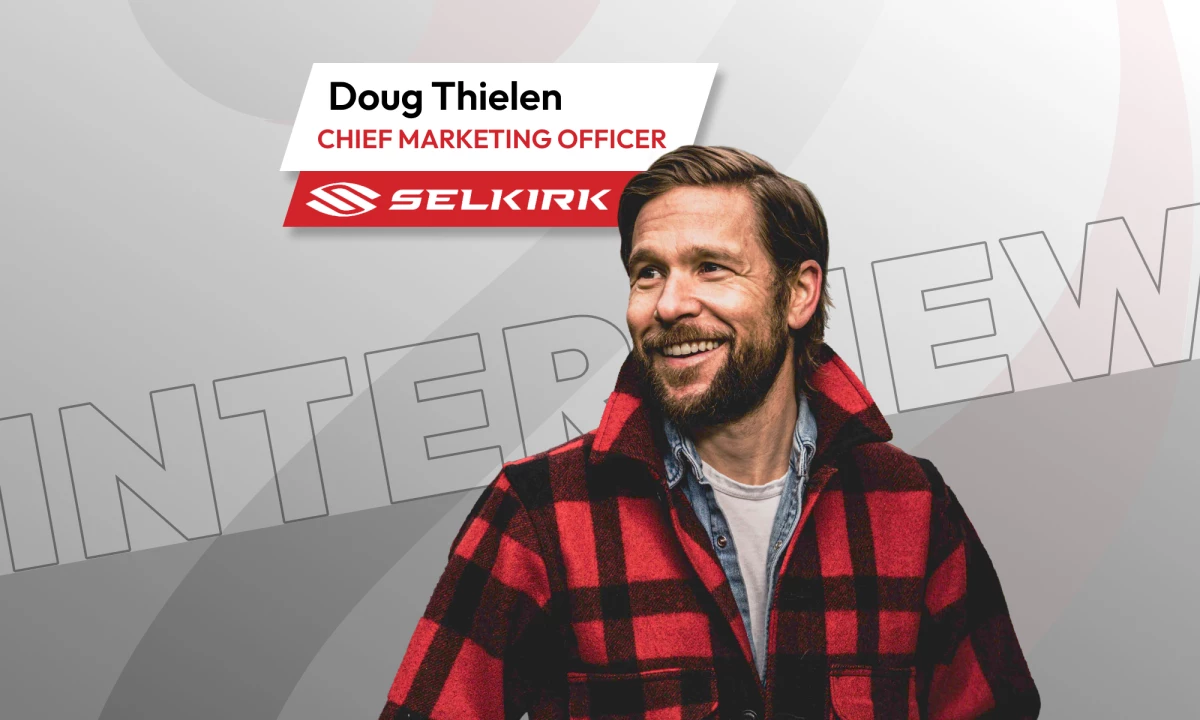
For Selkirk’s CMO Doug Thielen, this success comes from staying true to a clear mission and purpose. In our interview, he shares strategies that Selkirk followed to become a leading voice in the industry.

Who Is Doug Thielen?
Doug Thielen is a seasoned marketing professional with more than two decades of experience, working with top outdoor and lifestyle brands. Throughout his career, he has led award-winning campaigns for companies such as REI, Filson, and Dickies. As the Chief Marketing Officer (CMO) for Selkirk Sport, Thielen focuses on driving the brand's growth via the intersection of commerce, content, culture, and community. When he’s not overseeing the marketing strategy for Selkirk, you can find him playing pickleball or trail running in the Pacific Northwest.
For new brands — especially in niche industries — staying focused on their mission guides decision-making, product development, and customer engagement.
Doug believes that this is the key for brands looking to differentiate themselves in crowded markets, and gives customers a reason to connect with and trust your company:
“Consistency in delivering on your mission builds brand credibility and loyalty over time. In niche industries like pickleball, where community and trust are critical, a well-defined mission can help drive sustainable growth and ensure your brand remains relevant as the market evolves.”
For example, committing to growing the pickleball community has directly contributed to Selkirk’s success. According to Doug, doing so has expanded the company’s reach and created brand affinity.
By helping the sport itself grow, Selkirk positioned itself as a leader in the community, translating into increased sales and market presence.
“Through our partnerships with grassroots organizations and support of local tournaments, we’ve been able to introduce more people to the sport and Selkirk products.
These initiatives have strengthened our brand visibility and fostered a sense of belonging within the community, which in turn drives customer retention and word-of-mouth referrals,” Doug explains.
This commitment isn’t limited to just a select few athletes either — Doug says Selkirk has partnered with both beginners and professionals. This is because players typically seek brands that provide high-performance equipment and share their passion for advancing the sport.
“Players recognize that our dedication to quality and community is genuine, and they, in turn, become advocates for our brand.”
By aligning its mission with the goals of athletes, Selkirk created mutually beneficial and long-lasting partnerships.
Watch our video to learn more about experiential marketing, and how you can utilize it to engage with your customers and provide first-hand experiences of your brand:
Selkirk's Approach to Scaling with Purpose
For Selkirk, pickleball always takes center stage. And as the company scales, Doug notes, its core values — quality, innovation, and community — remain embedded into every business decision.
Additionally, Doug says the company’s close ties with the pickleball community keep the team grounded, ensuring that brand growth never loses sight of the needs and values of athletes.
“We continuously invest in R&D to ensure our products evolve with the sport while maintaining the high standards of craftsmanship that define our brand.
Whether launching a new product or entering new markets, these values guide our decisions and are a key component to Selkirk’s success,” Doug shares.
He explains that Selkirk’s product development process involves player engagement, listening to feedback, and rigorous testing of its products to ensure they meet the highest standards of performance and durability.
This approach has enabled the company to create paddles that exceed player expectations — differentiating Selkirk in a competitive market where players are always looking for reliable, high-performance equipment.
“Our reputation for delivering superior products has set us apart and solidified our standing as a brand players can trust,” Doug says.
How Innovation and Community Shape Selkirk’s Growth
Selkirk’s brand ethos revolves around innovation and community.
According to Doug, this attitude has led to tangible growth, allowed the company to push the boundaries of paddle technology, and attracted both casual players and professionals — which drives sales and expands its market share.
“At the same time, our investment in building the pickleball community — through sponsorships, partnerships, ambassadors, and grassroots initiatives — has created a loyal customer base that supports our long-term growth.
The combination of cutting-edge products and a community-driven approach has propelled us from a niche brand to a dominant force in the industry,” he says.
This is where “staying true to the mission” manifests itself — by delivering products that resonate with recreational and professional players alike, Selkirk has carved a prime spot for itself in a booming market.
“In a competitive market, customers look for brands they can trust, and by adhering to our mission, we have positioned ourselves as a leader in the sport, gaining credibility and trust among players at all levels,” Doug explains.
By focusing on delivering uncompromising quality, brands can build a loyal customer base, which is what Selkirk achieved — while its efforts to grow the pickleball community established a lasting brand awareness.
Rapid growth doesn’t have to come at the expense of maintaining brand consistency — a reminder to smaller brands that focused growth with a clear mission and strong client relationships can yield exceptional results if you just stick to your guns.