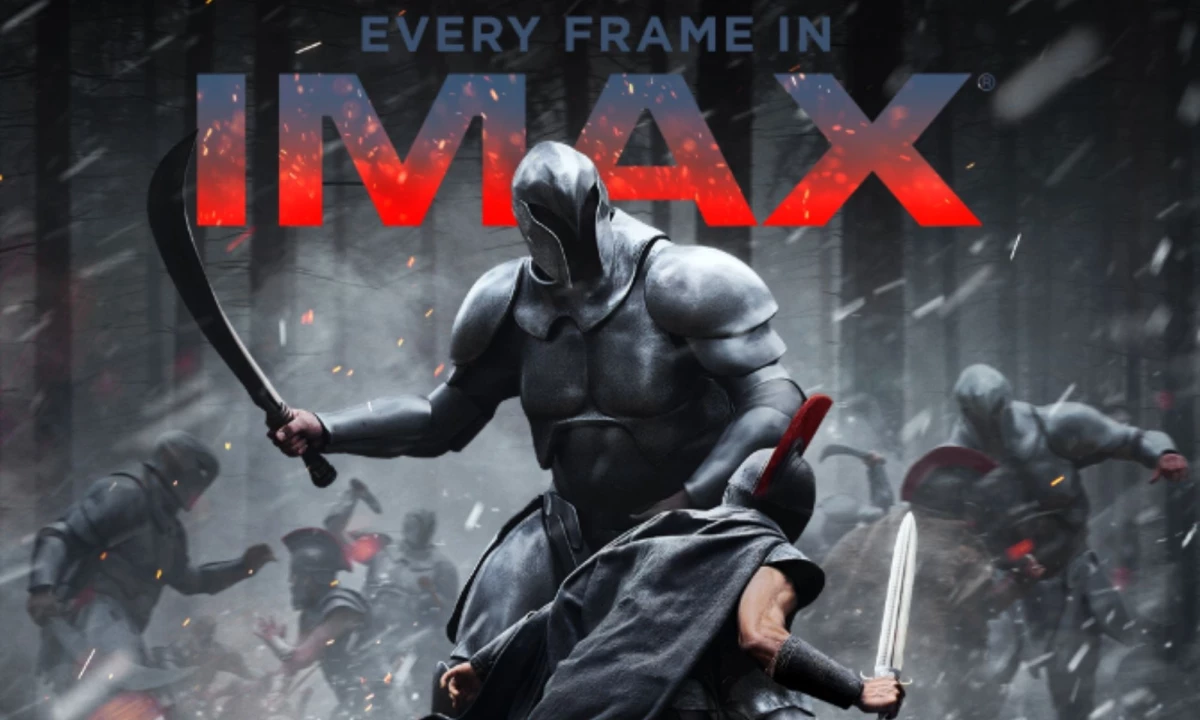

Director Christopher Nolan handed IMAX a list of technical demands and one condition.
Solve the camera's noise, reload, and sound problems, and he would shoot his entire next film on their cameras.
So IMAX built a quieter camera, the Keighley, that could roll through a full feature, and this film became "The Odyssey."
Universal Pictures made the format the whole pitch.
The studio kept footage offline, sold premium seats a year early, and guarded the theatrical window.
It worked on a scale few expected. The 41 IMAX 70mm screens worldwide averaged about $153,000 each on opening weekend.
"The Odyssey" opened to $264.1 million in tickets sold globally, Nolan's biggest debut yet.
The star-studded cast gave Universal cover to stay quiet.
Matt Damon, Zendaya, Tom Holland, and Anne Hathaway pulled coverage on their own while the studio held its footage back.
The campaign gives marketers a rare case study in demand creation, grounded in scarcity, premium formats, and nearly two decades of brand partnership.
Universal Kept Its First Teaser Off the Internet
Universal Pictures treated every piece of "The Odyssey" footage as something that audiences had to earn.
The first teaser appeared exclusively in theaters and never appeared online, leaving only fan-recorded clips circulating across social media.
Months later, select 70mm IMAX rereleases surprised audiences with a six-minute prologue before Universal released the full trailer online.
This sequencing changed audience behavior. Fans learned that early access meant buying a ticket.
Universal reinforced this message with a five-week theatrical window and three weeks of IMAX exclusivity.
The move positions the premium format as essential to the experience, with the studio also skipping influencer-first advance screenings.
Critics only saw the film after its London premiere, while audiences encountered few spoilers before release.
The approach suggests that scarcity works best when it supports a clear strategic goal.
In this case, a single, well-executed idea, protecting the theatrical experience, proved more effective than flooding audiences with a steady stream of content.
Outside the theater, the studio sustained attention through its ensemble cast.
Damon, Holland, Hathaway, Zendaya, Robert Pattinson, Charlize Theron, and Lupita Nyong'o kept "The Odyssey" in headlines without new footage.
The plan held even after the casting sparked months of backlash online.
Some commenters, including Elon Musk, attacked the choices of Nyong'o, Zendaya, and Elliot Page long before anyone saw the film.
But Universal stuck to its release schedule and let the finished film answer the critics.
The traveling Trojan Horse rolled through major cities and kept the conversation on the film's craft.
Nolan also dismissed the pre-release noise as irrelevant, a call that the opening weekend vindicated.
The marketing of "The Odyssey" proves withholding content can generate demand when every release is intentional and every reveal rewards participation.
Nolan and IMAX Grow Stronger Together
"The Odyssey" became the first commercial feature shot entirely with IMAX cameras, giving Universal a clear technical advantage to market.
IMAX 70mm tickets went on sale a full year before the release and sold out almost immediately across several major markets.
Nolan's long-running relationship with IMAX also gives the format credibility that few filmmakers can match.
IMAX CEO Rich Gelfond said Nolan continually pushes the company to improve its technology.
"Christopher Nolan summoned all his brilliance, imagination, and ambition to lead a world-class cast and crew in making this unforgettable film[.]
[A]nd we at IMAX are eternally grateful to be a part of this journey that is just beginning," Gelfond said in a statement.
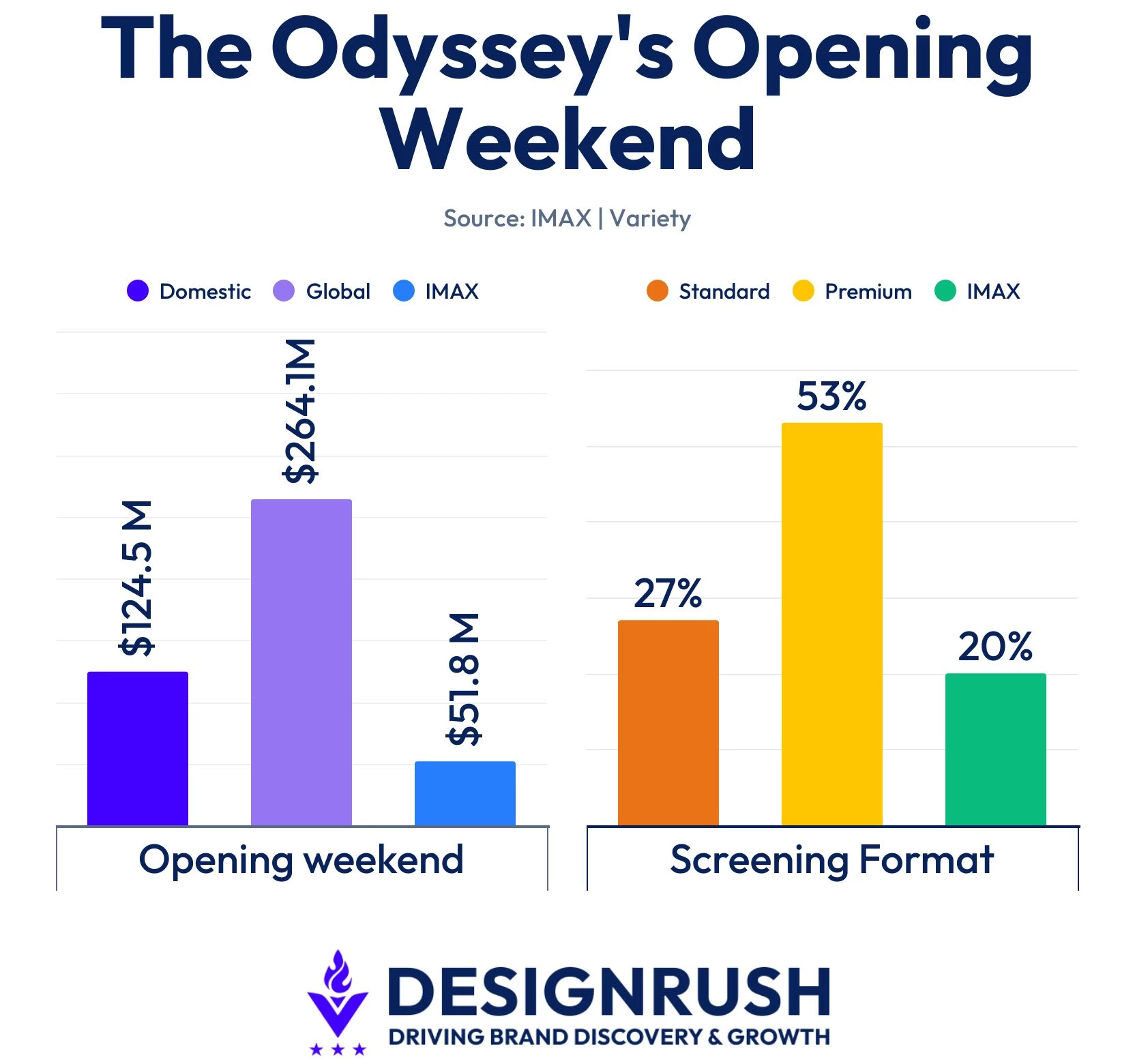
"The Odyssey" generated more than $52 million for IMAX during its opening weekend in the U.S., accounting for over 20% of the film's worldwide box office.
The company also reported $60 million in advance ticket sales for future screenings, highlighting sustained demand.
But perhaps the campaign's most overlooked achievement is that IMAX itself became part of the brand story.
Audiences discussed projection formats, camera technology, and sold-out screenings almost as frequently as the plot.
Nolan and IMAX demonstrate how long-term partnerships can create value that compounds across multiple releases.
An Opening Weekend Worth $264 Million
"The Odyssey" opened to $124.5 million in total ticket sales domestically and $264 million worldwide.
A nearly three-hour runtime and an R rating did nothing to slow it down.
Universal spent $375 million total, $250 million on production and $125 million on marketing.
Theaters keep about half of every ticket sold, so the film needs to gross close to $625 million worldwide before Universal breaks even.
The opening weekend ticket sales already clear more than 40% of this target in just three days.
China, Japan, and South Korea have not opened yet, and limited IMAX 70mm screens keep audiences paying a premium for a single ticket.
These numbers point to a broader change in how audiences value entertainment.
- Scarcity increases perceived value. Brands should limit access strategically to make premium experiences worth planning and paying for.
- Tech becomes marketing when it changes the result. Companies should highlight meaningful innovation to give consumers a reason to engage.
- Long-term partnerships build lasting demand. Brands should invest in recurring creative collabs to strengthen recognition and sustain interest.
Scarcity only sells premium tickets and quiets backlash when the film delivers.
And "The Odyssey" did it with a 94% critics' score and a 97% audience score on Rotten Tomatoes.
Our Take: Is IMAX Becoming the Go-To Movie Brand?
What stands out is that many moviegoers decided where to watch the film before deciding when they wanted to watch it.
Few theater brands become part of the purchase decision, yet IMAX reached that point through years of collaboration with one filmmaker.
So, we think the answer is yes, but only because Nolan spent years conditioning audiences to associate IMAX with an event worth leaving home for.
But scarcity and exclusivity only create demand when audiences already believe the experience is genuinely different.
Without this trust, we think withholding footage or limiting access could frustrate and dissuade consumers.
Brands in every category should ask whether they are marketing a product or creating a destination people actively seek.
Looking to create a campaign that earns attention before launch day?
Explore these top entertainment marketing agencies to find partners that know how to create anticipation, not just awareness.