
U.S. Navy's Healthcare Recruiting Campaign: Key Findings
- The Navy launched a healthcare recruiting campaign across four cities targeting physicians, nurses, and dentists aged 26 to 32.
- Developed with VML and WPP Media, the campaign uses technical medical language designed to speak directly to early-career clinicians.
- A YouTube series called Medicine Unscripted features current Navy healthcare professionals speaking to civilians about life in the Navy.
The U.S. Navy has a healthcare staffing problem, and it's now running a targeted advertising campaign to address it.
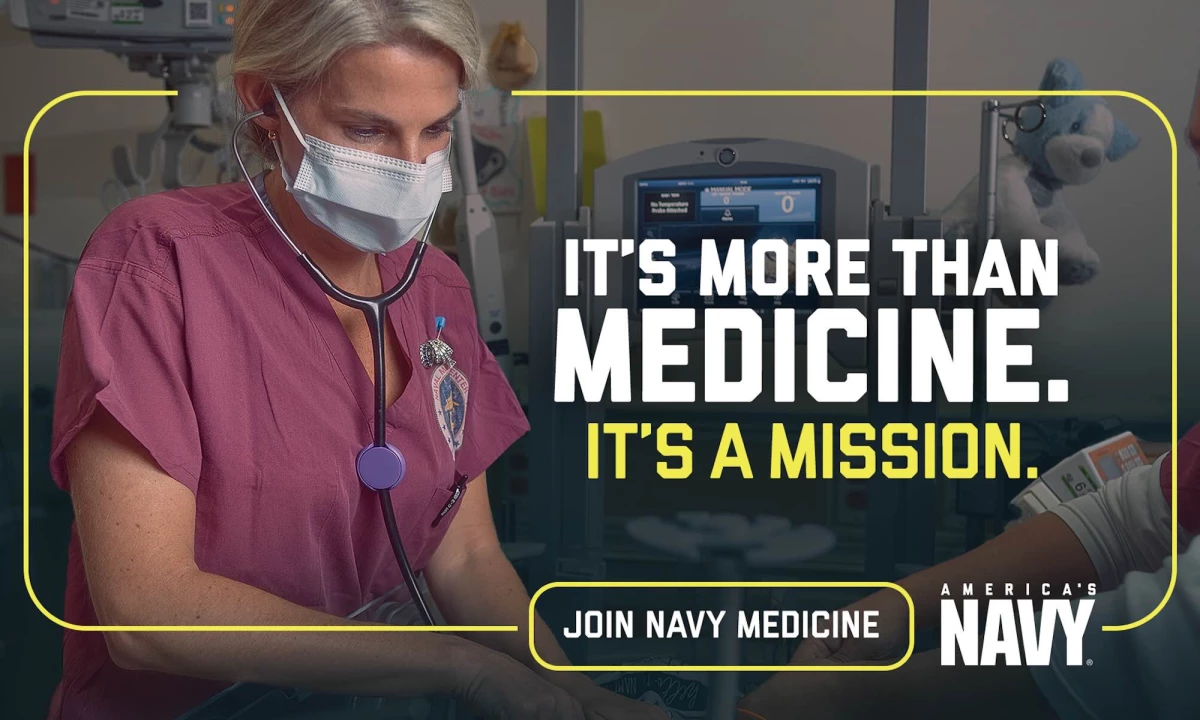
Navy Recruiting Command, working with agency partners VML and WPP Media, has launched an integrated campaign aimed at early-career physicians, nurses, and dentists aged 26 to 32.
The campaign's target markets are Chicago, Los Angeles, New York, and San Diego.
The cities have been selected for their high concentrations of medical schools, hospitals, and research institutions, as well as Navy medical operations.
While previous campaigns have focused on fields including cybersecurity, engineering, and aviation, this is the first time the Navy has aimed one at healthcare professionals.
Recruiting a niche professional audience requires a different approach from broad-reach military advertising, and this campaign reflects this thinking from the ground up.
The Creative Approach
The campaign's central creative decision is its use of language, as VML developed messaging that uses technical medical terminology.
The language is the kind that only clinicians would immediately recognize, to show the Navy's understanding of what early-career healthcare professionals have studied.
Megan Sousoulas, Creative Director at VML, described the approach in an official statement.
"In the Navy, medicine makes the mission," she emphasizes.
"By speaking in the specialized language that healthcare professionals understand, the Navy is engaging with this niche audience on their level and showing the impact a doctor, nurse, or dentist can have on a Sailor's life."
The campaign also includes a YouTube series called Medicine Unscripted.
The videos show Navy healthcare professionals speaking to civilian counterparts about patient care autonomy, work-life balance, and the professional environment the Navy offers.
The delivery is geotargeted digital out-of-home in grocery stores, gyms, and locations near major healthcare districts.
The films are also supported by connected TV, online video, paid social, paid search, and affiliate partnerships.
The Recruitment Context
Military healthcare recruiting sits at the intersection of two separate shortages, including a broader U.S. healthcare workforce gap and a military-specific retention problem.
A 2024 DoD report to Congress found that Walter Reed National Military Medical Center was operating at only 68% of its authorized nursing positions.
A September 2024 RAND Corporation report also found that Army physician recruitment had not kept pace with separations.
As a result, hospitals have been left understaffed and the medical corps' deployed mission has been compromised.
The U.S. is projected to face a shortage of more than 187,000 full-time equivalent physicians by 2037, according to workforce data citing AAMC projections.
For the Navy specifically, the competitive challenge is significant.
Civilian salaries for physicians can run upwards of $400,000 a year, a figure military pay structures have historically struggled to match.
The campaign responds to this by emphasizing the non-financial dimensions of a Navy career.
This includes patient care autonomy, work-life balance, and freedom from the administrative burden that dominates many civilian medical roles.
Here are some tips for agencies developing recruiting campaigns for specialist target audiences:
- Use the audience's own language: Clinical terminology signals genuine understanding in a way that generic recruiting copy does not.
- Let current practitioners carry the message: Medicine Unscripted works because the voices are internal, not branded.
- Place media where the target audience already is: Geotargeting near hospitals and medical districts puts the messaging in front of the right people at natural points in their day.
When the audience is this specific, getting the creative wrong is more costly than getting the media mix wrong.
Our Take: Will This Campaign Move the Needle?
We think the language strategy is the right call.
Generic military recruiting creative has historically struggled to resonate with highly educated professional audiences.
Career decisions for this group are driven by very specific concerns including autonomy, patient volume, and career development.
However, a campaign that opens with clinical language immediately signals that this is a different kind of conversation.
The Medicine Unscripted series is also a smart idea.
A YouTube series gives the campaign a special brand positioning that can deepen over time as more practitioners are featured.
Organizations recruiting specialist professionals need agencies that understand how to build campaigns around genuine audience insight, not just awareness goals.
Explore the top advertising agencies in our directory.