
Nature's Bounty's newest campaign features 100 women, but none of its supplements.
Nature's Bounty surveyed 2,000 U.S. women in July, weeks before the launch. Seven in 10 wish they had learned more about women's health when they were younger.
Just 7% consider themselves experts, and more than a quarter rate their understanding as basic or below.
For a brand that has sold supplements for 50 years, leaving the product out is an unusual choice. How do you fund health education without it reading as an ad?
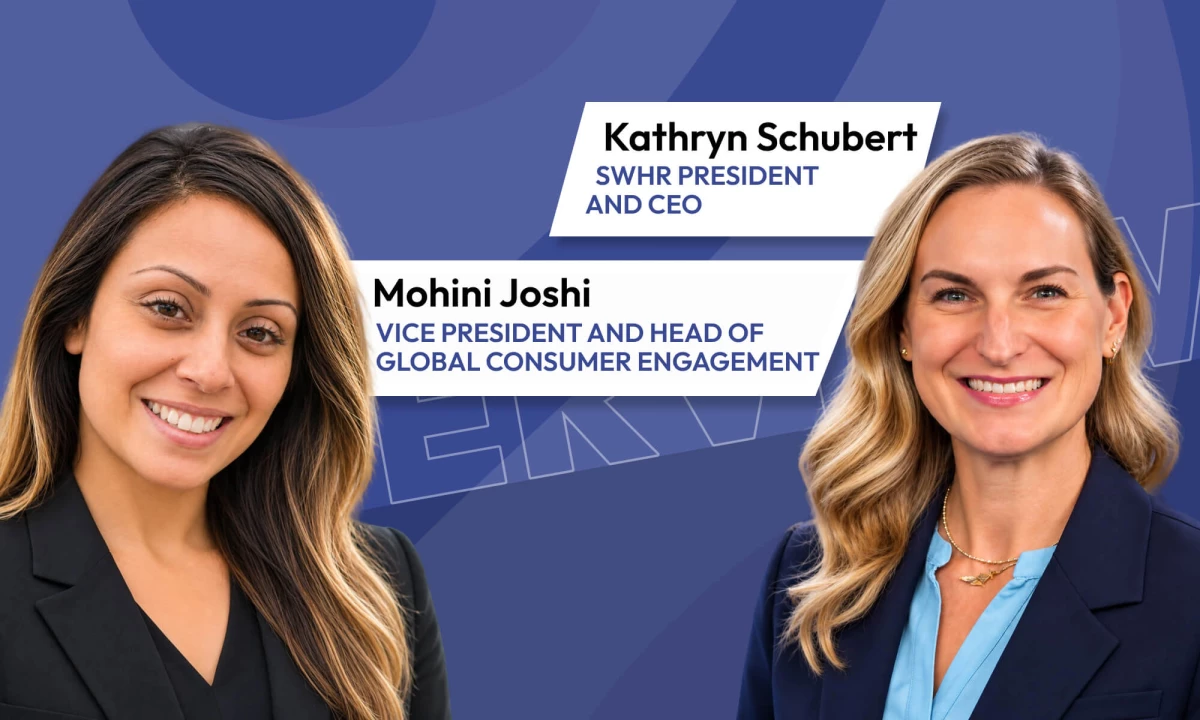
"The entire campaign is based on women's health education," Mohini Joshi, Nature's Bounty's vice president and head of global consumer engagement and experience, tells DesignRush in an exclusive interview.
The brand's answer runs through the Society for Women's Health Research (SWHR), a nonprofit that will publish a women's wellness report with Nature's Bounty in 2027.
In the interview, Joshi and SWHR President and CEO Kathryn Schubert, who oversees the research side of the partnership, explain where education ends and the brand begins, and what agencies and in-house teams can borrow.
Keep reading for the four rules behind the partnership.

Who Are Mohini Joshi and Kathryn Schubert?
Mohini leads global consumer engagement at Nature's Bounty. She previously ran holistic health brand strategy at Nestlé Health Science U.S. and brand marketing for Carnation Breakfast Essentials.
Kathryn has led SWHR, a women's health research nonprofit founded in 1990, since 2020. She previously served as chief advocacy officer at the Society for Maternal-Fetal Medicine.
She began her career on Capitol Hill, and Professional Women in Advocacy named her its 2020 Advocate of the Year.
4 Rules Behind the Supplement the Gap Partnership
Nature's Bounty and SWHR split the work so neither side's interests take over. Here's how each choice protects the campaign's credibility, and what agencies can take from it.
Here's how each choice protects the campaign's credibility, and what agencies can take from it:
- Product-free creative: Why the 30-second spot leaves out every Nature's Bounty product
- An independent research partner: How SWHR keeps editorial control of its joint report
- Real women as the faces of the data: How 100 women humanize the statistics on the knowledge gap
- A report for everyday readers: How SWHR plans to make the 2027 findings accessible to all women
Keep reading for the four rules behind the partnership.
1. Keep the Product Out of the Education
The campaign started with a funding number. Less than 9% of U.S. medical research funding goes to women's health, and Joshi says that statistic sparked the campaign.
A 2024 National Academies report found women's health research got just 8.8% of NIH grant spending from 2013 to 2023. Its share slipped over that decade, even as the NIH's overall budget grew.
The survey came next, giving the team a baseline on how women feel about their own health knowledge.
The survey showed women want to talk.
Sixty percent wanted more open health conversations with friends and family, and 46% wanted them to reach beyond their own circles.
Those findings put real women at the center of the creative.
Accompany Creative's 30-second spot humanizes statistics on the women's health knowledge gap.
No Nature's Bounty product appears in the spot. Joshi says the team settled that from the outset.
"At its core, Supplement The Gap is about democratizing women's health knowledge and amplifying the important conversations around women's health," Joshi says.
Leaving the product out lets the education be judged on its own.
For agencies, that line belongs in the brief. Once a client agrees the hero film stays product-free, the creative team can lead with people and data from day one.
2. Give the Research Partner Its Own Firewall
SWHR has more to lose here than the brand does. Its value rests on being trusted as an independent source of health information.
Industry money makes this trust fragile. A 2017 JAMA Internal Medicine survey found 67% of patient advocacy groups took industry funding, and 8% of their leaders felt pressure from donors.
SWHR's published policy says it keeps editorial control and independence over work funded by corporate and foundation grants. Schubert says this partnership runs the same way.
"SWHR keeps a firewall between our funders and our programming to maintain editorial control, and our scientific integrity prevents us from endorsing treatments, services, or products," Schubert says.
The partnership itself doesn't count as an endorsement of the brand or any of its products, she adds.
What made the deal workable, Schubert explains, was a clear shared goal. Nature's Bounty came in wanting better women's health education and an evidence-informed report.
SWHR will conduct an internal peer review of the 2027 report and draw on its working groups and advisory board members.
For marketers, the trade-off in a nonprofit brand partnership is control. A partner lends credibility only when it keeps the final say over anything carrying its name.
Schubert says the two organizations share one goal, a report that's useful to consumers. It will reach both SWHR's and Nature's Bounty's audiences.
Agencies sit in the middle of deals like this. A partner with editorial control will push back on copy, so timelines need room for its review.
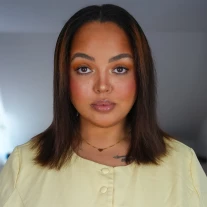
3. Put Real Women Behind the Statistics
Joshi says narrowing down the many women willing to take part was the hardest part of casting.
Some of the women's stories were strikingly similar.
"Across the board, women shared feeling unprepared, unheard and uninformed about their health," Joshi says.
The final cast covers health education, self-advocacy, stress and anxiety, pregnancy and postpartum, and perimenopause.
Agencies casting purpose work face the same math.
Vetting real stories takes longer than booking talent, so casting needs its own time and budget line.
Accompany Creative handled strategy, creative, and production. Whalar leads influencer marketing, Open Mind handles media, and Carmichael Lynch handles PR.
Outside research points the same way. KFF's 2022 Women's Health Survey found 29% of women who saw a provider said their concerns were dismissed, compared with 21% of men.
Only 35% of women ages 40 to 64 said a provider had ever talked with them about what to expect in menopause.
SWHR will bring lived experience into the research, too, pairing its literature review with a roundtable of women who can add context to the findings.
"We know the patient's voice is the most powerful tool we have in advancing women's health," Schubert says.
The hero film shows the knowledge gap now. SWHR's report can dig into where it comes from and what women need at each life stage.
4. Make the Report Useful Outside Research Circles
The 2027 report is where "Supplement the Gap" either becomes a platform or stays a campaign.
SWHR plans to cover women's wellness across life stages, including cardiovascular health, mental health, disparities, and topics where reliable information is still thin.
"We're excited to be creating a report that is evidence-based but accessible to all women," Schubert says.
It won't run in a peer-reviewed journal that everyday women struggle to access, she says, but it will follow the same rigor as every SWHR product.
Federal policy is moving, too. An Oct. 19 executive order directs the NIH to create a Women's Health Division within 90 days.
"It will take federal research dollars alongside private, corporate, and philanthropic funding, and one cannot replace the other," Schubert says.
Federal investment often comes in at early stages of research, before corporate funding is ready, she says. Coordination helps keep the two from duplicating each other's work, she adds.
Joshi measures success in conversations. A mother talks with her daughter about menopause, or a woman noticing thinning hair asks her doctor about perimenopause.
SWHR will track engagement with the report across its website, email, social media, and press, and plans to ask women what they learned and what they still need.
Both of those success measures run long after the media flight ends.
For agencies, the report is also the next brief. A 2027 deliverable gives creative and PR partners fresh educational content long after the hero spot stops running.
What Agencies Can Take From Supplement the Gap
The partnership's choices translate into three moves for agencies and in-house teams planning health or purpose work.
- Write the no-product rule into the brief. A 2021 Razorfish and Vice Media Group study found 83% of marketers think their brand lives its purpose. Only 43% of consumers agree.
- Put the partner's final edit in writing. Agree up front on copy control, review, a no-endorsement line, and funding disclosure, the terms that keep co-branding deals balanced.
- Pitch the second act with the first. Dove's Self-Esteem Project has worked with outside experts since 2004 and had reached 137 million young people by October 2025.
For SWHR, the report is one project in a 36-year history.
"We know the field of women's health is wide, and due to decades of under-funding and underprioritizing research, the needs in women's health are vast. The work doesn't stop here," Schubert says.