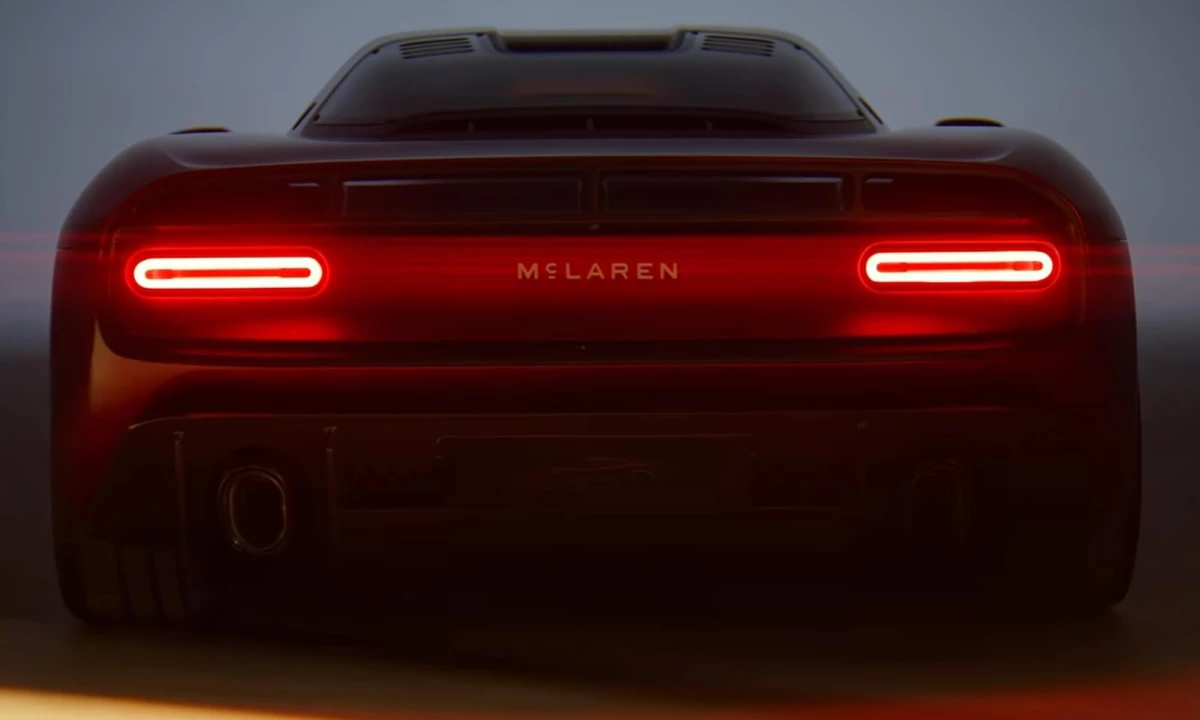

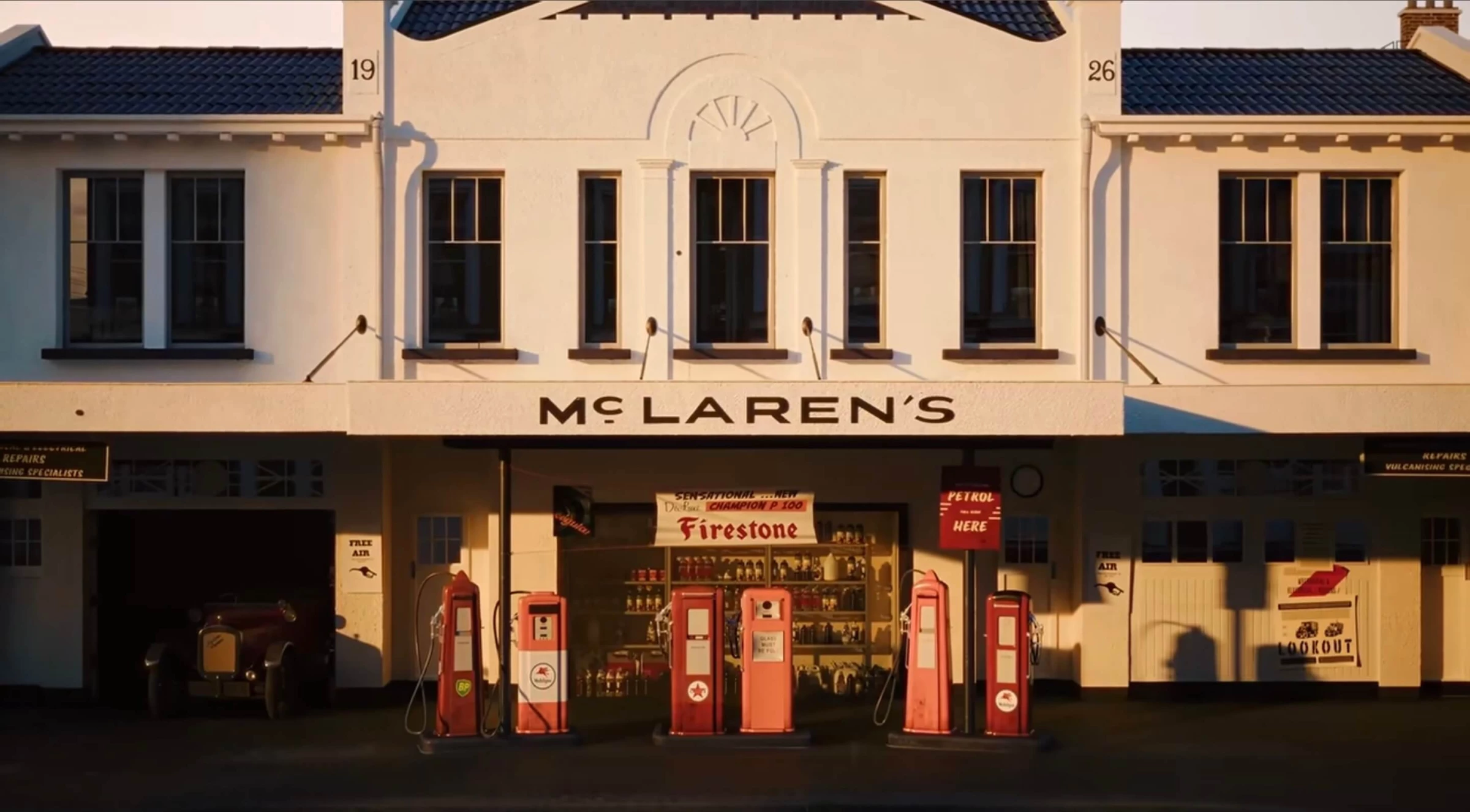
McLaren has a new wordmark, and it comes from a 1920s garage sign in Remuera, Auckland.
The automaker unveiled an evolved brand identity spanning McLaren Automotive and McLaren Racing.
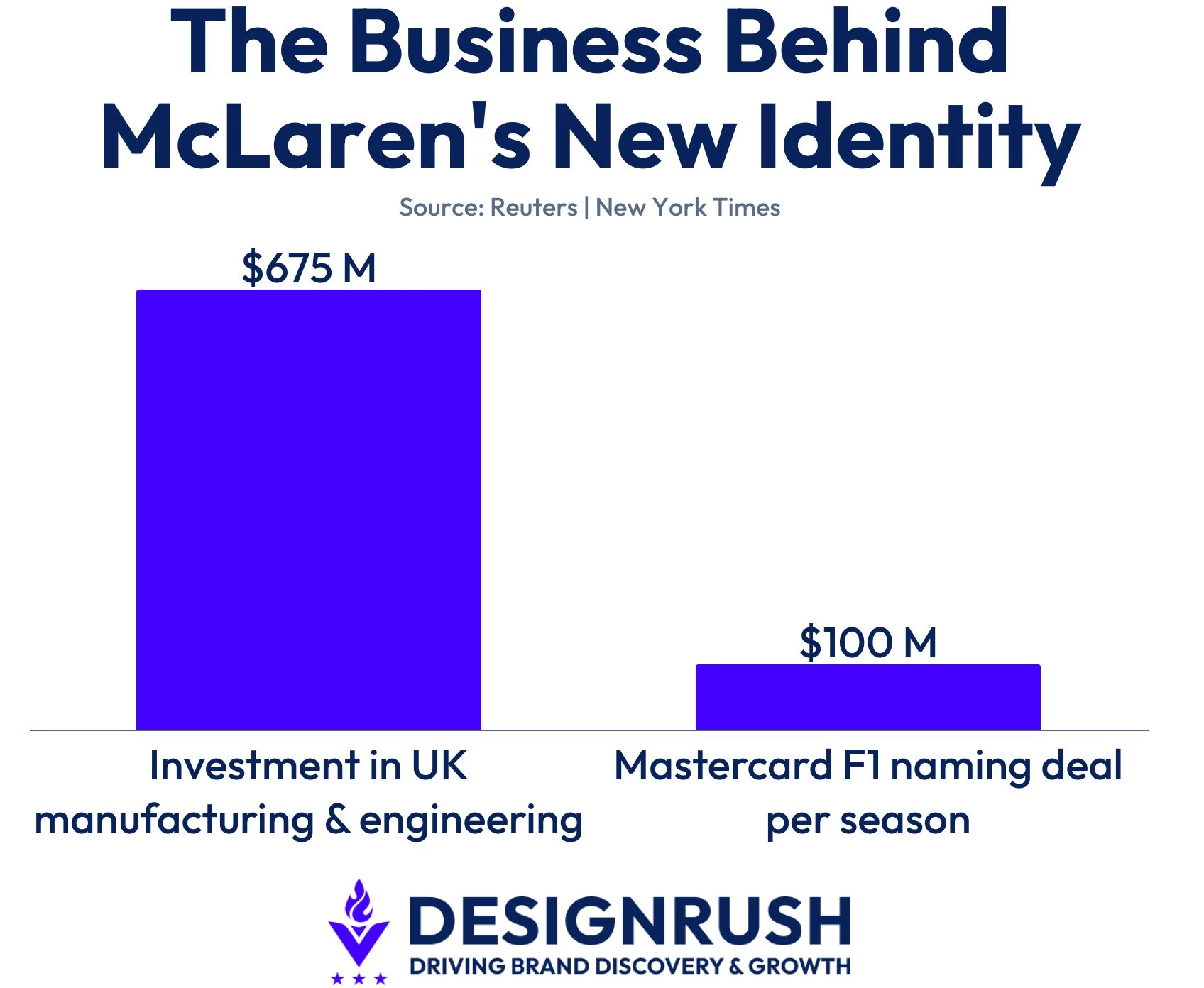
The redesign follows McLaren Automotive's £500 million U.K. expansion, worth around $675 million, and its first performance SUV.
A name that sold supercars now has to sell an SUV, a licensing catalog, and an F1 team carrying Mastercard's name.
The lettering comes from the sign above the service station run by Bruce McLaren's parents, Les and Ruth, where he built his first winning race car.
McLaren Chief Creative Officer David Woodhouse framed the redesign as continuity rather than a reset in a press release.
"We've always looked ahead, driven by a restless desire to innovate, create and push beyond expectations."
"This evolution of our visual identity captures that spirit. It's a reflection of the journey we are on as a company."
The timing points to a commercial strategy as much as a design update.
McLaren created a new licensing business in 2025 as part of the group structure formed after CYVN completed its McLaren transaction.
@mclarenauto McLaren. Our brand world. Born from an obsession to do things differently. Explore the stories, symbols and ideas behind its evolution, and discover a brand world created for the possibilities ahead. Discover now. Link in bio.
♬ original sound - McLaren Automotive
The team is officially the McLaren Mastercard Formula 1 Team under a naming deal announced in 2025.
A founder's story is the one asset a title sponsor cannot buy into.
McLaren is putting its own name back at the center just as another company's name sits beside it.
Every Brand Asset Now Traces to One Origin Story
The launch film opens before McLaren was a global name, back when it was just a family business.
Bruce's surname sat hand-painted above his parents' service station, the place the narrator calls where he first learned "to question, to make, to improve."
These letterforms became the new wordmark.
The film then walks through the Heritage Shield, the Speedy Kiwi, the chevrons, and the Speedmark.
View this post on Instagram
Each brand symbol gets a job in the story.
The Heritage Shield came out of the company's earliest days and carries Bruce's New Zealand heritage.
The Speedy Kiwi arrived later, born during McLaren's dominant Can-Am years.
The chevrons gave way to the Speedmark, a single dynamic stroke.
McLaren describes it as a form drawn from speed, precision, and progress, and confirmed it stays on both its road and race cars.
"[It's] poignant how much of Bruce's original vision and spirit still runs through the business today."
"This evolved identity perfectly bridges that proud heritage with our future ambition."
"It feels unmistakeably McLaren," McLaren Racing CMO Lou McEwen shared.
View this post on Instagram
The brand colors get the same historical treatment.
Papaya came from Bruce's decision to make his cars impossible to miss on track, which the film calls "a practical decision that became a philosophy."
Ember comes from the racing suits of a defining era, and Midnight from a blue McLaren used from the very beginning.
Black and Anthracite point to the materials and engineering that changed what a McLaren could do.
Colnbrook is the Berkshire village where Bruce started building cars, while Mist Muriwai is the beach where he won his first race at 15.
McLaren Sans closes the design system, using the same letterforms that produced the new wordmark.
It gives the identity one voice across written and visual communication.
Every color and letterform now answers to a specific date or place, which is a harder standard to hold than it sounds.
The brand is about to build an SUV at volumes that its supercars never reached.
Scarcity stops holding the price the day that a McLaren gets easier to buy.
Provenance gives buyers a reason to pay supercar money for a car that thousands of other people will also own.
The Identity Now Covers Cars, Racing, and Licensing
The new identity arrives as McLaren expands production, adds products, and grows the commercial value around its racing team.
McLaren Automotive is investing $675 million in U.K. manufacturing and engineering.
The company expects 1,000 direct and indirect jobs by 2032, according to Reuters.
This capacity goes toward a car that needs the name to work on something other than a supercar.
Mastercard is paying a reported $100 million per season for the F1 naming rights through the mid-2030s.
The wordmark now has to hold its own next to a sponsor paying more than any other title deal on the grid.
Three pressures show up whenever a premium name starts selling into new categories:
- Write the rules before the growth. Identity guidelines set during expansion always lose to speed, so lock them while the portfolio is still small.
- Decide where partner names sit. A sponsor sharing the masterbrand needs a fixed position in the hierarchy, not a case-by-case call.
- Connect every new category to old equity. Buyers accept an unfamiliar product faster when it carries a story they already recognize.
Heritage gives the new identity a working job, and a brand refresh strategy of this kind earns its keep in the categories a company has not entered yet.
Our Take: Can McLaren's History Scale Commercially?
Making every asset traceable to one origin story hands McLaren a deep supply of material for cars, merchandise, and race weekends.
We think it scales, though only if the stories travel with the assets.
A color named Muriwai means nothing to a buyer who never hears why it exists.
McLaren Licensing is the real test here, since licensed products are where brand stories usually get stripped down to a logo and a color chip.
McLaren has committed to higher volume, an SUV, and a racing partner list of more than 50 companies.
Its SharkNinja collab is what that looks like in practice, with McLaren engineers now feeding racing methods into home appliance development.
McLaren has given itself a system that can outlast any single sponsor, product, or ownership change.
An identity system has to hold up wherever the name shows up next.
Explore these top brand strategy agencies that help businesses create flexible identity systems that protect recognition as portfolios grow.