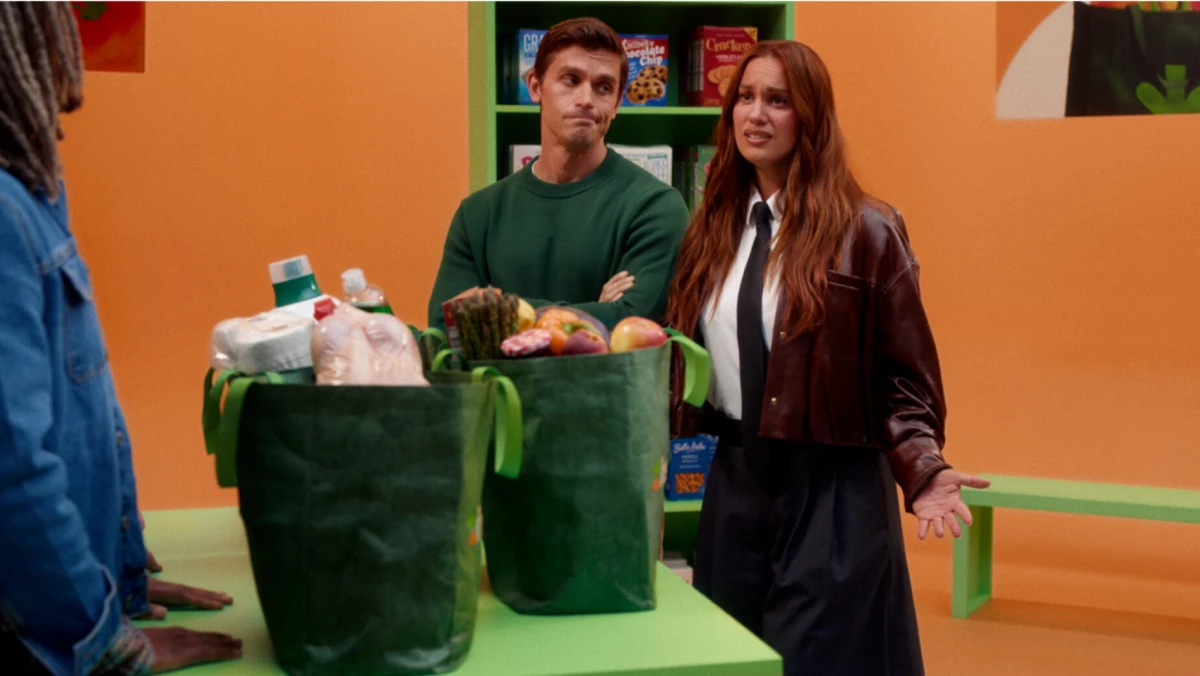

Instacart just made a micro-drama out of a meme that has been aimed at men for years.
"The Male Shopper Project" is a branded entertainment episode starring Antoni Porowski of "Queer Eye" and Hannah Berner of "Giggly Squad."
The story takes cues from a meme that says men can't be trusted to pick out groceries without getting something wrong.
The debate has generated millions of social views over the years.
View this post on Instagram
The serialized branded storytelling style has become one of the fastest-growing content categories on social platforms this year.
The grocery platform is answering a conversation that has been running about its own service.
"Instacart shoppers are really good at what they do — over 100 million five-star ratings last year speak for themselves," said Jasmine Taylor, Instacart VP of Brand Marketing.
"But the male shopper meme has taken on a life of its own, and we felt it was time to respond.
"We wanted a campaign that could tell that story in a way that was truly entertaining."
Taylor said a narrative episode was the right vehicle, since people actually want to watch this kind of content on social.
The Punchline as a Product Demo
The episode ties back to a larger platform Instacart has been building about confidence and control.
Ordering groceries online should feel as reliable as picking them out yourself.
View this post on Instagram
This promise lives in "Grocery Quality Controls," a suite of in-app tools built inside the ordering flow.
Shopper Notes lets customers leave specific instructions for their personal shopper.
Meanwhile, Replacement Preferences lets them set rules in advance for out-of-stock items.
Smart Backup fills gaps in an order without guessing.
And Preference Picker lets customers dial in details like banana ripeness or exactly how thick they want their deli meat sliced.
View this post on Instagram
Placing these tools next to a comedic story about a shopper who can't be bothered to check any of these things drives the joke home.
Instacart wants the laugh to end on its own shoppers, who work off written customer instructions.
To top it all off, its two leads give the episode a built-in audience.
Porowski carries a reputation for taste and judgment from "Queer Eye," while Berner brings her comedic timing from "Giggly Squad."
View this post on Instagram
Both celebrities map effectively onto a story about grocery competence.
Casting for topical fluency gives product marketing a shortcut, since audiences accept a feature demo faster from someone they already trust on the subject.
Humor as a Trust Signal
Audiences are more forgiving of a brand poking fun at itself when the joke gets resolved by something concrete.
Several lessons can be learned from Instacart's efforts.
1. Cast people fluent in the topic.
Porowski's culinary judgment and Berner's comedic timing both give the meme a credible narrator.
2. Let the punchline set up the product.
The meme creates the tension, and Grocery Quality Controls resolves it inside the same two minutes.
3. Treat the format as a controlled test.
As Instacart's first entry into micro-drama, the episode lets the brand measure whether narrative content is effective in building recall before it commits further to the format.
Answering a joke with working features gives a campaign something measurable.
It also converts skepticism into product awareness, which is a rare payoff for content marketing.
Our Take: Should Instacart Keep Making Micro-Dramas?
Micro-drama asks for patience that social feeds rarely hand a brand.
We think Instacart can afford it, since the meme did the setup work years before this episode existed.
The risk sits in the back half, where Grocery Quality Controls has to show up while people are still watching.
Duolingo and Netflix have both held attention with serialized brand content, though they earned it over months of consistent posting.
One episode gives Instacart a read on the format, while an entire season would give it a habit.
The follow-up is more important here, since it decides whether Grocery Quality Controls becomes something customers remember without an ad in front of them.
Brands pursuing ambitious creative need partners who are all in on their ideas. Take a look at these top creative agencies in our directory.