
Agencies render most car advertising with CGI nowadays, down to the paint, the road, and the weather.
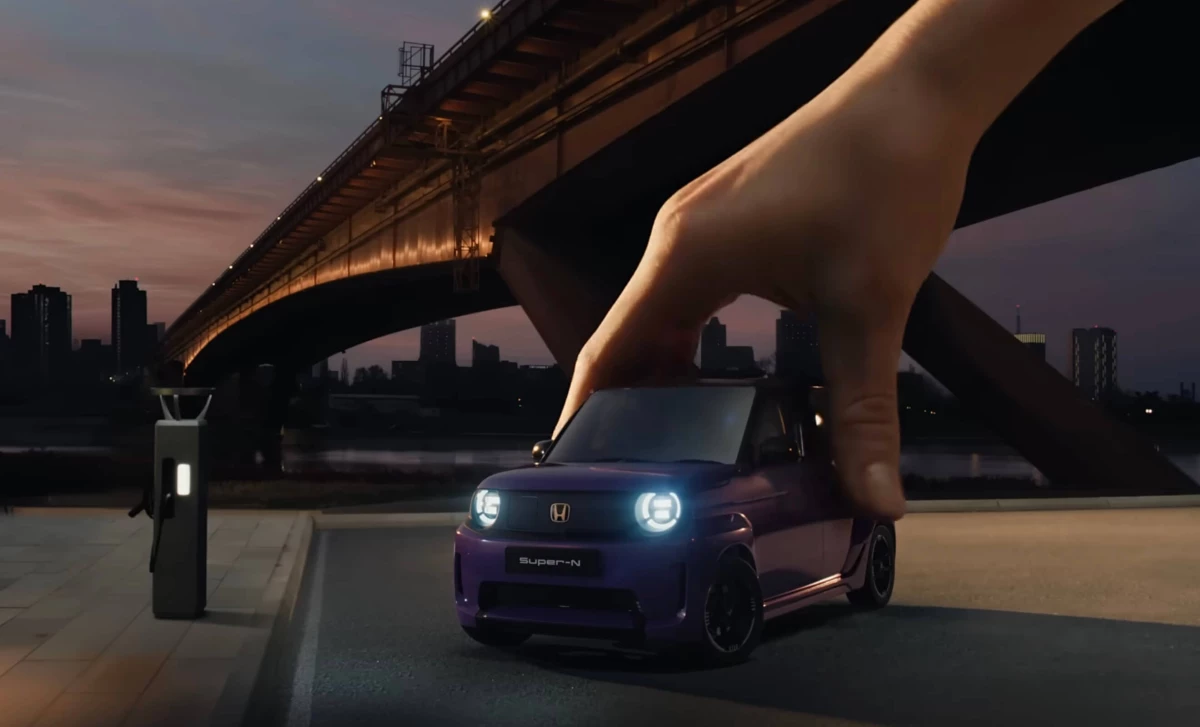
This time, creative ad agency Pablo London built Honda a real miniature Super-N, small enough to pick up, and shot it winding through a city obstacle course.
Pablo London still used CGI on the film, and the sharper call was making the handmade part the thing people notice.
The campaign launches the Super-N in the U.K., the brand's new £18,995 city EV (about $25,600), under a campaign called "Small Car, Big Fun."
View this post on Instagram
City driving has gotten quite dull, and Honda created the Super-N to fix this.
It packed kei-car proportions with a "BOOST" button, F1-style paddle gears, and a 20cm Bose subwoofer as standard kit.
"It's not every day you get to launch a small car with so much personality and this much purple.
We went big on both," Pablo London creative group heads Victoria Daltrey and Will Bingham said in a press statement.
Olivia Dunn, head of European automotive communications at Honda, linked the car to the kind of buyer that Honda is targeting.
"Super-N is for people who dream of a car with as much personality as they have – joyful, vibrant and anything but ordinary," Dunn said.
"It's what we love to do best: engineering brilliantly different cars that realise people's dreams."
The work follows Pablo London's "Your Dreams Engineered" platform and marks the agency's first product launch for Honda under it.
The platform launched July 16, putting two campaigns three weeks apart and a lot of the brand's UK strategy on the Super-N.
The Super-N at Toy Scale
Directed by Dan French via Stink UK, the hero film opens on what looks like a full-size Super-N.
It's then revealed to be a real-life FUNsize miniature.
The practical build solves a problem that CGI creates, because a rendered car has no weight, and viewers can usually tell.
Pablo also gets a second campaign out of the build itself, which is why the miniature keeps showing up in the social cuts.
The tiny car launches onto a purple track and winds through a city obstacle course, hitting spots and activities set to an energetic garage soundtrack.
The rollout extends well past the TVC, with a fully integrated push spanning VOD, social, high-impact out-of-home, and station takeovers.
It also launched a giant 1:17 scale toybox, developed with CThree Creative, and the tour opened at The Queen's Walk in London on July 31.
It runs Birmingham Bullring from August 6 to 9, Manchester's Exchange Square from August 13 to 16, and Edinburgh St James Quarter from August 20 to 23.
View this post on Instagram
The film and the toybox tour run the same idea in opposite directions.
On screen, Pablo London shrinks the Super-N to toy size, while at the activation, CThree Creative supersizes the box until the visitor becomes the toy.
A physical object people can stand inside gives the launch a second life once the media buy ends, which is the whole point of experiential marketing.
A 25% EV Market
Honda's launch arrives with the UK small-EV segment filling fast.
Battery EVs took 25.3% of new UK car registrations through July 2026, on 327,683 cars.
SMMT's latest outlook puts the full-year figure at 27.4%, still short of the 33% mandated target.
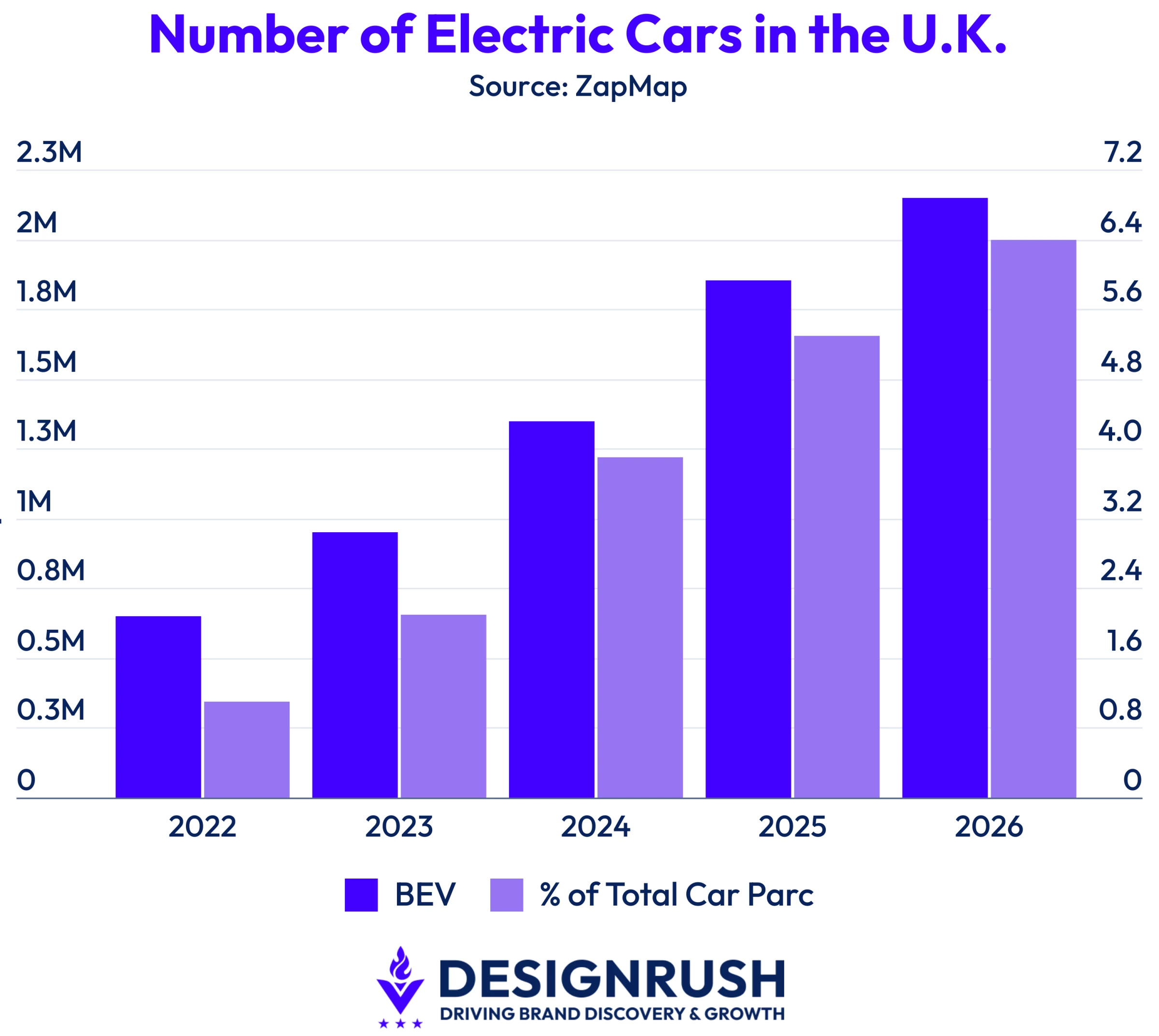
The gap explains why cheap EVs keep arriving.
Carmakers behind the mandate need volume, and it comes from cars priced like the Super-N.
So the £18,995 bracket now holds several models that spec out roughly the same, and the advertising does the separating.
Honda's answer is craft, and it has pulled this off before.
"Cog" ran in 2003 on 606 takes with almost no digital work, and it still gets cited as one of the best car ads ever made.
Here's what marketers can take from Honda's approach:
- Make the product the special effect. Turning the object itself into the trick gives a campaign a hook tied permanently to that product.
- Give the audience a physical version of the ad. An activation people can stand inside extends a campaign past the media buy and generates its own footage.
- Score the work to the audience's taste. Music signals who a product is for faster than copy does, so genre choice functions as targeting.
Small cars rarely get big budgets.
Honda spent its money on craft and physical presence, which is where a cheap EV can still out-punch its segment.
The whole approach works as a product launch built for attention.
Our Take: Does the Toybox Justify Its Own Budget Line?
Experiential activations usually get funded as the afterthought line on a campaign budget, the bit that survives if there's money left.
But we think that Honda's toybox tour earns more than the film does.
View this post on Instagram
The film shrinks the Super-N down to toy size, and the toybox flips the whole thing so the visitor walks in and becomes part of the toy.
This approach only works because the object is real, and you can't fake the feeling of standing next to something a crew actually built.
Most experiential work just rebuilds the ad at life size, which buys a brand a photo op and not much else.
The film gets a few weeks of novelty online, while the toybox gets four cities and most of August.
Automotive brands need partners who understand how to build campaigns for diverse audiences.
Find top automotive branding agencies in our directory