
Gatorade x 'Stranger Things' Collab: Key Findings
- Gatorade revives 1987’s “No Ordinary Thirst Quencher” campaign in partnership with 'Stranger Things', blending old and new concepts.
- NFL star Myles Garrett narrates the 30-second spot, bridging athletic pressure with supernatural challenges in Hawkins.
- The brand brings back its iconic glass bottles after nearly 30 years, using the Hawkins-themed capsules to anchor the campaign’s nostalgia appeal.
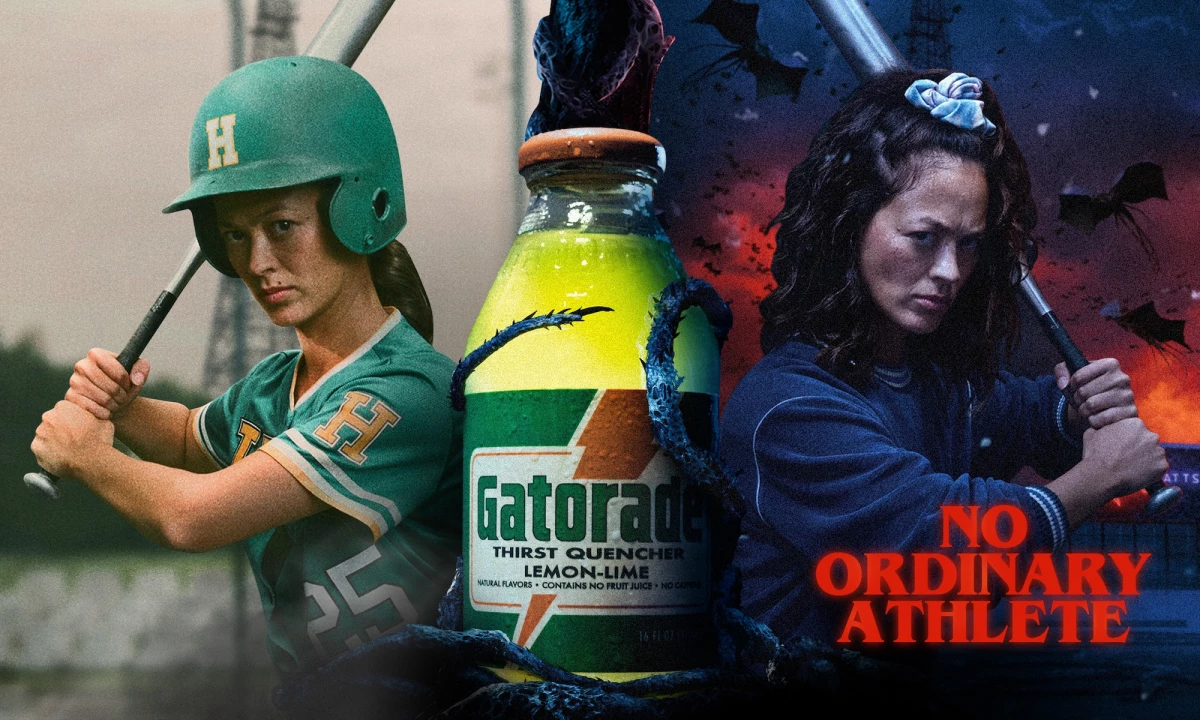
Gatorade is bringing back its 1987 "No Ordinary Thirst Quencher" campaign for Netflix's "Stranger Things'" final season.
The timing now stretches further with a major product return, as after nearly 30 years off shelves, the brand's iconic glass bottles are making a comeback.
Designed by creative agency TBWA\Chiat\Day, the wider campaign shows sports fields transforming into the show's signature dark world, the Upside Down, complete with monsters and its iconic synth theme.
Code red. Something’s coming. pic.twitter.com/HPg46TiCzt
— Gatorade (@Gatorade) October 31, 2025
The campaign follows Gatorade's recent trend of tapping into brand heritage strategy.
"For over 60 years, Gatorade, the OG sports drink, has fueled the world’s greatest athletes," the brand's SVP of marketing, Anuj Bhasin, said in a statement.
"The Gatorade Stranger Things 5 collaboration celebrates our authentic 1980s heritage by reviving iconic products and ads from our vault and pulling them into the 'Upside Down.'"
"No Ordinary Athlete" resonates with those who recall the original campaign as it brings in new viewers, appealing to both older millennials and Gen Z.
Game-Day Pressure Meets 'Stranger Things'
At the heart of the campaign is a 30-second spot narrated by NFL star Myles Garrett.
It opens with a young basketball player in Hawkins, Indiana, the show’s fictional hometown, for a glass bottle of Gatorade while the original 1987 jingle plays.
And then the court gets weird.
As athletes dash for the chance to take possession, their courts and fields morph into the Upside Down, complete with floating particles and the unsettling red glow that fans know well.
Vecna, the series' mind-manipulating villain who feeds on fear, makes a cameo in the perfect metaphor for pre-game anxiety.
Garrett connects the two worlds in his narration:
"The line between ordinary and extraordinary is marked in sweat. When that voice in your head whispers, 'You have already lost,' but you fight to the end.
Because you're no ordinary athlete, and Gatorade is no ordinary thirst quencher," he says, closing the spot.
The creative rolled out across social and digital channels first, building organic momentum ahead of connected TV placements and a media buy tied to Netflix's upcoming Christmas Day NFL games.
With this strategy, Gatorade is meeting two major audiences: sports fans and streaming subscribers, at a time when they both overlap.
Why Nostalgia Marketing Drives Consumer Engagement
Gatorade has tapped into how nostalgia marketing works in today’s world: smart creative control backed with thoughtful product revival.
One of the key reasons behind nostalgia marketing’s effectiveness is that it triggers positive emotional associations, creating instant familiarity.
According to a GWI study, 53% of people feel happy engaging with media from the past, and 40% say it provides them with comfort.
Nostalgia isn’t just a feeling—it’s a trend. In the Asia-Pacific region, downloads of nostalgic visuals are up 40%. For brands, it’s a powerful tool to connect, comfort, and cut through. https://t.co/anLmb1dwRx
— Getty Images VisualGPS (@GettyCreativity) October 30, 2025
A more recent UserTesting survey also found that U.S. consumers are more likely to buy from brands they associate with their childhoods.
"Stranger Things" fans love how the show captures the '80s in every detail, including the style, the culture, and even the products.
As a result, brand partnerships don't feel like marketing gimmicks, but like they're actually part of the show’s nostalgic world.
The return of Citrus Cooler and the launch of the glass bottles echo those trends.
The designs lean into authentic 1980s cues, and the limited nature of each drop encourages fans to collect while raising the campaign’s cultural visibility.
The revival of the glass bottles sits at the center of that idea, giving the campaign a physical artifact from Gatorade’s archive rather than a modern redesign.
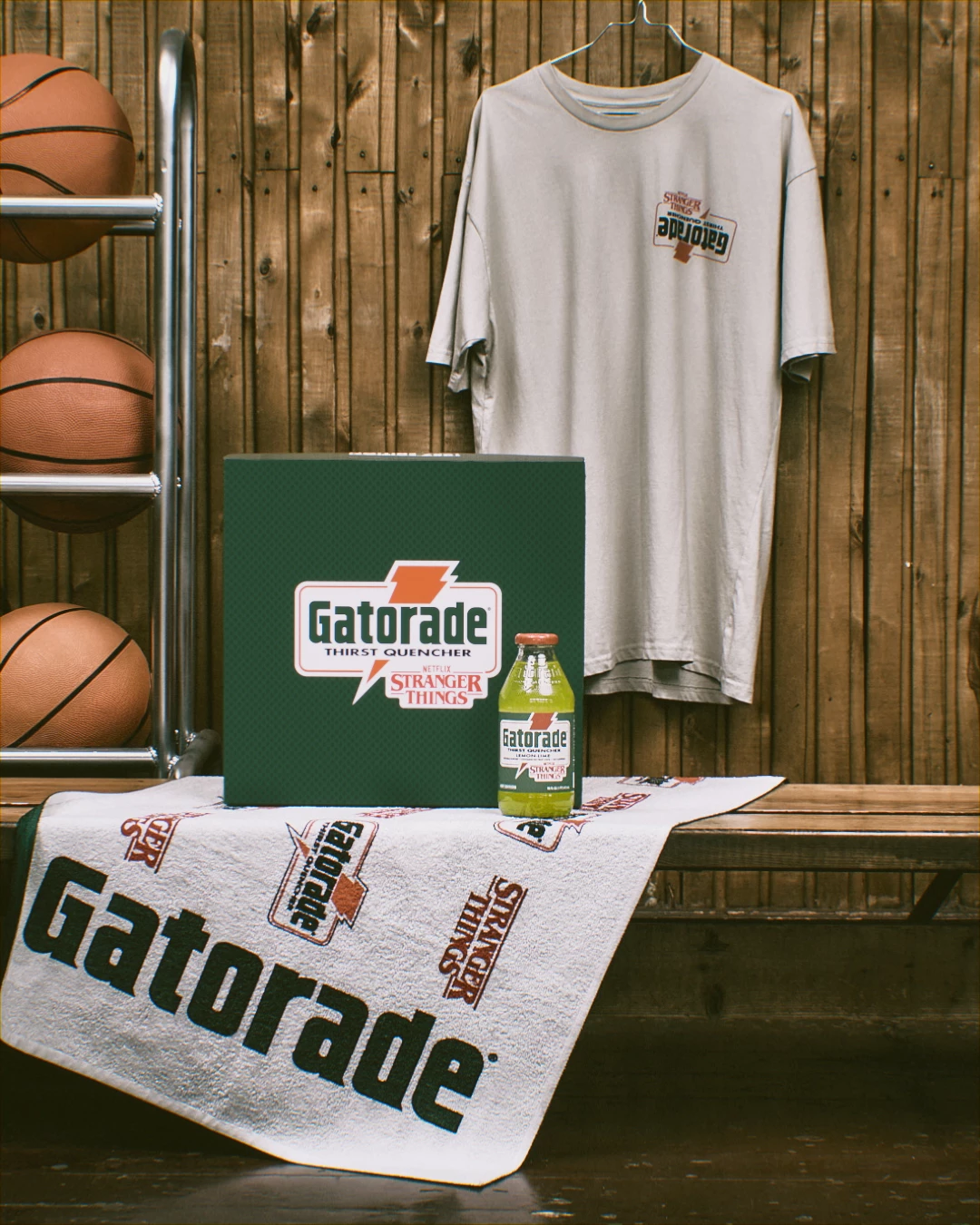
The five limited-edition bottles will appear in the new “1987 Hawkins Capsule,” launching December 4.
This includes a Lemon-Lime glass bottle, a vintage T-shirt, a Gatorade sideline towel, and a collectible shipper box.
A second drop, the Upside Down Capsule, will follow on December 30 at 11 a.m. ET with items tied to later episodes.
Gatorade's approach makes old feel new again while executing it across multiple platforms.
- Brand archives offer instant recognition and cut creative development time vs. building campaigns from scratch.
- Place campaigns where audiences already gather naturally, like Netflix's Christmas NFL games, rather than forcing them across disconnected channels.
- Multi-agency collaborations work when each team owns its specialty (creative, media, social, PR) while staying aligned on the central vision.
The timing is important, too.
Launching this campaign ahead of "Stranger Things'" final season increases cultural relevance while the show is at peak anticipation.
This also hints at where sports marketing is heading.
As Netflix expands into live sports, athletic brands now need strong storytelling, not just performance credibility.
The Bigger Picture
Gatorade joins a crowded field of "Stranger Things" partnerships, including:
- Target: 1980s in-store experience with 150+ exclusive Stranger Things products.
- Doritos: Retro talk-show spot merging snack culture with Hawkins nostalgia.
- Coleman: Limited camping gear line reissued in vintage Stranger Things style.
But while competitors focus on simple co-branding, Gatorade has found thematic resonance.
Athletic pressure as a supernatural battle is an insight-driven creative that serves both brand and entertainment property.
After strategically mining its brand archives this year, Gatorade is proving that thinking forward sometimes means looking backward.
It's a lesson other CPG brands should note as they work through culture-saturated markets.
Our Take: Does Nostalgia Marketing Create Smart Campaigns?
I think Gatorade cracked the code on entertainment partnerships by asking the right question: What do sports and "Stranger Things" actually share?
The answer: pressure, fear, and overcoming extraordinary challenges create a more authentic connection.
To top things off, the glass bottle return also feels like a detail pulled from the era the show depicts rather than a marketing add-on.
Gatorade hasn’t overplayed the "Stranger Things" connection or abandoned its athletic roots.
What I think they did is find a sweet spot where both worlds naturally overlap.
And this is a continuation of the brand's retro campaigns this year, including its revival of 1990's "Is It In You?" featuring NBA legend Michael Jordan.
Be sure to also check out these top creative agencies building authentic connections between brands and audiences in our directory.