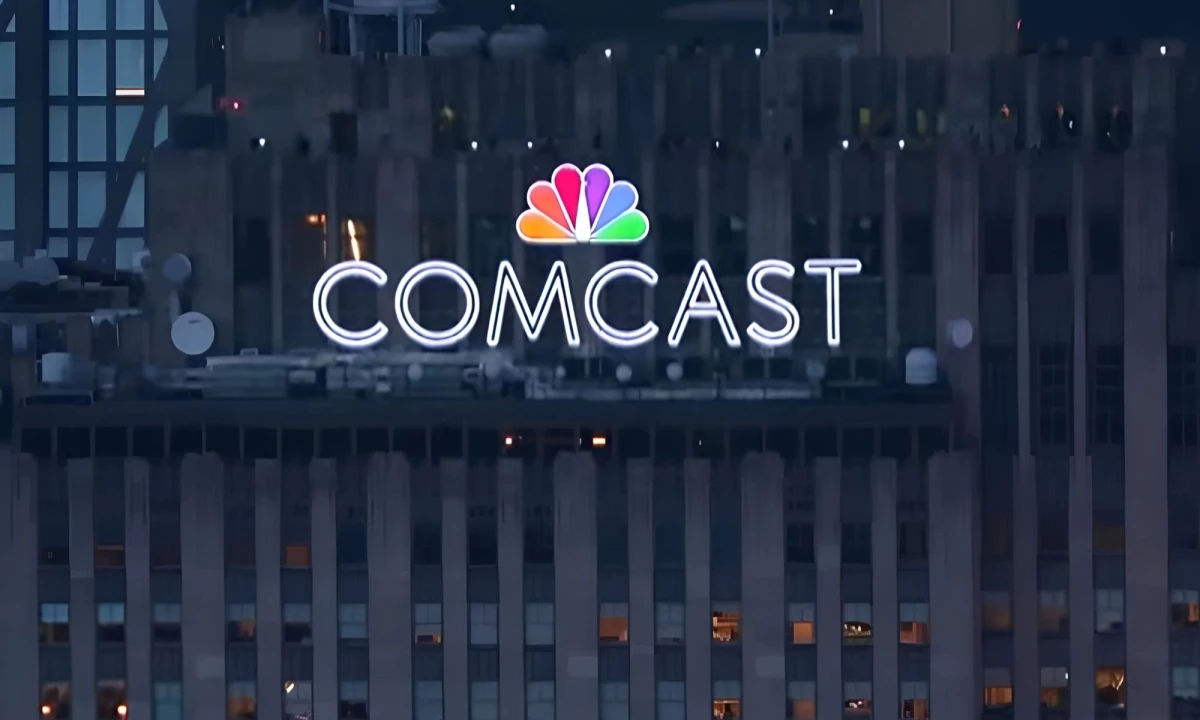

Comcast is splitting in two, ending its roughly 15-year strategy of owning both content and the broadband pipes that carry it.
NBCUniversal and Sky will separate into a new publicly traded company, while Comcast keeps the connectivity and technology business.
The tax-free spin-off, expected to close in about a year, hands Comcast shareholders stock in both companies.
NBCUniversal takes Peacock, NBC, Telemundo, Universal film and television studios, the theme parks, Bravo, and Sky.
Comcast keeps broadband, wireless, business services, and its network infrastructure.
"This is a very exciting day for our company," Comcast Chairman and Co-CEO Brian L. Roberts said in a company announcement.
"The transaction we are announcing will unlock a more entrepreneurial management approach and open up a multitude of new opportunities for each business."
Mike Cavanagh will run NBCUniversal as CEO, and former Comcast CFO Michael Angelakis returns to lead Comcast.
The split reflects how streaming, broadband, and advertising now run on different economics, each one needing its own kind of investment.
Two Companies, Two Sets of Priorities
The split unwinds the idea that drove Comcast for over a decade.
Owning the content and the network it traveled on was supposed to make each side stronger.
Streaming broke this logic, since shows now reach viewers over any broadband connection, so Comcast's pipes no longer give its own content an edge.
Holding both sides together started to cost more than it returned.
Broadband needs steady capital for fiber and network upgrades, while media pours money into hit-or-miss content and the chase for streaming subscribers.
Cavanagh said both companies start from positions of strength.
"With our iconic brands and theme parks, leading franchises and incredible creative talent, we are well-positioned for long-term value creation."
Splitting them lets investors value each business on its own terms, which is the real draw of a breakup like this.
A focused company tells a cleaner story, and sharp brand positioning is easier for investors and customers to grasp.
65 Million Homes and Businesses
The announcement shows how media companies are restructuring around new consumer habits and the economics of streaming.
Comcast serves more than 65 million homes and businesses through its connectivity platforms.
And this reach is what throws off steady, predictable cash flow, the kind that funds long-term network investment.
Peacock has the audience but not the profits.
Forrester's 2026 research found that 27% of U.S. online adults stream Peacock monthly, nearly level with HBO Max at 28%.
Comcast booked $2.1 billion in Peacock revenue in the first quarter, alongside a $432 million adjusted EBITDA loss.
This split between strong reach and weak margins is the whole problem with streaming today.
And it seems that investors are liking the split.
Comcast stock closed up about 4.5% Monday on the news, even with shares down roughly 24% over the past year.
This early vote of confidence is the clearest sign yet that a cleaner product strategy can be worth more to the market than sheer size.
The results illustrate why media companies continue balancing subscriber growth with sustainable streaming economics.
- Focus improves execution. Companies should separate businesses with different investment cycles to sharpen operational priorities.
- Financial transparency improves decision-making. Leaders should simplify corporate structures to help investors evaluate performance more accurately.
- Consumer habits reshape corporate strategy. Brands should adapt organizational models to match where audiences spend their time and money.
A focused company moves faster because every decision answers to one business, not two competing ones.
Our Take: Did Comcast Wait Too Long to Split?
A spinoff cleans up the org chart, but it does nothing for the problems that forced the move.
We think that Comcast acted late, after streaming already ate the advantage that owning both content and pipes was supposed to protect.
Comment
by u/AudibleNod from discussion
in news
Peacock still loses money, and a standalone NBCUniversal now competes for subscribers without a broadband parent to cushion the losses.
Look at Warner Bros. Discovery, which announced a similar split last year and drew takeover bids within months, ending in a $110 billion sale to Paramount Skydance.
This is the quiet logic of most media breakups right now, since smaller and cleaner companies are easier to buy.
Looking to navigate similar organizational changes to clarify positioning, communications, and maintain customer confidence?
Explore these top corporate branding agencies in our directory.