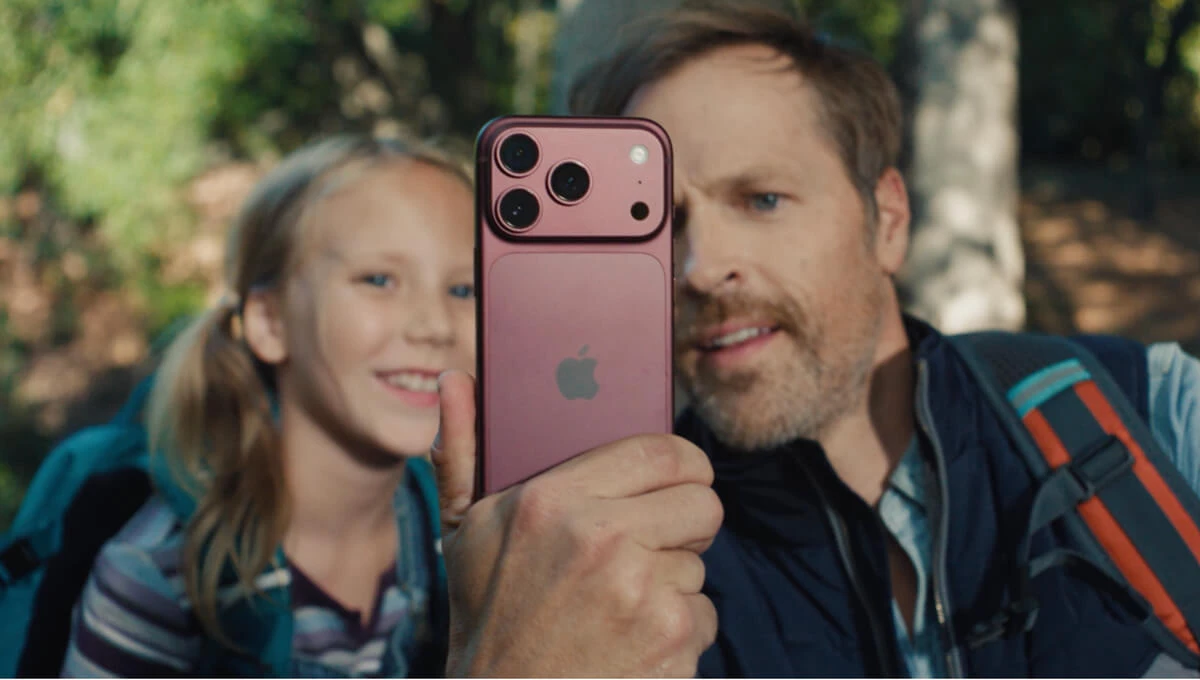

A little girl asking to be a unicorn is now C Spire's pitch for the iPhone 18 Pro.
Apple released the iPhone 18 Pro and iPhone 18 Pro Max, together with the foldable iPhone Duo, this September.
C Spire marked the launch with "Unicorn Quest," a campaign about a dad and his daughter.
Full-service creative agency Lewis developed the work, starting with three audience personas it mapped before anyone wrote a script.
One of these personas is made up of Android users.
So a regional carrier is spending its Apple launch budget trying to pull people off a competing operating system.
The spot puts C Spire's regional voice up front in a launch every carrier is selling, aiming for warmth and trust next to the global Apple name.
Brand stories are the one lever a carrier has when it can't change the product on the shelf.
Notably, C Spire says it was the only major U.S. wireless provider to write the iPhone 18 Pro's new manual shutter control into its core storyline.
The feature is a main driver of the plot, opting for a proper heartfelt narrative rather than a specs-based one.
A Deer Becomes the Unicorn
The 30-second hero spot follows a young girl and her father through the woods.
When she asks to be a unicorn, the two set off on an adventure, with dad's iPhone guiding the way and taking photos.
They meet a deer, and Dad sends Mom a picture with the message "We found a unicorn."
The spot closes on the iPhone 18 Pro and C Spire's tagline, "There's more to C."
As part of the campaign, Lewis created three audience personas:
- Apple Aficionados
- Apple Loyalists on a Budget
- Best-in-Class Tech composed of non-Apple users
The agency studied each group's touchpoints, media habits, and feature priorities.
It combined the findings with competitive analysis to guide strategy talks before concepting.
The campaign runs across TV/OTT, OOH, digital display, search, social, retail, and web, following the partnership's earlier "Like a Boss" Super Bowl campaign.
Three personas means the same 30 seconds has to work on a loyalist, a deal hunter, and an Android holdout.
C Spire picked the one feeling all three share, which is what audience segmentation is supposed to produce.
Carriers Sell the Same Phone as Everyone Else
C Spire is using feature-led storytelling to stand out at launch.
Omdia put Apple at 60% of U.S. smartphone shipments in the first quarter of 2026.
Counterpoint Research found that iPhones made up 75% of smartphone sales at AT&T, T-Mobile, and Verizon in the same quarter.
When shoppers arrive wanting an iPhone, the story around it is the carrier's to write.
Three lessons follow for marketers selling a product that other brands also carry:
- Write the feature into the plot: The manual shutter control drives the story's key moment, so the spec carries emotion.
- Research audiences before concepting: Lewis mapped media habits and feature priorities for three personas first.
- Give every channel the same story: One 30-second narrative across TV/OTT, OOH, search, and retail keeps the message consistent.
All three depend on a story short enough to remember, which one deer and one text message manage.
C Spire's wager is that emotional branding outlasts the promo pricing every carrier resets each quarter.
Our Take: What Does a Carrier Own in a Phone Ad?
Every carrier gets the same phone, the same launch date, and the same embargoed spec sheet from Apple.
We'd argue that the only brand asset left is the delivery moment, and C Spire grabbed it by closing on a photo of the phone arriving in Mom's hands.
Service brands can copy this by finding the last step in the customer's story and letting the company be the one that finishes it.
Shoppers who picture this message arriving hold a memory no competitor selling the same phone can copy.
Brands building product-led creative campaigns need agencies that understand how to make the hardware the story.
Explore these top video production agencies in our directory.