
Consumers are becoming more open to advertising just as marketers are growing less certain about how they are using the media mix.
This comes as campaigns are seven times more impactful when audiences are receptive to the advertising around them, per Kantar’s Media Reactions 2026 report.
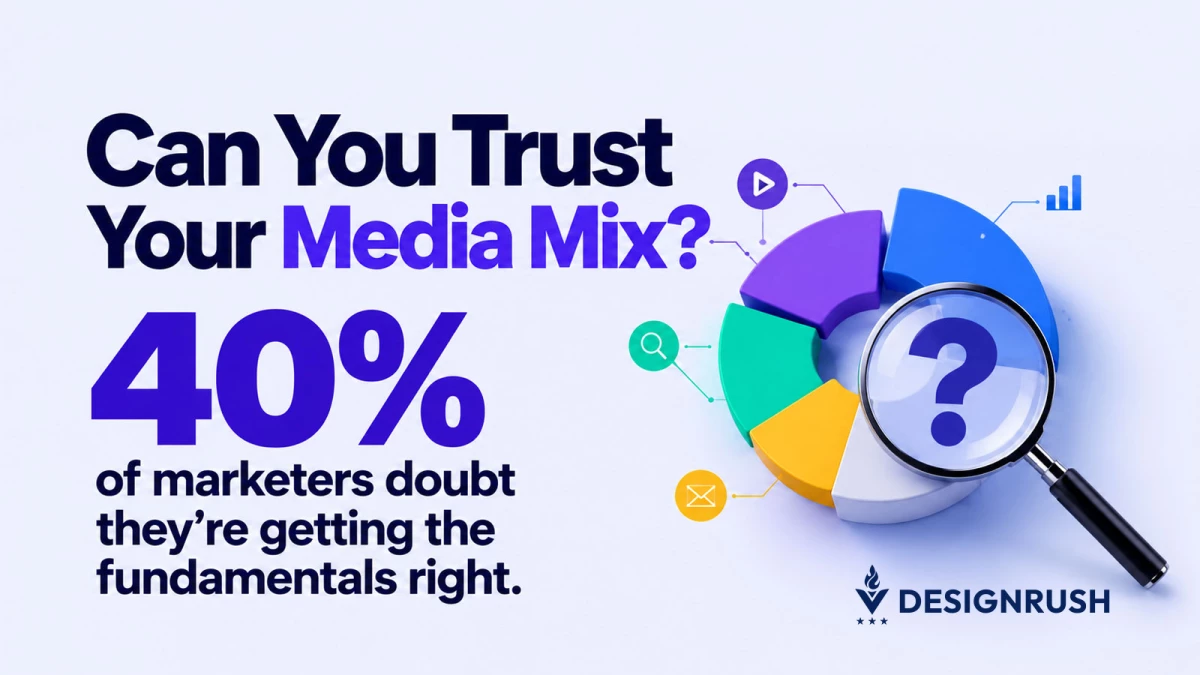
The only problem is that 40% of marketers doubt they are getting basics such as cross-channel integration and creative adaptation right.
Design In DC works across paid media and the landing pages those campaigns send people to, where the same message can play a different role depending on where someone encounters it.
The agency's CEO, Ziad Foty, has seen how timing and placement can change what that message needs to do.
"Two hours apart, same post, two different jobs. Same week, same idea, same audience. The order they appear in matters more than the copy," he says.
Ad Receptivity Rises as Negative Sentiment Falls
The Kantar report adds that negative sentiment toward advertising fell from 20% to 17% over the past year.
Fewer consumers said they were seeing too many ads, getting the same ads repeatedly, or simply tuning them out.
That openness only goes so far, and people can still lose interest when what they see next doesn’t match what they expected.
"If the page is answering questions people aren’t actually asking, faster performance won’t fix it. The message still has to be clear and relevant to what they came for," Foty says.
The problem can start before anyone reaches the landing page. A campaign may run across several channels, but the message, format, and ask can’t work the same way everywhere.
Marketers Doubt Their Media Mix
That uncertainty gets harder to manage once the same campaign is spread across more formats, platforms, and AI tools.
Intent can also change sharply between those environments.
"When someone asks an AI for help scaling their business, they’re not browsing. They’re solving a problem in real-time," Foty says.
People aren’t doing the same thing when they search, scroll through social media, or ask an AI for help.
That changes what they expect from the message in front of them. Creative that works in one of those settings can feel completely wrong in another.
How Brands Should Adapt Creative Across Channels
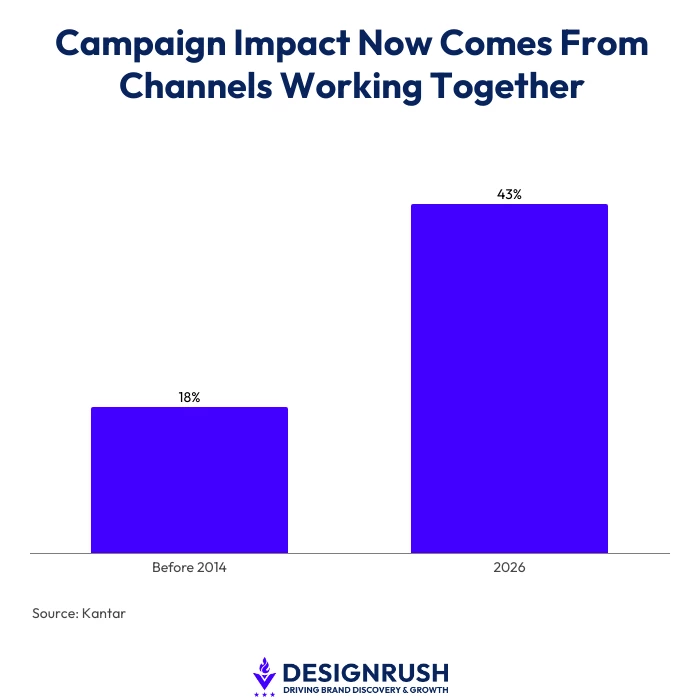
Kantar’s LIFT+ database shows that 43% of campaign impact now comes from channels working together, up from 18% before 2014.
Foty reminds teams that planning should start with what each platform is actually there to do.
"Both platforms are powerful, but what they actually do is completely different. That difference should drive your strategy, not the latest hot take," he says.
For brands and agencies, that leaves four practical checks when creative moves across the media mix:
1. Start with what the audience is doing
A person typing a question into search isn’t in the same situation as someone scrolling past an ad or asking an AI assistant for help. Before changing the creative, look at what brought them there and what they’re likely to want next.
2. Adapt the creative to the channel
There’s little value in forcing one asset into every placement. The ad may need a different format, offer, proof, or call to action depending on where it runs, even if the campaign behind it hasn’t changed.
3. Keep the ad and landing page connected
After the click, the page still needs to feel like a continuation of the ad. If the opening, offer, or final ask takes the person somewhere else, the connection is lost.
4. Look beyond individual placements
A channel can post strong numbers on its own and still contribute little to the campaign’s overall success. Kantar’s data puts more of the impact on channels working together, which makes isolated results less useful on their own.
People may be more willing to see the ad, but they can still switch off quickly if it feels wrong for the setting.
So ask yourself this. If the campaign is showing up in search, on social, and in AI-assisted experiences, would you really use the same message on all three?