

Enterprise Takeaways:
- WooCommerce powers over 4.6 million active stores globally, yet misconceptions about scalability and security still deter enterprise adoption.
- Neuralab shows how WordPress and WooCommerce succeed at scale, powering government platforms, complex product catalogs, and millions of monthly users.
- With proper implementation, WooCommerce rivals and even outperforms proprietary platforms, offering unmatched flexibility, deep integrations, and enterprise-grade performance.
As of Q2 2025, there are over 4.6 million active WooCommerce stores globally, according to Shoptrial. This includes more than 422,000 in the U.S. alone.
Despite that scale, WooCommerce is still widely misunderstood.
Many enterprise leaders continue to view it as a lightweight option that’s too insecure, too hard to scale, or too dependent on plugins.
Those myths persist, even as WooCommerce Checkout ranks as the third most popular eCommerce solution worldwide, holding a 16% global market share.
Editor's Note: This is a sponsored article created in partnership with Neuralab.
Unfortunately, that disconnect has real business consequences.
Companies overinvest in bloated proprietary stacks or miss critical go-to-market opportunities by underestimating what open source can deliver — but it doesn’t have to be that way
According to Bruno Zagorščak, chief content at Neuralab, the biggest misconceptions surrounding WooCommerce and WordPress holding brands back in 2025 are ready to be debunked.

Who is Bruno Zagorščak?
Bruno Zagorščak is the chief content officer at Neuralab. With nearly two decades of experience in multimedia storytelling and digital strategy, Bruno leads content initiatives that bridge creativity with technical precision. At Neuralab, he drives content architecture for complex WordPress and WooCommerce projects, helping global brands scale their eCommerce ecosystems with clarity and impact.
Based in Zagreb, Neuralab has spent over 17 years designing enterprise-grade WordPress and WooCommerce solutions.
The team has contributed to WordCamps and open-source plugin development, and received the Open Source Champion award from the WordPress community.
Neuralab also co-runs a joint venture with Infobip, one of Croatia’s two unicorns, to embed omnichannel messaging directly into WooCommerce platforms.
We spoke to Bruno about five enterprise myths — and the real WordPress capabilities behind them.
The Open Source Reality Check: 5 WooCommerce Myths, Debunked
1. “WordPress is just for blogs or small businesses.”
This is one of the most persistent misconceptions, and one of the easiest to debunk.
According to Bruno, many clients still view WordPress as a blogging platform and underestimate its ability to support complex, large-scale enterprise websites with advanced functionality.
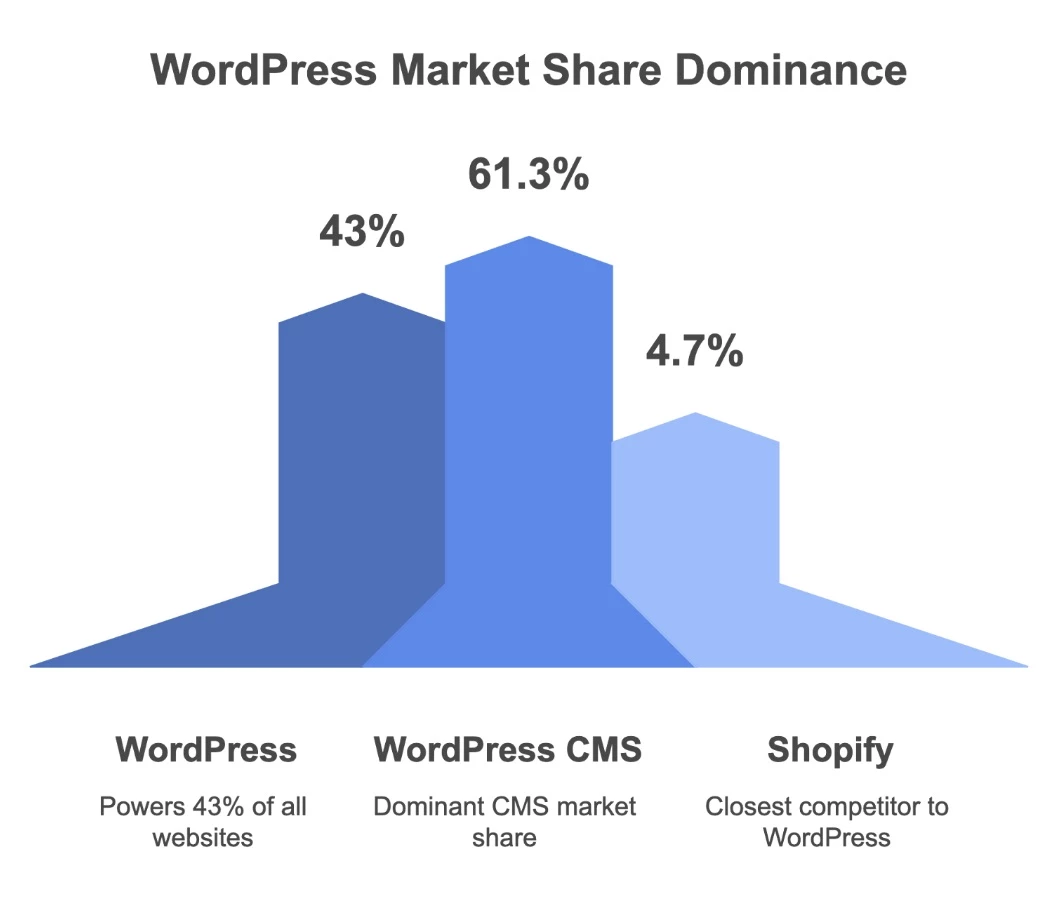
But as of April 2025, WordPress powers 43% of all websites on the internet.
Among sites using a known content management system, it holds a dominant 61.3% market share, far ahead of its closest competitor, Shopify, at just 4.7%.
And this isn’t a short-term trend. Between 2012 and 2023, WordPress grew steadily from 54.3% to 63.7% of CMS-based websites.
WordPress’s real advantage lies in its decoupled, content-first structure, which allows brands to manage multimedia-rich content, run personalized campaigns, and push to multiple front ends — all without reengineering the backend.
At Neuralab, that’s not just theory.
“[Neuralab’s] own client portfolio includes government institutions and high-traffic eCommerce stores, demonstrating its capability in demanding environments,” Bruno says.
“[Neuralab’s] status as a WordPress VIP partner, a program specifically designed for enterprise-level requirements, serves as external validation of our expertise in leveraging WordPress for complex enterprise needs,” he adds.
2. “Open source is not secure.”
For many enterprise clients, especially those in finance, healthcare, or government, the phrase “open source” triggers alarm bells.
“They're convinced WordPress is basically a welcome mat for hackers, especially with its vast ecosystem of themes and plugins,” Bruno says.
But the facts say otherwise.
As of May 2025, WordPress core has logged only 583 documented CVEs (Common Vulnerabilities and Exposures) across its entire history, a remarkably low number for a platform that powers nearly half the internet.
This is significantly fewer than platforms like the Linux kernel or Android, which each have thousands of CVEs.
While CVE count alone doesn’t define risk, it does highlight that WordPress is not the soft target many assume.
He also points to Gutenberg, the modern WordPress editor, which is reviewed by hundreds of contributors as part of each core update cycle — an added layer of community-driven scrutiny often missing from closed platforms.
WordPress benefits from a “many eyes” security model: its code is continuously reviewed by thousands of developers and researchers around the world.
When vulnerabilities are found, patches are often released within days — not weeks or months, as is common with proprietary systems.
Neuralab builds on that strong foundation with enterprise-grade protections:
- Secure managed hosting
- Proactive patching and updates
- Strict plugin vetting
- Web Application Firewalls (WAF)
- Role-based access control
- ISO 27001 certification (achieved in 2017)
3. “WordPress can't handle high traffic or large inventories.”
Bruno highlights that the myth stems less from platform limitations and more from poor implementation.
Businesses expecting high traffic or large inventories often worry that WordPress and WooCommerce can't handle the load, a concern typically rooted in past experiences with poorly optimized implementations.
Historically, negative perceptions around WooCommerce performance come from small-scale builds that weren’t designed to grow.
But the platform itself has evolved significantly, and so has the data.
According to the latest State of Enterprise WordPress report, 18% of enterprise WordPress sites now handle over 10 million unique visitors per month.
Meanwhile, the percentage of smaller WordPress sites (under 500K visitors) is declining: clear evidence that the platform is thriving in high-demand environments.
The root issue, Bruno says, is strategic. Even after clients choose WordPress or WooCommerce, many projects stall or underperform due to poor planning.
Businesses often approach eCommerce with a platform-first mentality, rushing to install plugins and launch pages before defining their customer journey, aligning internal teams, or preparing content at scale.
One major blind spot? Product content. Neuralab frequently steps in to untangle this — handling bulk content imports (CSV, XML, XLSX), refining product taxonomy, and structuring metadata for SEO and UX.
Neuralab takes a layered approach to performance optimization:
- Multi-tier caching strategies (object, server, CDN)
- Database optimization (with Redis and HPOS)
- Cloud infrastructure that auto-scales with traffic
- Custom taxonomies and faceted search for large catalogs
The result? WooCommerce stores that can manage thousands of concurrent sessions, 2,000+ add-to-cart events per minute, and catalogs exceeding 100,000 products, all without compromising speed or stability.
“When performance is treated as a priority from day one, WooCommerce can scale to meet the needs of even the most demanding eCommerce operations,” Bruno says.
4. “WooCommerce isn't a ‘real’ eCommerce platform and lacks essential features for enterprise.”
Many enterprise stakeholders compare WooCommerce unfavorably to platforms like Shopify Plus, Magento, or BigCommerce.
They assume it lacks core functionality, depends on unreliable third-party plugins, or simply can’t support complex workflows.
“They might see it as an add-on rather than a robust eCommerce solution,” Bruno explains.
That perception is outdated.
As of early 2025, WooCommerce powers over 3.5 million active eCommerce stores and accounts for more than 20% of all eCommerce websites globally.
It's not just powering mom-and-pop shops. It supports high-revenue businesses, international brands, and deeply integrated commerce ecosystems.
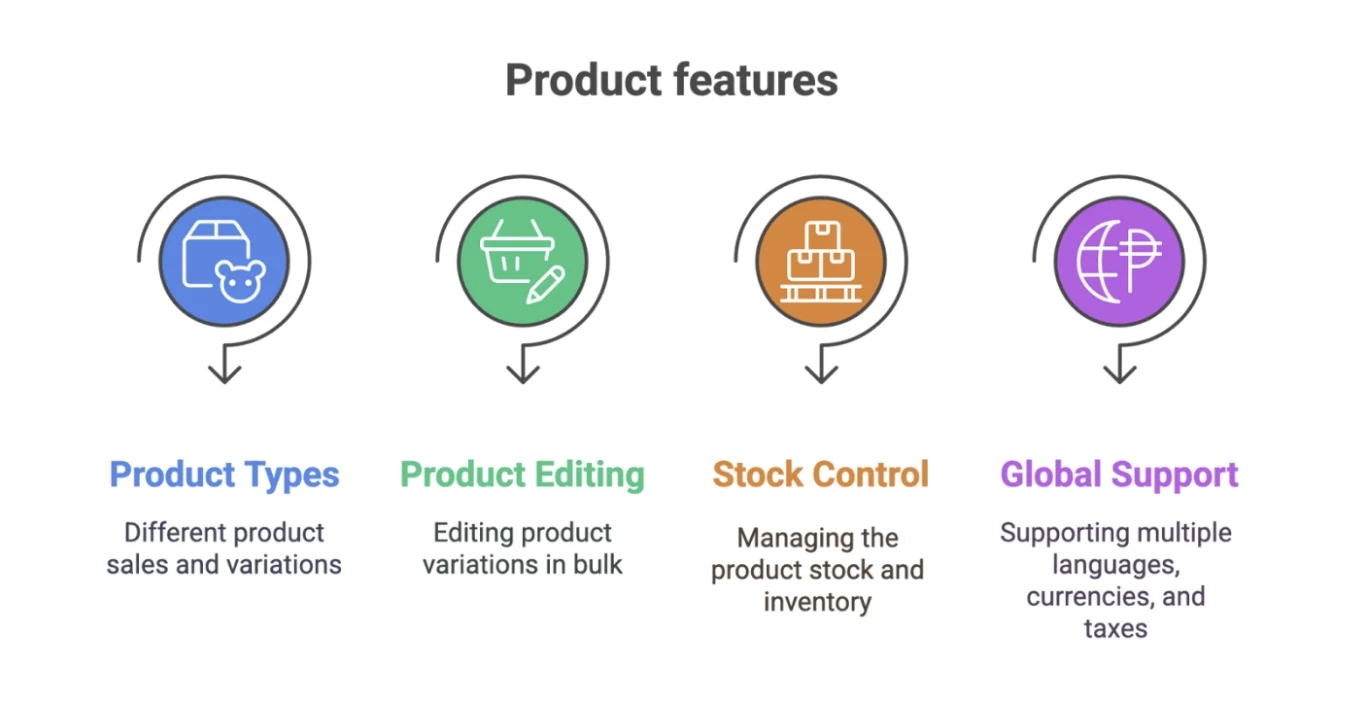
The platform’s strength lies in its flexibility and extensibility. WooCommerce supports advanced eCommerce functionality out of the box:
- Physical, digital, and subscription products
- Complex product variations and bulk editing
- Inventory management
- Multi-language, multi-currency, and tax zone support
But where it really shines is in integration and customization.
WooCommerce’s robust REST API enables seamless integration with business systems like CRMs, ERPs, and accounting platforms, which are essential capabilities for enterprise operations.
Without proper planning, however, these integrations become pain points. Bruno notes that as stores grow, technical issues often stem from decisions made early on.
WooCommerce API fragmentation, performance lags when retrieving large datasets, and complex system integrations can all destabilize a live store if not accounted for from the outset.
Neuralab regularly solves issues such as syncing inventory across legacy ERP systems and scaling customer support bandwidth during peak traffic with live chat tools.
The fix? Implementation partners who understand both architecture and operations. That’s what separates a WooCommerce build that simply launches from one that actually scales.
5. “WordPress is difficult to use and requires constant coding expertise.”
Many enterprises are reassured by licenses, SLAs, and contracts.
But Bruno argues that what they really want is predictability and governance — and that’s fully achievable with WordPress.
“Let's be real for a second: if your WordPress site requires a developer to update a product description or publish a blog post, someone has royally screwed up the implementation.
WordPress was literally built to make content management accessible to non-technical users.”
The confusion stems from conflating setup with day-to-day use.
While custom development is essential during the build phase, routine content and product management should be fully accessible to marketing and eCommerce teams.
That’s where Gutenberg becomes a game-changer.
Neuralab guides clients in using Gutenberg, WordPress’s native block editor, to streamline content creation.
Tasks that once required shortcodes or HTML can now be handled through an intuitive interface, allowing marketing teams to create complex layouts and dynamic content independently.
To reinforce that autonomy, Neuralab offers “WP Admin Workshops,” hands-on training sessions where client teams learn how to structure content, manage media, and handle day-to-day store operations with confidence.
While advanced changes still require technical expertise, WordPress is designed to empower internal teams, not trap them behind a dev backlog.
Strategic onboarding and content workflows make that possible.
Why These Myths Still Stick Around
Despite powering millions of stores and over 40% of the internet, WordPress and WooCommerce still face outdated perceptions in the enterprise space.
A key reason, Bruno explains, is the lack of centralized marketing.
“While companies like Adobe and Sitecore spend millions on enterprise marketing, WordPress's distributed ecosystem lacks this unified voice, creating an information vacuum often filled by outdated perceptions.”
Without coordinated messaging, WordPress struggles to position itself as an enterprise-ready solution, even when the capabilities are there.
Another issue is what Bruno calls the “implementation paradox.” When enterprise projects fail, the blame often falls on the platform rather than on poor execution.
“Enterprises that experience WordPress failures typically blame the platform rather than recognizing implementation issues.”
The cycle creates a negative feedback loop, where one flawed deployment shapes broader assumptions, even if the root cause was unrelated to WordPress or WooCommerce’s actual limitations.
Scaling WordPress for National Exams
A perfect test of WordPress’s enterprise capabilities? Powering critical government infrastructure under pressure.
Neuralab partnered with Croatia’s National Center for External Evaluation of Education (NCVVO), the agency responsible for administering the country’s high-stakes graduation exams.
Their outdated custom CMS couldn’t handle modern demands, according to Bruno.
“They needed three things: a streamlined publishing system for their editorial team, an accessible and mobile-friendly experience, and a solution to their massive bandwidth bottlenecks.”
Neuralab delivered:
- A custom editorial interface for 70+ editors across multiple teams
- Mobile-first design, with 68% of traffic coming from smartphones
- Load times reduced to 480 milliseconds
- Zero 500 errors during June’s exam release — over 1M visitors in a single month
- Terabytes of weekly traffic served efficiently via CDN
- Enterprise-grade security implemented weeks before the institution’s first-ever cyberattack
The build included staging and deployment pipelines, DevOps collaboration with hosting provider Kinsta, and layered security architecture focused on plugin integrity and access control.
Which Metrics Actually Matter?
Measuring eCommerce success goes far beyond pageviews and plugin installs.
For enterprise stores running on WooCommerce, Bruno recommends a multi-layered approach to KPIs, covering everything from revenue to infrastructure.
“While WooCommerce's native analytics provide excellent baseline data, the ecosystem offers specialized analytics tools that deliver deeper insights.”
Here’s how Neuralab breaks it down:
Financial Performance
Track the revenue-driving core:
- Total sales, net sales, average order value (AOV)
- Gross and net profit margins
- Sales by product/category
Conversion Metrics
Monitor how effectively your site turns traffic into transactions:
- Overall conversion rate
- Add-to-cart rate
- Cart abandonment rate
Customer Behavior
Focus on retention and long-term value:
- Customer lifetime value (LTV)
- Customer acquisition cost (CAC)
- New vs. returning customer ratio
Omnichannel Communication
Especially with integrations like Infobip, monitor:
- SMS/email open and click-through rates
- Transactional message delivery
- Preferred customer channels and opt-in behavior
Technical Health
Behind-the-scenes metrics impact every customer interaction:
- Page load time and site speed
- Server response time
- Cross-browser and mobile compatibility
- Uptime (Neuralab uses tools like BrowserStack, Kinsta APM, FlyWP, and UptimeRobot)
What to Look for in a Strategic eCommerce Partner
Many agencies market themselves as strategic partners, but in practice, few operate beyond the role of implementers.
For enterprise brands investing in WooCommerce, knowing what real partnership looks like is critical.
Based on Neuralab’s experience delivering complex WordPress and WooCommerce solutions, here are the traits that define a strong long-term agency relationship:
Deep Cross-Functional Collaboration
Designers and developers should work together from day one, not just hand off deliverables at the last minute. Close collaboration ensures technical feasibility, smoother UX, and fewer surprises down the line.
A useful sign: Your agency’s design and dev teams attend client calls together and give feedback as one team.
Transparent, Flexible Project Management
Avoid rigid, black-box workflows. Enterprise projects evolve, and your agency should use a project management system that offers real-time visibility and adaptability.
For example, Neuralab co-manages Trello boards with clients so priorities are shared and transparent throughout the build.
A Long-Term Growth Mindset
A strategic partner doesn’t disappear after launch. They stay involved to improve underperforming sections, test for conversion rate gains, and evolve your store based on real user data.
Ultimately, a great agency won’t just build what you ask for.
They’ll challenge assumptions, bring proactive ideas to the table, and help you grow the business behind the build.
Rethink What WordPress and WooCommerce Can Do
The myths surrounding WordPress and WooCommerce are outdated and actively prevent enterprises from tapping into powerful, flexible, and scalable tools.
Neuralab's almost two-decade track record proves that open-source platforms, when architectured strategically, can meet complex enterprise requirements.
These include custom integrations with global payment systems, multi-channel publishing workflows, and advanced security standards.
This foundation gives enterprises a choice that proprietary platforms simply cannot match: the freedom to evolve without vendor constraints.
Every enterprise platform decision is really a bet on the future.
You can bet on vendor promises and proprietary limitations, or you can bet on the platform that's already proven itself across 4.6+ million active implementations worldwide.
The platform has already proven itself. The question is whether you'll join them.