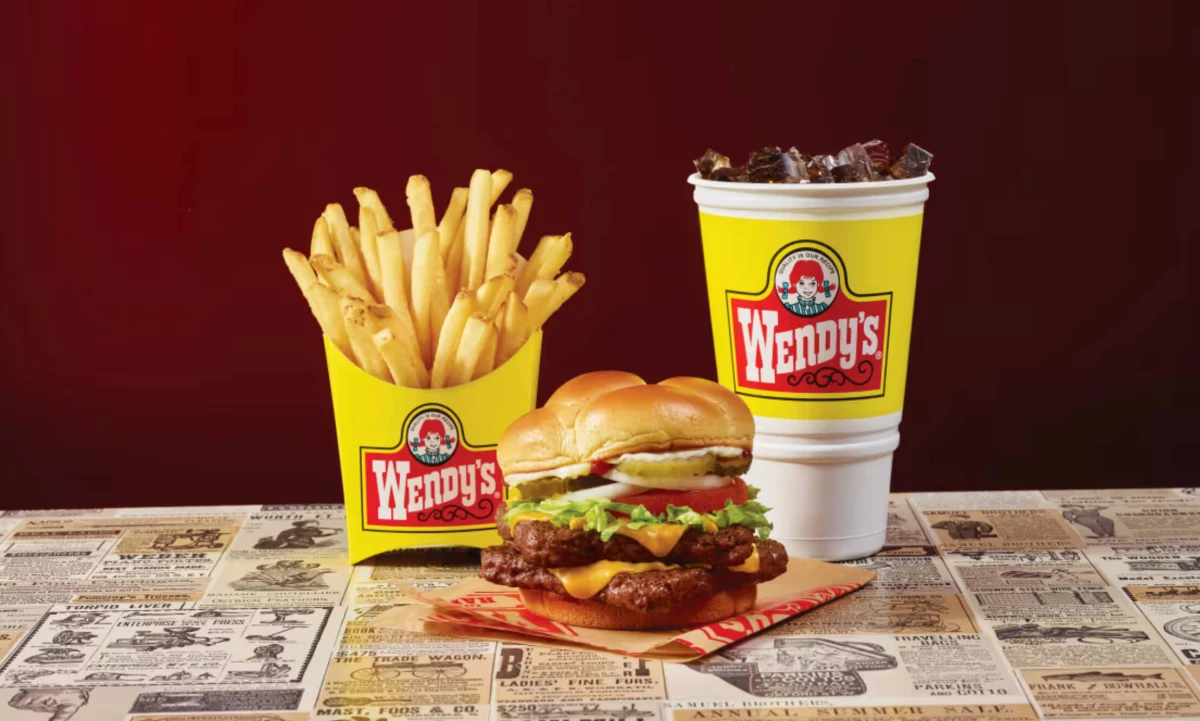

Wendy's original yellow is coming back, and fans finally get one of the things they keep asking for.
Starting September 28, Wendy's will serve burgers, nuggets, and fries in the yellow packaging it used decades ago.
Frosty cups get the same treatment, the company confirmed. The rollout is gradual and continues into 2027.
The timing matters, as U.S. same-restaurant sales fell 7% in Wendy's second quarter.
U.S. traffic dropped 12.5% over the same stretch, management told analysts during the August earnings call.
President and CEO Bob Wright said Wendy's is "clearly not performing at our potential," naming food quality and value as the places the chain slipped.
Wendy's Chief Marketing and Customer Growth Officer Tariq Hassan said the request has followed the brand for years.
"Fans asked. Constantly," Hassan told USA Today.
"It's one of the most requested things we've ever had come back."
Yellow defined Wendy's from the day the chain opened its first restaurant in Columbus, Ohio, in November 1969.
The red-and-white look came much later.
Online, the old packaging never really left people's minds.
A Bronx-based content creator wrote in 2025 that "the yellow packaging had powers I think."
The post resurfaced across social platforms as more people recalled Frostys that supposedly tasted better in the old cups.
Hassan read the reaction as proof of real emotional attachment.
"That kind of emotional connection is powerful, and you can't design it into packaging," he said, adding that it's something brands spend years trying to earn.
Wendy's is counting on this nostalgic attachment to hold while it fixes everything underneath it.
The Archive as Ad Budget
The new packaging covers nugget boxes, fry cartons, and Frosty cups.
It echoes the sunlit dining rooms that Wendy's operated in its earliest decades.
The chain is running nostalgia marketing off years of unprompted fan requests.
Other chains are mining their own history, too.
Pizza Hut now runs 155 Classic locations in the U.S. with red cups, checkered tablecloths, and arcade machines pulled from its 1980s and '90s dine-in era.
Yum Brands is banking on the old dine-in feel to sell more pizza.
Meanwhile, KFC is heading in the opposite direction.
The chicken chain started rolling out a modernized visual identity in June across its 34,000-plus restaurants worldwide.
New sauces and a drinks platform also came with it.
One chain is digging up its past, the other is rewriting its future, and both are hoping the changes make people walk back in.
Wendy's picked the cheaper of the two options.
Reissuing old packaging costs a fraction of a full brand identity overhaul, and the creative work is already sitting in its archive.
The catch is that heritage design buys attention for a few weeks, but the food still has to do the rest.
What Memory Is Worth at Checkout
Shoppers are responding to brand history across every age group, and the pull reaches well past longtime fans.
CivicScience found that 68% of U.S. adults say nostalgia influences their purchases at least a little.
The share who say it influences them a lot climbed to 17%, an annual high.
Research from the U.S. Chamber of Commerce showed that 81% of Gen Z shoppers like it when brands revive products from their childhood.
These numbers make the 1969 yellow the cheapest demand Wendy's owns. It's already proven and already requested for.
Rivals can easily match a sauce launch with one of their own, but nobody can knock off a yellow Frosty cup that their mom held back in the day.
Marketers watching Wendy's move have plenty to learn from it:
- Audit the archive before writing the creative brief: Wendy's reissued a design that had already been circulating in old photos and fan posts for years.
- Let demand set the release date, not the campaign calendar: The yellow return only became a launch once "Fans asked. Constantly" gave the brand a documented reason to act.
- Give the comeback a real timeline: Rolling the packaging out from September 28 through 2027 gives the gesture a dated, trackable rollout.
None of this required Wendy's to build anything new.
It only required admitting that what it already had, sitting in old photos and fan comments, was worth bringing back.
Our Take: Can Yellow Cups Fix a 12.5% Traffic Drop?
Digging through your own archive is the cheapest creative work a brand can do.
We think that it's also the least useful thing Wendy's could be doing right now, with U.S. traffic down 12.5% and the CEO saying the food itself needs improvement.
The archival work was real, since someone had to match the exact yellow to a supply chain and confirm the color was still theirs to use.
But the wrapping was never the part that slipped.
We'd take a better-tasting burger from a brand that listened over retro packaging that sells a feeling more than quality and value.
Burger King heard the same complaints about slow service and tired stores, and answered with $700 million in kitchen upgrades and remodels.
U.S. same-store sales rose 8.5% last quarter, the strongest run the chain has had in years.
Customers can tell the difference between a brand that heard them and a brand that spent money trying to prove it.
The strongest refreshes usually start with something people already feel when they use the product. Explore these top branding agencies in our directory.