
The creative AI market has developed an odd problem.
There are now more models available to generate an image or video than ever, which can make choosing the right one to use for a particular project difficult for creative teams.
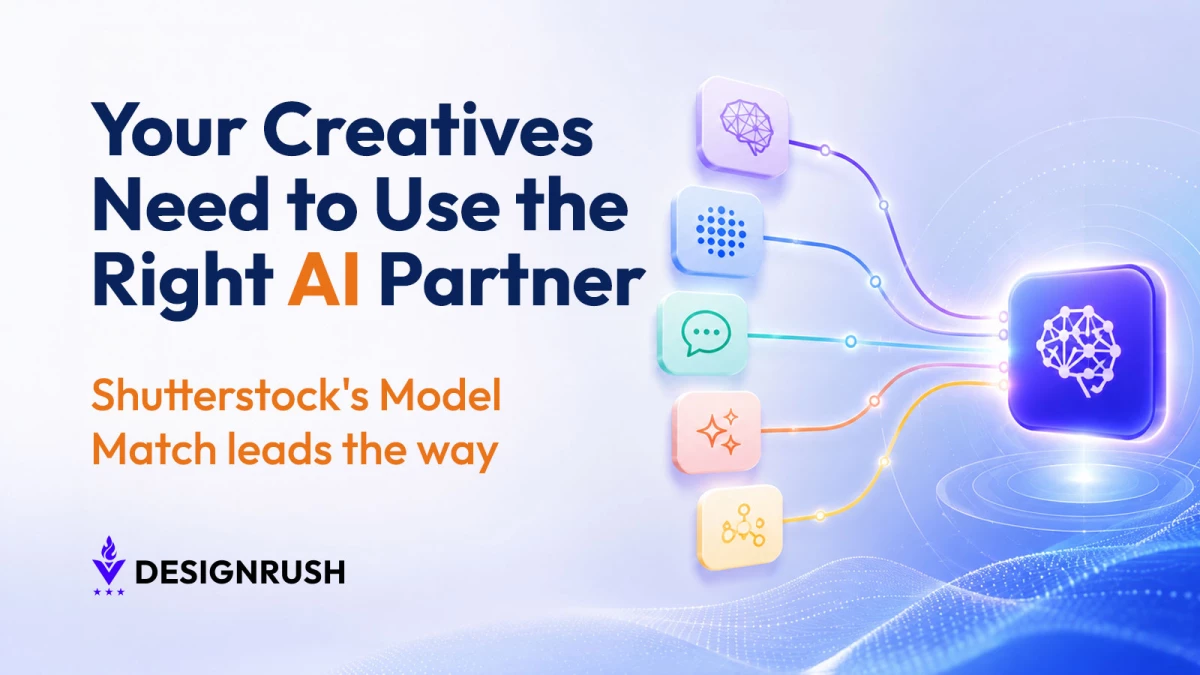
To assist creatives with this problem, Shutterstock introduced Model Match, its proprietary technology designed to connect a user's prompt with the AI model best suited to the specific creative task.
Model Match features some of the most popular AI models, including:
- Gemini 3 Pro Image (Nano Banana Pro)
- GPT Image 1.5
- Seedream 4.5
- Flux 2 Pro
- and more
The release of this new feature is in line with Shutterstock's shift toward a human-led, AI-powered creative platform.
This new feature matters because different models produce dramatically different results, even when given the same creative brief.
One may be better suited to photorealistic imagery, while another handles composition, character consistency, or video motion more effectively.
That makes model selection a creative decision.
Match Models to Creative Intent
The idea that one AI model can handle every creative task equally well is a common, but significant, misconception.
Some are particularly effective at stylized imagery or handle complex visual compositions more effectively.
This is why creative teams should be asking "which model is best for this brief?" rather than "which AI model is best?"
In line with this, creative briefs should establish what the model needs to accomplish before a team decides which technology to use, including:
- Visual style: The desired aesthetic, level of realism, or artistic treatment
- Subject complexity: The number of elements, characters, objects, or environments that need to appear together
- Consistency requirements: Whether subjects, characters, products, or visual elements need to remain consistent across outputs
- Format: Whether the work is intended for still imagery, video, or another creative application
- Level of control: How precisely the creator needs to influence composition, details, or other aspects of the output
Explore Creative Directions Faster
Early-stage ideation often involves exploring several interpretations of the same concept before settling on a direction.
A creative team may know the general idea it wants to communicate, but they still need to determine what that idea should look like.
A campaign concept, for example, could work as a realistic product scene, a highly stylized composition, or even as a more cinematic visual.
Each of those options changes how the final creative communicates the original idea.
Model Match helps accelerate that process by connecting a prompt with models likely to suit the creator’s intent and presenting multiple AI-generated image or video outputs to consider.
Instead of spending time deciding which model to try first, creators can focus on:
- Comparing different interpretations
- Identifying what resonates
- Refining prompts until the idea begins to take shape
Turn Model Diversity Into Creative Value
Having access to more AI models only creates value when the right model can be matched to the right creative objective.
That makes model selection part of the creative decision itself.
AI can expand the number of ways an idea can be produced, but it doesn't decide which expression of that idea is right for the brand.
Model Match is designed to close that gap by connecting the creative intent expressed in a prompt with the model best suited to execute it.
Instead of asking creatives to understand the strengths and limitations of every model themselves, it puts that intelligence behind the selection process.
After all, the creative team has better things to do than keep a scorecard for every AI model on the market.
Start today for as low as $15 per month.