
Rocket 'Room to Dream' NFL Campaign: Key Findings
- Rocket debuted its new NFL spoton Netflix’s Christmas Day game, tapping a 26M+ U.S. audience while avoiding Super Bowl-level media costs and creative constraints.
- The campaign was led entirely by Rocket’s in-house Dream Factory team, signaling how brands are reallocating creative control internally as AI lowers execution barriers.
- AI now underpins Rocket’s creative workflow, enabling faster ideation, tighter messaging refinement, and broader creative participation across the organization.

Campaign Snapshot
Rocket is returning to the NFL spotlight with a Christmas Day ad that reflects more than media strategy.
This ad reveals how the company’s in-house creative team is restructuring itself around artificial intelligence.
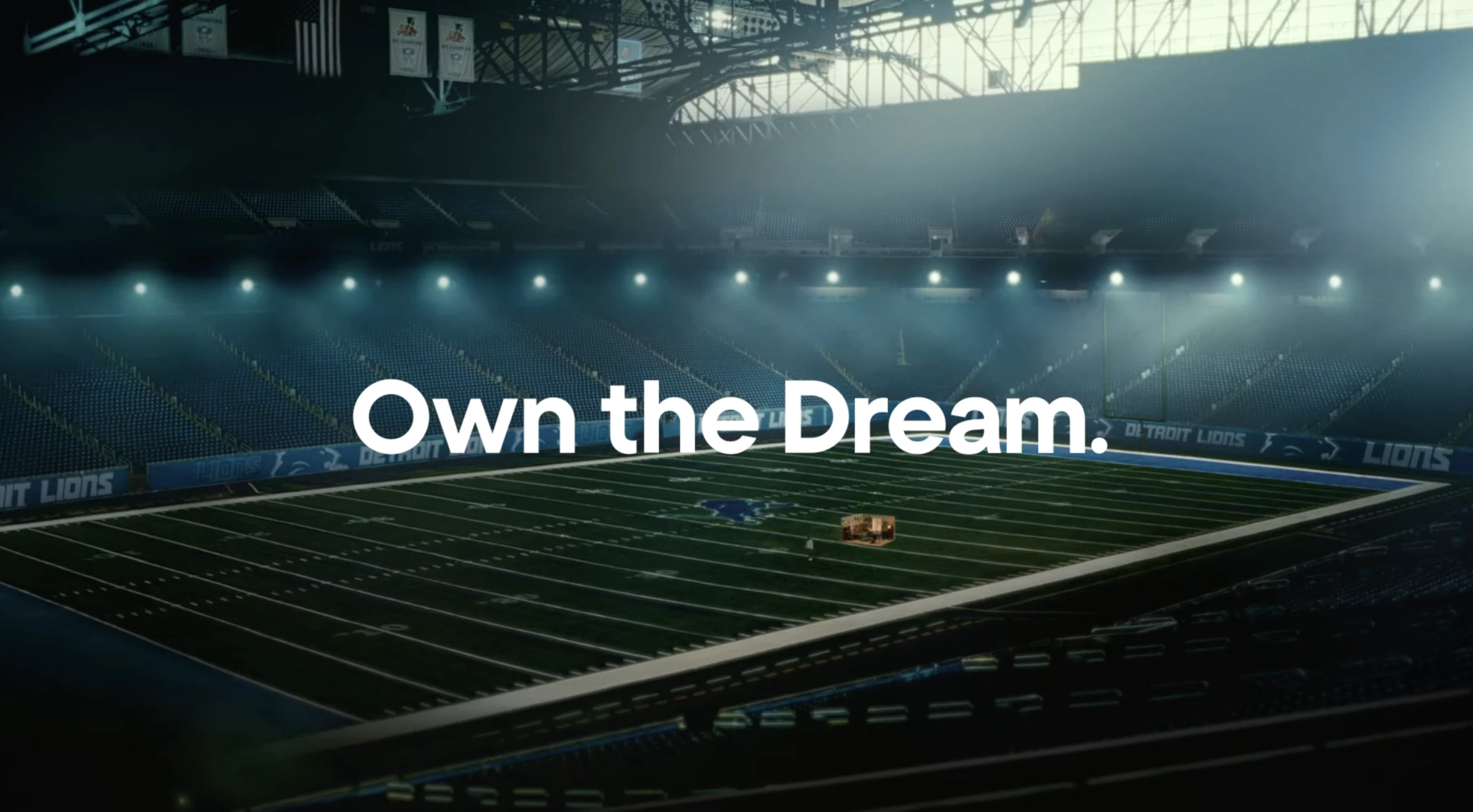
The 30-second “Room to Dream” spot premiered on Christmas Day during Netflix’s prime-time match between the Detroit Lions and Minnesota Vikings.
The placement reaches a national audience without the premium price tag of Super Bowl ads.
And it also reinforces Rocket’s long-running narrative around homeownership and personal ambition.
The ad stars Lions running back Jahmyr Gibbs, walking through a recreation of his childhood bedroom filled with memories from his rise to the NFL.
The reveal comes as viewers realize the room is set at midfield inside Ford Field. Sharing Detroit roots, Rocket and the Lions anchor the moment in local authenticity.
Rocket’s “Own the Dream” platform was first introduced at the Super Bowl earlier this year.
Earlier in 2025, Dream Factory delivered a full-funnel campaign anchored by the “Lake House” spot, which became Rocket’s most effective marketing effort of the year.
That campaign leaned heavily on AI-supported messaging refinement and set the internal benchmark for creative performance.
Together, the Super Bowl launch of “Own the Dream,” the Lake House work, and now “Room to Dream” show a clear pattern.
Rocket is building consistency without stagnation, with each campaign reinforcing the same emotional territory while sharpening execution.
How AI Is Reshaping Creative Thinking Inside Dream Factory
“Room to Dream” continues Rocket’s focus on the emotional origins of ambition.
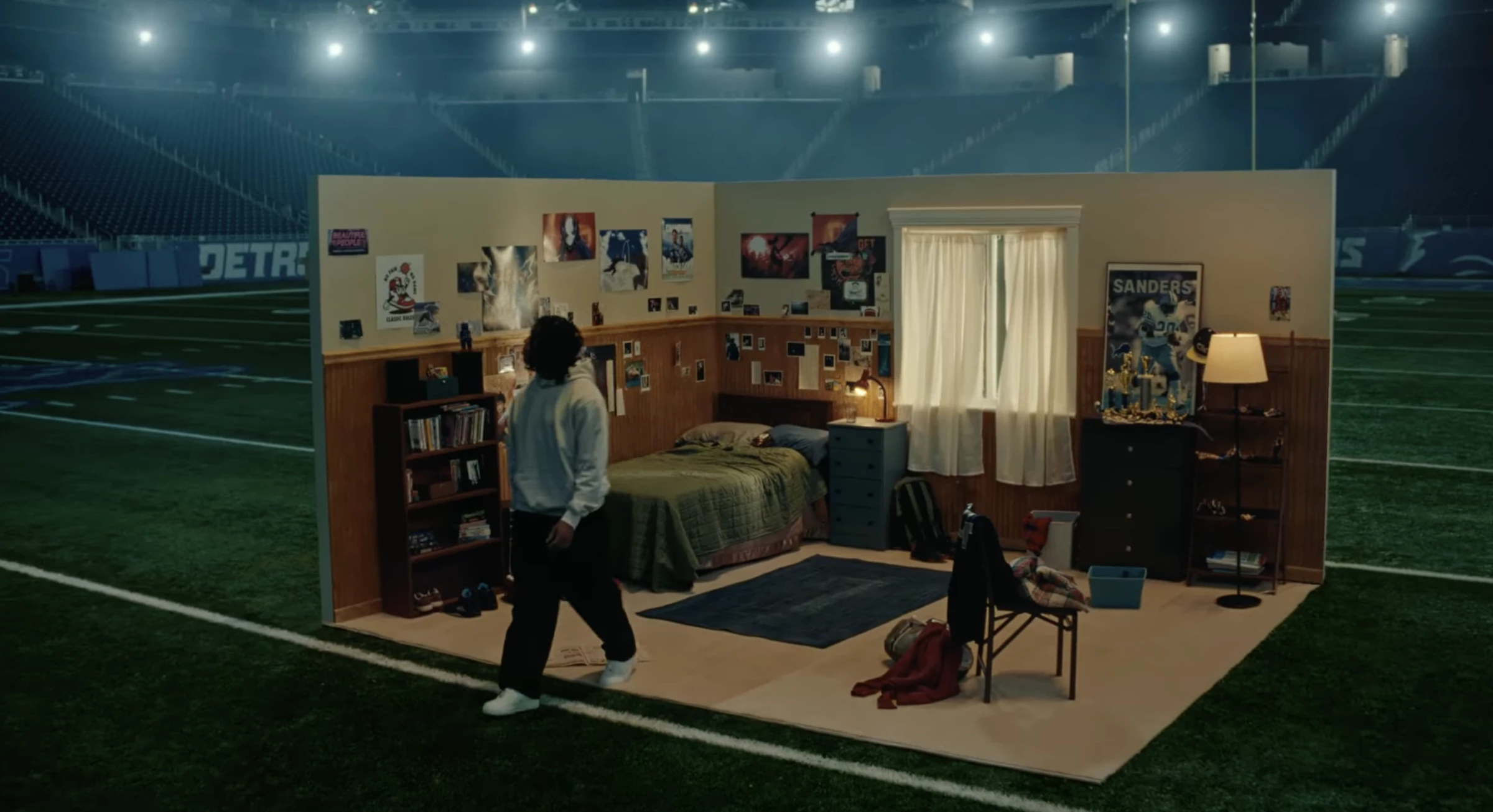
The creative links childhood homes to future success, a narrative that aligns cleanly with Rocket’s mortgage business without overexplaining the product.
- The decision to debut the ad during a Christmas Day NFL game on Netflix reflects a shift in how Rocket thinks about reach.
- Netflix’s two Dec. 25 NFL games averaged more than 26 million U.S. viewers in 2024, according to the company.
- That scale rivals traditional broadcast moments while offering more flexible pricing.
Internally, the work was led by Rocket’s Dream Factory team, reinforcing a growing confidence in in-house creative ownership.
The team developed the concept, production, and execution without leaning on outside agencies, and the result is a spot that stays focused on insight rather than spectacle.
The main takeaway?
Big ideas no longer require bloated production models when the insight is strong, and the distribution is smart.
By pairing in-house talent with AI-enabled workflows, Rocket is reducing friction between insight, approval, and output, and that model is becoming harder for brands to ignore.
Rocket’s Creative Reset: Faster Ideas, Smarter Execution
Behind the campaign is a broader organizational shift.
Over the past year, Rocket has been rebuilding its creative process around AI, not as a cost-cutting tool but as a way to expand creative participation.
The goal is simple: Give every team member access to the same creative firepower, regardless of title or tenure.
AI tools are embedded across ideation, messaging refinement, and internal alignment, and that approach helps teams move from concept to execution faster.
Key changes inside Dream Factory include:
- Faster ideation cycles, allowing more concepts to be explored without extending timelines.
- Earlier messaging refinement, helping teams land on clearer creative directions sooner.
- Broader creative contribution, reducing dependency on a small group of senior creatives.
AI was not the origin point for “Room to Dream,” which came from traditional insight-led conversations.
While AI didn’t spark the original idea, it played a key role in shaping the final result.
The tools helped speed up feedback, streamline alignment, and move the concept to execution more efficiently.
Our Take: Is Rocket Building a Real Creative Advantage?
Yes, and it’s coming from structure, not novelty.
Rocket isn’t turning to AI to cut corners or replace creative instincts.
Instead, it’s using the technology to open up collaboration and reach better ideas, faster.
That matters more than flashy tech adoption and signals confidence in the in-house model, paired with disciplined storytelling across moments that actually draw mass attention.
If more brands follow this path, the agency conversation is going to change faster than many expect.
For brands watching cultural signals closely, this approach mirrors how other sectors are evolving, including the visual language shaping competitive emerging ESports.
Looking to apply this level of storytelling to your own brand?
Explore Top Video Production Agencies at DesignRush and find the right creative partner for your next campaign.