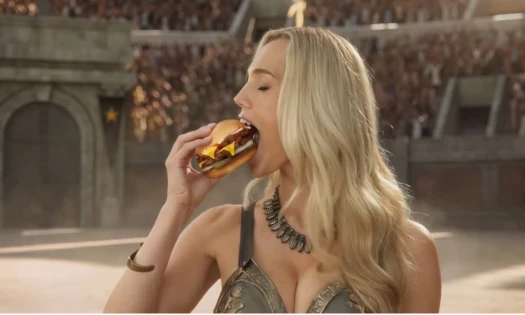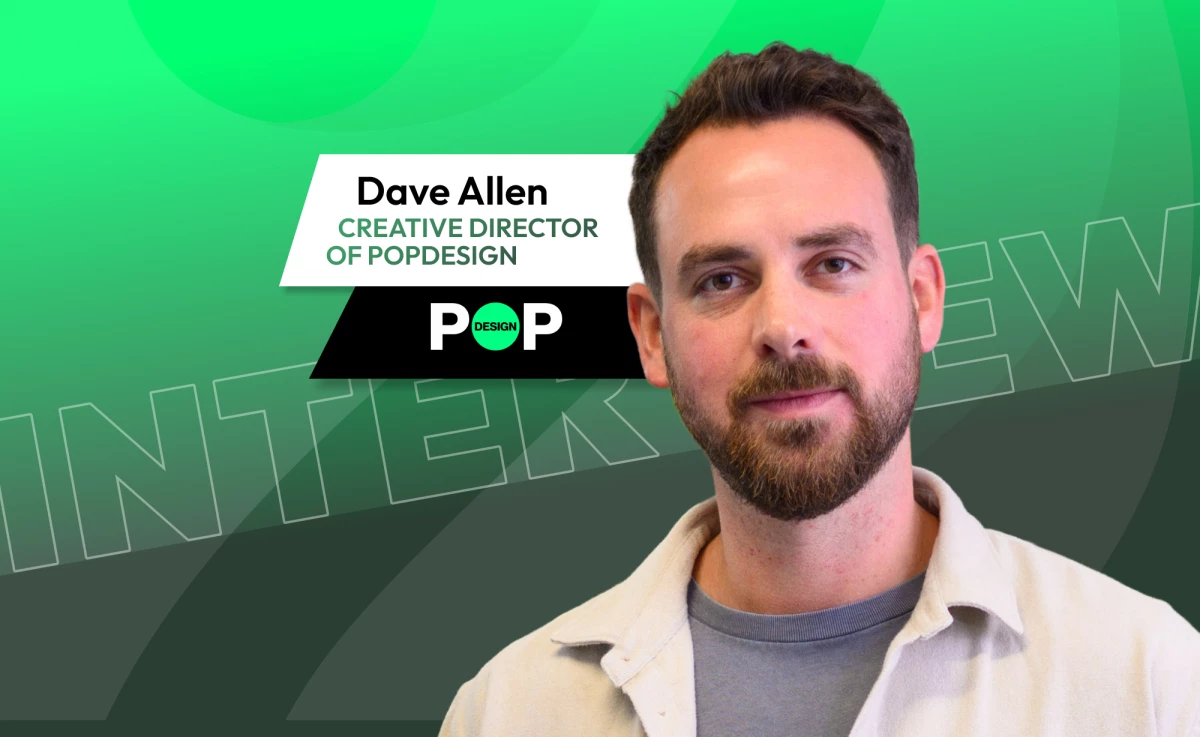

In-house creative teams are taking on a larger role than production support.
Their remit now spans strategy, brand work, content, campaign design, and AI-assisted production.
The World Federation of Advertisers' 2023 survey with The Observatory International remains one of the clearest global benchmarks for tracking the growth of in-house agencies. It found that 66% of major multinationals now have in-house agencies, with another 21% actively considering one.
The same report found that 70% of respondents already have strategic capabilities in-house, including brand, creative, or media, while 75% said the volume and complexity of work had increased.
The WFA findings point to a wider demand for creative capability across brands, agency groups, and specialist studios.
But as teams grow, maintaining quality becomes just as important as increasing output.
View this post on Instagram
PopDesign, the conceptual design studio within Leo UK, works across brands including McDonald's, Premier Inn, Morrisons, and B&Q.
Over the last five years, PopDesign Executive Director of Design Dave Allen has grown the team from 10 to 35 full-time conceptual designers, adding capabilities across social, branding, typography, packaging, illustration, and 2D and 3D animation.
In this DesignRush interview, Allen explains how PopDesign protects craft at scale, why populist design needs cultural clarity, and where AI helps without replacing art direction.

Who Is Dave Allen?
Dave Allen is the executive design director of PopDesign, a conceptual design studio within Leo UK.
He leads the studio’s work across branding, social, typography, packaging, illustration, and animation.
Over the last five years, Allen has grown the team from 10 to 35 full-time conceptual designers.
Design Has to Enter the Brief Earlier
For Allen, PopDesign's role inside Leo UK works best when design is part of the thinking early.
The studio works with Leo’s creative and strategy departments to shape, sell, and craft work across the agency’s client base. This structure gives designers a seat at the table before the final execution stage.
"We're at our best when there's a shared vision with each department working in harmony from brief to delivery, avoiding the classic 'insert design at the end of the process and hoping it all comes together,'" Allen says.
PopDesign is set up to avoid that.
View this post on Instagram
The studio brings what Allen calls "Populist Design thinking" to new and existing clients when there is a clear opportunity.
"The advantage of this is understanding the entire process and knowing what’s needed to tell the story," he says.
That point is becoming more relevant as in-house and hybrid models grow.
WFA’s research found that brands bring work in-house for more than cost savings.
Respondents cited quicker and more agile processes, better integration, and stronger brand knowledge as major reasons for building in-house agency capabilities.
Those benefits only work when design enters the process early.
ForPopDesign, the value sits in knowing the brand, shaping the idea, and staying close enough to protect the final work.
Scale Needs a Shared Standard
Growth can flatten a design team fast.
More people mean more output, more handoffs, and more chances for work to lose its edge.
PopDesign's expansion came after several major pitch wins for Leo UK, giving Allen a chance to build the department with longer-term needs in mind.
"We were deliberate in hiring for the future, not just the immediate need," he says.
That meant broadening the team’s skills for a social and digital world.
Allen had seen other departments split teams by format. Print sat in one place, social sat in another, while static and motion worked apart.
This structure can make work feel disconnected.
View this post on Instagram
PopDesign took a different route by keeping the team unified across disciplines. Collaboration, skill sharing, and shared culture became part of the quality control system.
"We have kept PopDesign unified through collaboration across disciplines, skill sharing, and building a strong culture," Allen says.
This is where scale becomes a creative issue, not only an operations issue.
ISBA’s 2023 in-housing report found that successful in-house operations often depend on clear vision, strong internal communication, and culture.
It also noted that talent acquisition, retention, resources, and technology remain major challenges for marketers building these teams.
The report supports Allen’s emphasis on culture and communication.
For PopDesign, scale works when every discipline understands the same brand idea.
Populist Design Starts With Clarity
PopDesign's creative position is built around populist design.
Allen defines it as work that is accessible and engaging to the widest possible audience. The point is to communicate clearly while tapping into culture in a way that feels memorable, iconic, and authentic.
"At the heart of populist design is work that’s accessible and engaging to the widest possible audience," he says.
The McDonald’s CARDS campaign shows how that thinking works in practice.
View this post on Instagram
Allen says the work was designed to fuel the culture of collectors around the country, using brand history as a source rather than a restraint.
"Each card was lovingly created in-house, taking inspiration and iconicity from the McDonald’s archives and reimagining it in a modern, memorable way that we hope people will treasure," he says.
The archive is doing real work here.
For a brand like McDonald’s, the visual history is already part of public memory. The work has to feel new enough to earn attention, while still feeling unmistakably tied to the brand.
View this post on Instagram
Kantar’s Brand Imprint research covered eight markets, more than 200 brands, 10,500 interviews, and more than 1,300 brand cues.
It identifies clarity, consistency, and communication as three principles behind strong brand assets.
This helps explain why PopDesign's approach to McDonald’s matters.
The collectible format works because familiar brand cues give people something recognizable to keep, share, and talk about.
Refreshes Need Familiarity and Movement
The Premier Inn rebrand created a different challenge.
The brand already had strong public recognition. For PopDesign, the job was to decide what could change and what had to stay familiar.
Allen says the first step was a full brand audit to identify which assets carried the most equity.
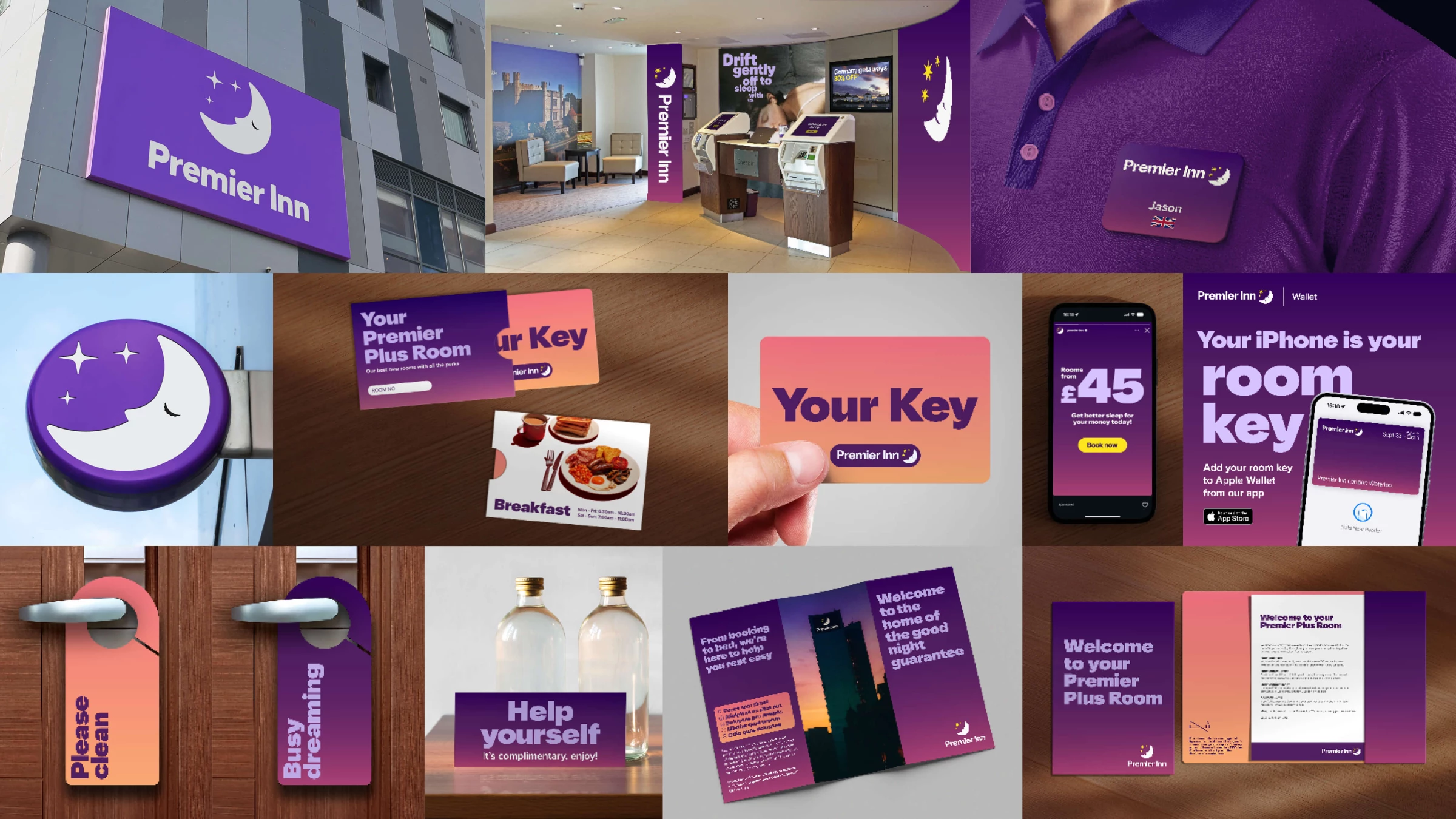
Research showed that Premier Inn’s signature purple, moon, and stars were highly recognizable and well liked. PopDesign then built around those assets with sunrise and sunset gradients and a bespoke typeface.
The goal was to update the identity while protecting the parts people already knew.
"As we kicked off development, we realised (pretty quickly) the gravity of changing a logo so embedded in culture and the importance of every decision being grounded in strategy and theory," Allen says.
That kind of project needs proof at each stage.
Allen says PopDesign tested the new identity against the original for familiarity, distinctiveness, and modernity across age groups and business versus leisure audiences.
View this post on Instagram
The target was specific: the new identity needed higher scores for distinctiveness and modernity while holding familiarity.
This is the kind of work where design taste alone is too loose a measure. The team needed to know if the refresh could move the brand forward without weakening the assets people already associated with Premier Inn.
For brands, the lesson is that a refresh works when the audience still knows who they are looking at.
High-Volume Brands Need Rules With Room
McDonald’s creates another kind of pressure.
The brand has high volume, high frequency, and multiple campaigns running across products, audiences, and channels. That can make creative teams slip into autopilot.
Allen says the challenge is keeping each campaign fresh and distinctive while holding the brand voice.
"With a client as prolific as McDonald’s, it’s important to keep each campaign fresh and distinctive without losing the brand voice," he says.
PopDesign uses core brand assets and templates as a starting point. The studio also encourages those rules to be challenged when the idea calls for it.
This balance is important.
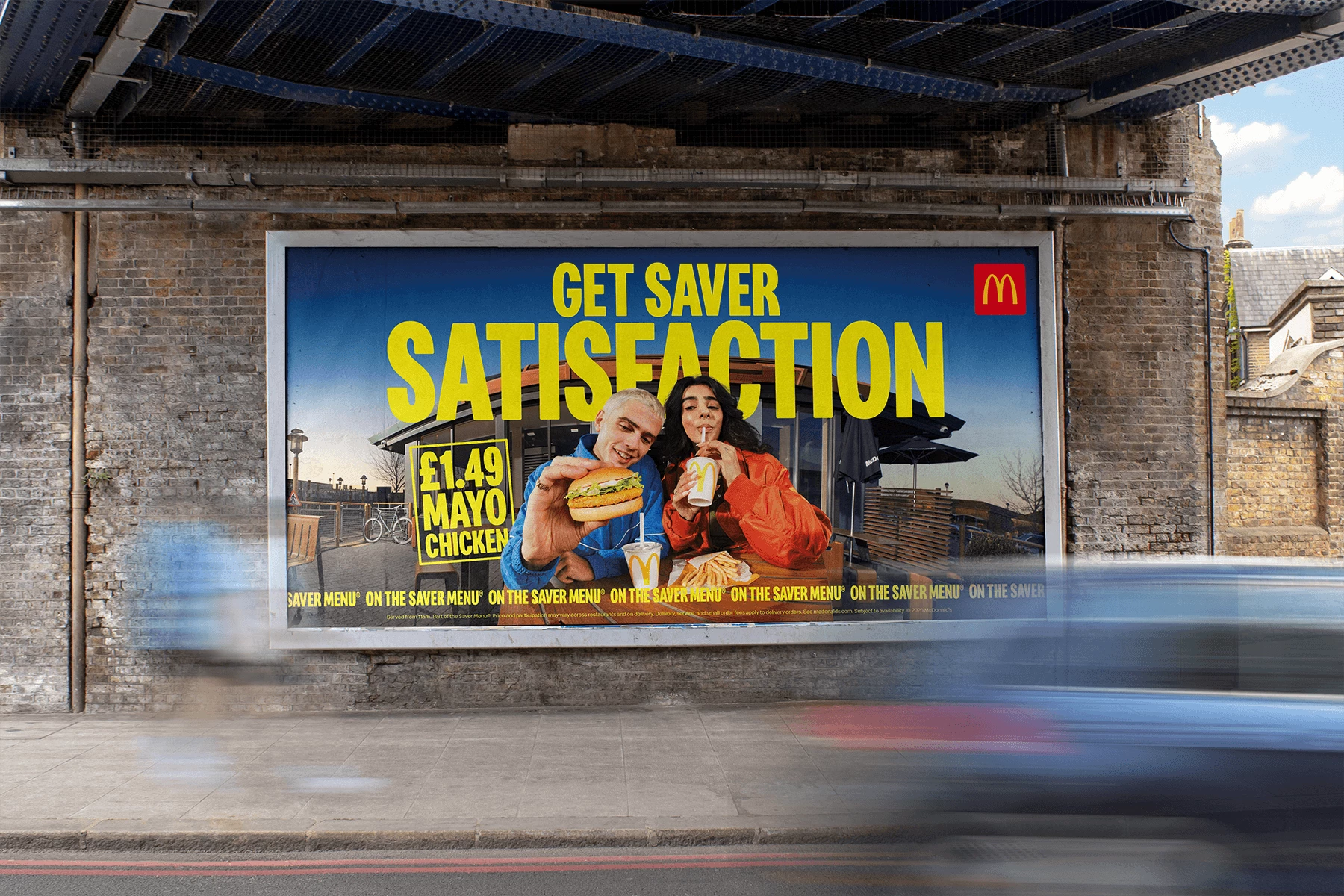
Templates help protect consistency. They can also become a creative trap when teams follow them too closely.
Allen’s rule is clear: the challenge has to serve the idea.
The same applies to culture.
PopDesign often works with current culture and trends, but Allen says the team avoids pastiche.
"McDonald’s should be driving culture, not simply borrowing from it," he says.
This is the line PopDesign is trying to hold.
For high-volume brands, cultural fluency is useful only when the brand can add something of its own.
AI Puts More Pressure on Craft
AI is now part of PopDesign's process.
Allen says the studio uses it across visualizing, concepting, 3D, motion, retouching, upscaling, and presentation design.
AI is already changing in-house agency work.
WFA’s 2025 report found that 93% of in-house agency leads planned to invest further in AI over the next 12 to 24 months. Forty percent had already seen faster content production, while 33% reported increased efficiency.
Speed is the obvious gain.
The harder question is what happens to creative roles.
Allen says AI has started to blur skill sets. Static designers can now test motion. Motion designers can create and edit live action. The boundaries between roles are becoming less fixed.
View this post on Instagram
Still, he is clear about what has not changed.
"What hasn’t changed is the need for skilled art direction and craft," Allen says.
This is where his view lines up with wider industry pressure.
Reuters reported that global companies are using AI to bring more creative work in-house, with AI helping teams create product images, select influencers, and produce campaign assets faster.
Gartner analyst Jay Wilson told Reuters that strategic and creative thinking would become key differentiators as scale becomes less of an agency advantage.
The production gains are clear, but taste, judgment, and direction still shape the result.
"We all need to work smarter and figure out which of the tools at our disposal will get us the best results, in the most effective way," he says.
"That doesn’t mean automatically dialling in the bots."
What Brands and Agencies Should Take From This
PopDesign's growth shows how design teams can scale without treating craft as a luxury.
For brands and agencies, the takeaways are practical.
- Bring design into the brief early. Design has more value when it shapes the idea rather than decorating the final asset.
- Protect shared standards as teams grow. Scale works when disciplines collaborate instead of splitting into disconnected lanes.
- Use brand assets with intent. Familiar cues give campaigns memory, but they still need a current reason to exist.
- Treat AI as a tool for better creative judgment. Speed helps, but taste and art direction still decide the quality of the work.
The larger issue is how creative teams control quality as output demands rise.
For PopDesign, scale depends on shared taste, clear brand thinking, and enough discipline to know when a tool should stay in the background.
This makes craft harder to fake.
More output only helps when the work still feels like it came from people who know what the brand is meant to say.