
Elon Musk vs. Netflix: Key Points
- Musk told his 227 million followers on X to “Cancel Netflix for the health of your kids” after backlash resurfaced around a trans character in a canceled animated series.
- Netflix stock slid nearly 5% within 48 hours of Musk’s posts, erasing billions in market value despite analysts saying the long-term impact may be limited.
- The uproar shows how fast brand narratives can spiral and why companies must treat content decisions as creative and reputational choices.
Daniel Ek may have stepped out of the spotlight at Spotify, but Elon Musk is busy shining it squarely on another streaming platform.
Within hours of posting to his hundreds of millions of X followers that people should “Cancel Netflix for the health of your kids," the streaming giant found itself in the middle of a global backlash.
On the next day, its stock was down 2.34%, a nearly $25 billion shave off its market cap.
The spark was cultural and political.
An old cartoon with a transgender character became the newest proxy war in the streaming battlefield.
And Musk, the richest man on the planet, turned it into front-page news overnight.
How a Canceled Cartoon Became a Flashpoint
The fire started with a viral post from Libs of TikTok, a conservative account with millions of followers, resurfacing a clip from "Dead End: Paranormal Park."
The Netflix series, based on a graphic novel, featured a teenage trans character voiced by Zach Barack.
It ran for two seasons before being canceled in early 2023.
But the clip posted by Libs of TikTok on September 30 went viral. The account has 4.5 million followers on X.
OMG. Dead End Paranormal Park, a show on Netflix, is pushing pro-transgender on CHILDREN.
— Libs of TikTok (@libsoftiktok) September 29, 2025
This show is advertised for 7-YEAR-OLDS
It’s being promoted on @netflix kids now.
Parents- BEWARE pic.twitter.com/gh5UZftKns
Musk reposted it, adding bluntly: “This is not ok.”
When one user replied they had canceled their Netflix subscription, Musk shot back: “Same.”
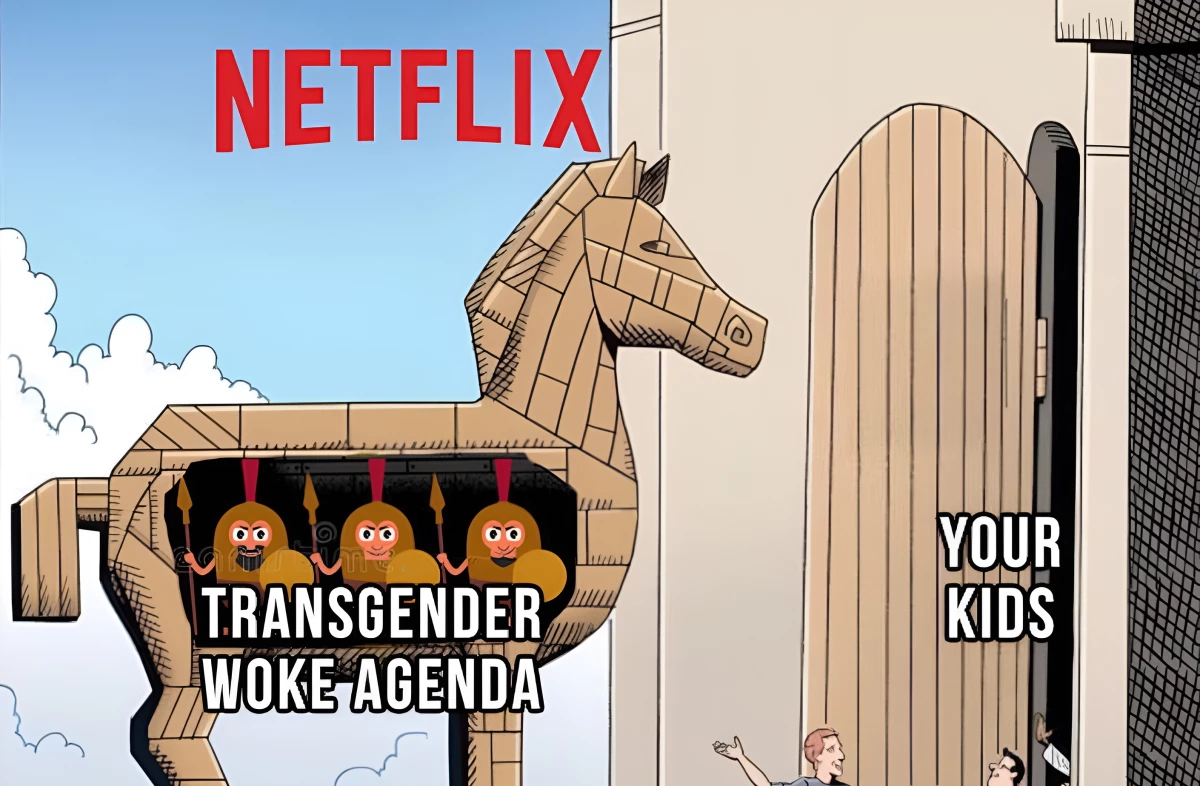
Hours later, he went further: “Cancel Netflix for the health of your kids,” reposting a graphic from Doge Designer.
The image shows a Trojan horse of "transgender woke agenda" entering a gate labeled "your kids."
The post has since been viewed 88.8 million times, with over 992,000 likes and 37,000 comments.
Cancel Netflix for the health of your kids https://t.co/uPcGiURaCp
— Elon Musk (@elonmusk) October 1, 2025
Show creator Hamish Steele responded on rival platform Bluesky: “It’s probably going to be a very odd day.”
He later denied accusations that he mocked the death of conservative activist Charlie Kirk, writing, “I never celebrated his death.”
He also shared that his social media accounts had been flooded with harassment.
It's ironic because before his meltdown, Graham did a writing workshop at my animation studio and he gave me loads of advice on getting the dead end pilot made.
— ✨ Hamish Steele ✨ Buy Go-Man! (@hamishsteele.bsky.social) October 3, 2025 at 6:21 PM
[image or embed]
However, Netflix has remained silent.
There have been no statements or clarifications.
The streamer, which has weathered storms over Dave Chappelle, cutbacks, and price hikes, stayed off the mic this time.
Netflix shares fell more than 2% on Oct. 1 and 4.3% the next day, cutting about $15 billion from its market value.
The stock, which had climbed 11% last year, suddenly looked fragile in the face of cultural outrage.
Analysts tried to calm investors. “I don’t think this is a reason to sell the stock,” CNBC’s Guy Adami said, adding some people might sign up just to counter Musk’s boycott.
Wedbush’s Alicia Reese also told CNBC that the timing came too late in the quarter to dent subscriber numbers, and ad revenue could offset any churn.
This incident shows how Netflix’s market price is tied to brand perception.
When Musk speaks, the echo chamber can move billions, even if only for a few days.
When Brands Lose the Mic
Musk's boycott demonstartes what happens when culture wars turn content into symbols and brands into targets.
Silence can look like weakness.
Netflix’s decision to stay quiet may avoid inflaming either side, but it leaves others to tell the story.
View this post on Instagram
In the age of instant virality, brands need to control their narrative before someone else does.
- Content is identity. Every show on a platform is a value statement, even years later. Companies have to assume that what they publish can be reframed anytime.
- Speed is survival. Brands need crisis playbooks that can move at the same speed as the backlash.
- Storms can be flipped into loyalty. Owning a stance can turn controversy into trust. Nike’s support of Colin Kaepernick showed there’s an audience that rewards brands for standing firm.
Netflix’s current move looks like endurance, waiting for the noise to fade.
Whether that is smart or shortsighted depends on how quickly the stock stabilizes and who ends up shaping the story.
Our Take: Can Netflix Survive Musk’s Spotlight?
I think it definitely can.
Netflix isn’t Bud Light, and one billionaire canceling his subscription won’t sink a $494 billion giant.
But the point right now is how fragile reputations have become when platforms are judged not by what they push today but by what they once hosted.
— Elon Musk (@elonmusk) October 2, 2025
This episode tells me why narrative control is everything. Netflix didn’t say a word, and for 48 hours, Musk owned the story.
This is the risk every brand faces. The real damage isn’t the temporary stock drop; it’s letting someone else define what you stand for.
In a market where streaming platforms fight tooth and nail for attention, remember that your content is your identity, and silence doesn’t make the storm disappear.
Comment
byu/jk_arundel from discussion
inLGBTnews
Silence can also be a flex, a way of saying this isn’t worth a response, and it'll keep doing what it does, no matter who shouts.
Releasing a statement could also make the issue bigger and give it more reach.
There are always two sides to every move, and I think Netflix is weighing these right now.
Every piece of content is a value statement. These crisis management firms guide brands in preparing for controversies that may surface.