
Middle East Retail Closures: Key Findings
- Chalhoub Group, Kering, and Amazon have temporarily closed or reduced operations across the UAE, Bahrain, Kuwait, and Qatar.
- The Middle East was luxury's fastest-growing market last year, accounting for 5% to 10% of global luxury spending.
- LVMH, Hermes, and Richemont shares fell between 4% and 5.7% as investors assess the commercial impact on the region.
Some of the world's biggest luxury and retail brands have temporarily closed or reduced operations across the Middle East.
This is due to the regional conflict that has disrupted business travel, tourism, and supply chains in the region.
Chalhoub Group, which operates 900 stores across the region for brands including Versace, Jimmy Choo, and Sephora, confirmed its Bahrain locations are now closed.
Global brands shut Middle East stores as conflict causes chaos https://t.co/M7uWBw6m0jhttps://t.co/M7uWBw6m0j
— Reuters (@Reuters) March 3, 2026
Amazon has also closed its Abu Dhabi fulfillment center, suspended regional deliveries, and instructed employees in Saudi Arabia and Jordan to remain indoors.
Meanwhile, stores in the UAE, Saudi Arabia, and Jordan remain open with voluntary staff attendance.
Kering, which owns Gucci, has suspended travel to the region and temporarily closed stores in the UAE, Kuwait, Bahrain, and Qatar.
Luxury’s Key Growth Region Enters Uncertainty
The Middle East has been one of the strongest-performing regions for luxury goods heading into 2026.
Consultancy Bain & Company described it as the brightest performer last year, when sales of high-end handbags and accessories had stalled across other major markets.
RBC analyst Piral Dadhania also estimates the region accounts for between 5% and 10% of total global luxury spending.
Travel retail is a significant component of that figure.
Victor Dijon, senior partner at consultancy Kearney, told Reuters that he estimates the travel retail market to be at $5 billion to $6 billion.
If it's shut down for even just a month, millions of dollars are at risk.
Shuttered airports have also disrupted inbound tourism.
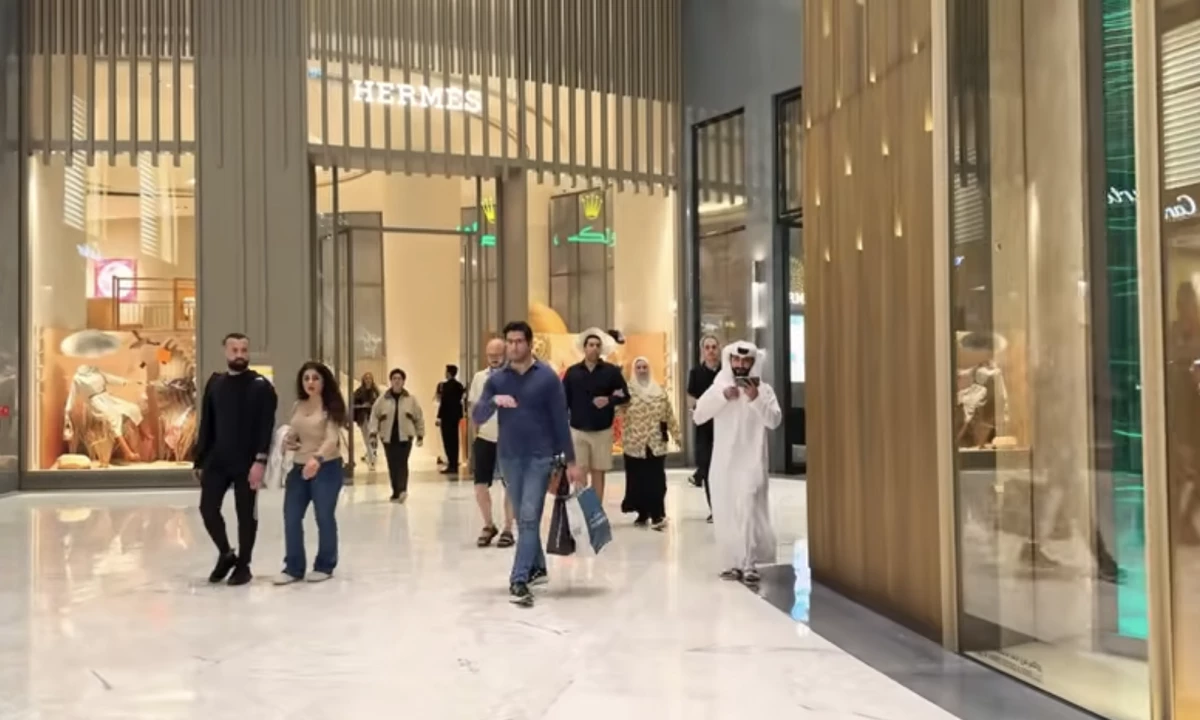
This feeds directly into retail foot traffic across major shopping destinations, including Dubai Mall and Mall of the Emirates.
Investor Reaction and Broader Commercial Impact
Financial markets moved quickly on the news.
Shares in LVMH, Hermes, and Richemont fell between 4% and 5.7% on Monday as investors weighed the impact of store closures and disrupted travel in the Middle East.
Amazon’s decision to suspend regional deliveries alongside its physical store closure also shows how quickly instability can spread across retail and logistics operations.
This incident also carries secondary implications for European luxury sales.
Middle Eastern shoppers who travel to Paris and Milan for purchases represent a meaningful portion of European luxury retail revenue.
If their travels are suspended for an extended period, the impact moves beyond the region itself.
This major incident highlights several operational and strategic considerations for global brands with significant regional presence:
- Travel-driven retail creates volatility. Luxury sales tied to tourism can stall immediately when travel corridors close.
- Operational response signals brand governance. Staff safety policies and store management decisions become visible brand actions during crises.
- Revenue concentration amplifies investor risk. Heavy exposure to fast-growth regions can quickly translate into market pressure when disruption hits.
Brands with established Middle East operations that have clear crisis protocols in place are better positioned to resume normal operations once conditions stabilize.
Our Take: How Long Can Brands Ride Out the Turmoil?
We think the short-term store closures are manageable for most of the brands named here. They are global conglomerates, after all.
The bigger question is duration.
A week of disruption is an operational inconvenience.
But a sustained closure of travel retail and tourism flows is a different calculation, particularly for brands counting on Middle East growth to offset softness elsewhere.
Overall, we think luxury brands with genuine long-term infrastructure in the region are likely to weather this with their market position intact.
That is, if the turmoil in the Middle East doesn't drag on.
Luxury brands managing retail operations across multiple regions need agencies that understand how to adapt quickly to market disruption. Explore the top luxury branding agencies in our directory.