
KitKat's 'KatKit' Campaign: Key Findings
- KitKat Canada flipped its name to "KatKit" and altered its tagline to spark curiosity ahead of its "Mix Ups" launch.
- The campaign uses controlled confusion as a strategy, encouraging audiences to question the brand before revealing the product's truth.
- Courage executed the rollout across social, OOH, TV, and online video to maintain consistency and reinforce the mix-up idea.
KitKat made people question something they thought they knew by getting its own name wrong.
The snack giant has unveiled a campaign that deliberately disrupts its most recognizable assets, all to introduce its latest product, "Mix Ups."
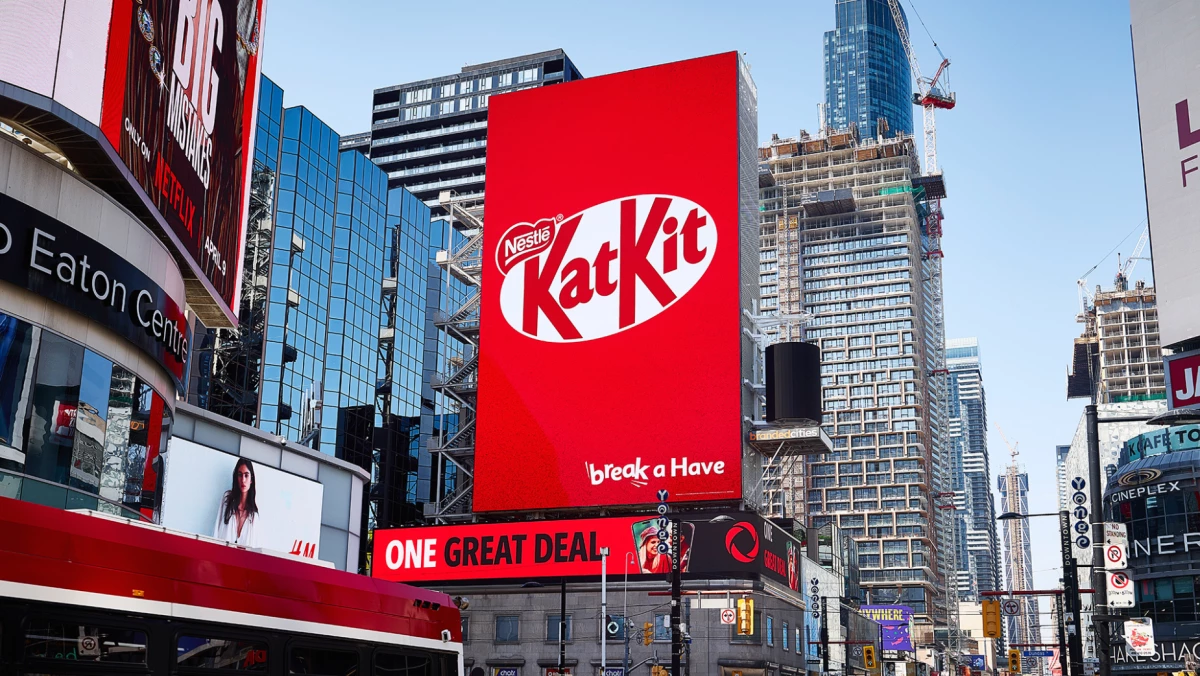
Created with Courage, the efforts swapped “KitKat” to “KatKit” and twisted its long-running line "Have a break" into "Break a have," planting enough confusion to make audiences pause.
It revolves around the simple premise that if something feels off, people notice.
This became the hook that pulled audiences into the campaign before the product was even revealed.
"KatKit is a tease, but it’s also a signal. It shows how much we’re willing to play with the brand, and that comes with a responsibility to our fans.” said Joel Holtby, founder and CCO at Courage.
"The tactic is not to cause confusion for the sake of it, but to engage in a way that earns fans curiosity. We’re asking them to lean in now, knowing it will pay off when the full story is revealed."
Overall, it's a bold move, especially for a product tied to decades of consistency.
Instead of telling consumers what Mix Ups is, KitKat invited them to figure it out.
When Confusion Becomes the Hook
The campaign unfolds across multiple channels, including social, out-of-home placements, TV, and online video.
Each execution uses the same slightly "wrong" branding, suggesting that something has changed.
On social platforms, the flipped identity shows up in posts and short-form content.
Audiences are left wondering whether the brand made a mistake or if something bigger is coming, and this uncertainty became part of the engagement loop.
Out-of-home placements push the disruption further.
While the familiar red branding remains, the altered name and messaging prompt a double-take among passersby.
It's a small shift visually, but a meaningful one psychologically.
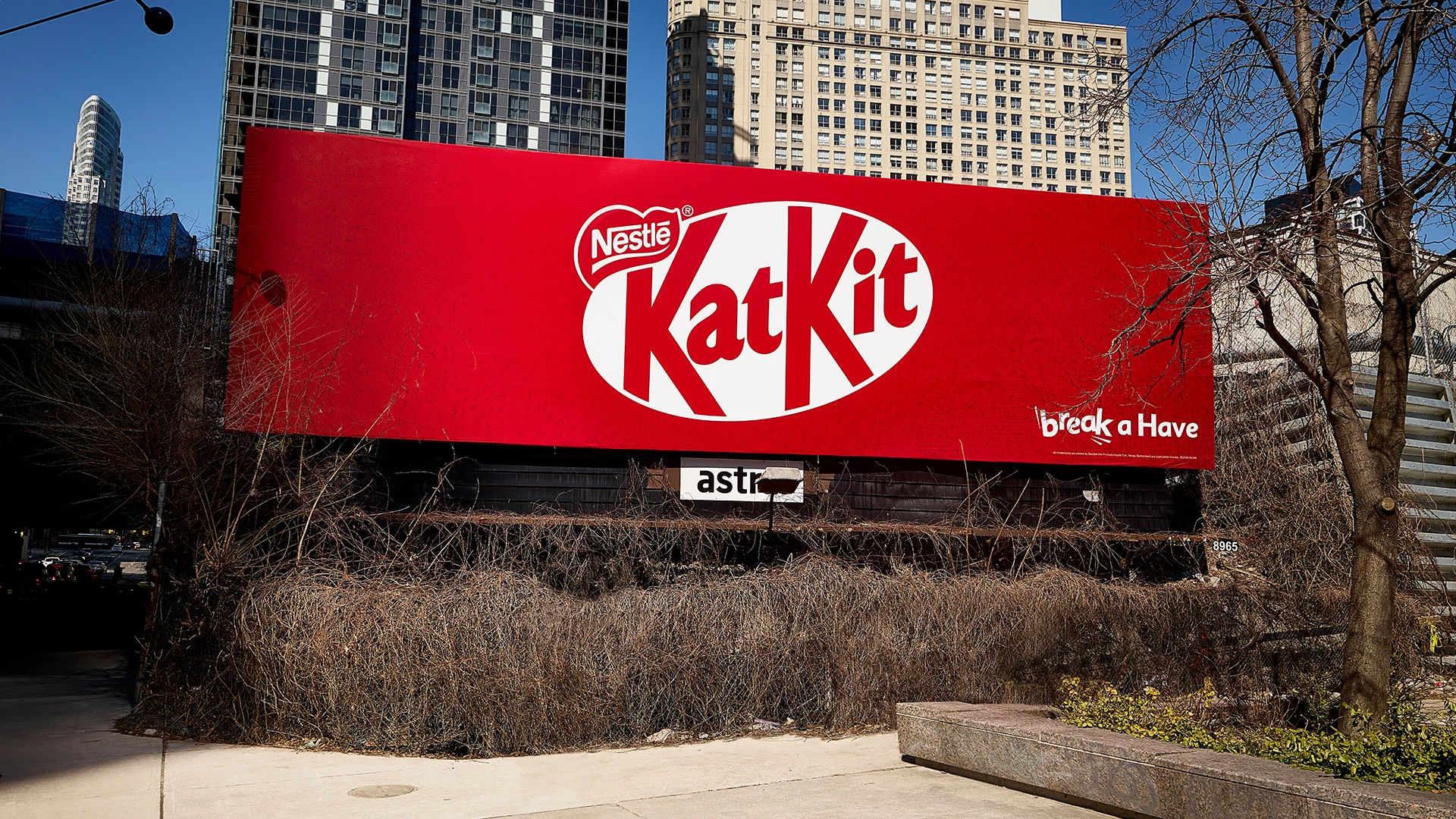
Ultimately, the campaign did not need heavy storytelling or complex visuals, just a simple brand name flip that rings in the heads of consumers.
KitKat’s Brand Mix-Up Play
KitKat’s approach highlights how even the most established assets can be stretched without breaking trust:
- Small but noticeable brand disruptions can spark curiosity. This prompts audiences to engage more deeply before a product reveal.
- Campaign ideas grounded in product truth feel more cohesive. And when it's grounded in truth, creative executions are cascaded more smoothly across channels.
- Consistent execution across social, OOH, and video ensures that a single idea remains clear despite unconventional messaging.
Last year, KitKat celebrated its 90th anniversary and was noted as Nestlé’s leading confectionery brand.
Our Take: Does Changing the Name Make It Stronger?
KitKat's latest stunt feels risky in a way most legacy brands avoid.
You spend decades building recognition, then one day you flip it on its head and trust people will follow.
However, it's not an entirely new concept.
Late last year, Wendy's rebranded to "Tendy's" to push its new chicken tender offering.
And across these types of creative campaigns, what makes them work is the discipline.
The idea is simple, almost annoyingly so, but it sticks because the brands commit to it everywhere.
This is a reminder that you don't always need a bigger story.
Sometimes, you just need to make people look twice at something they thought they understood.
Recently, MUG Root Beer launched its “Brotein” stunt with George Kittle, proving curiosity still drives attention when done right.
Explore DesignRush’s selection of the top brand strategy agencies to turn existing brand equity into something that still lands.