
As businesses navigate the complexities of data-driven marketing strategies, they increasingly rely on advanced tools that improve decision-making.
This shift is particularly significant as the importance of first-party data grows due to stricter regulations on third-party data usage.
I spoke with ReportGarden's digital marketing manager Munazza Khan to find out how B2B marketers can efficiently review their objectives in 2024.

Who Is Munazza Khan?
Munazza focuses on creating engaging content that captures audience interest and drives conversations. She has a proven track record of driving revenue growth through innovative marketing strategies for the past five years. Her approach effectively blends creativity, humor, and pop culture.
Amid stringent third-party data regulations, marketers increasingly turn to first-party data as a cornerstone for crafting precise and effective targeted marketing initiatives.
Munazza shares a few strategies that they can employ to integrate and analyze first-party data for crafting targeted marketing campaigns:
- Learn about the decision-making methods of your consumers by conducting customer surveys. Marketers can gather first-party data, map the buyer journey, and determine important factors influencing decision-making
- Create loyalty programs and provide discounts, early access to products, or exclusive content in return for user data. Long-term relationships can help you establish an effective first-party data strategy.
- Digital marketers should use email data to measure open, click, and bounce rates, giving them past data on customer engagement. Email data should be used to categorize ICPs and customize marketing for clients with different interest levels
There's a Need for Real-Time Data Analysis
The demand for real-time data analysis in B2B marketing is escalating.
In light of this, I asked Munazza how ReportGarden's marketing dashboards facilitates immediate insights into campaign performance.
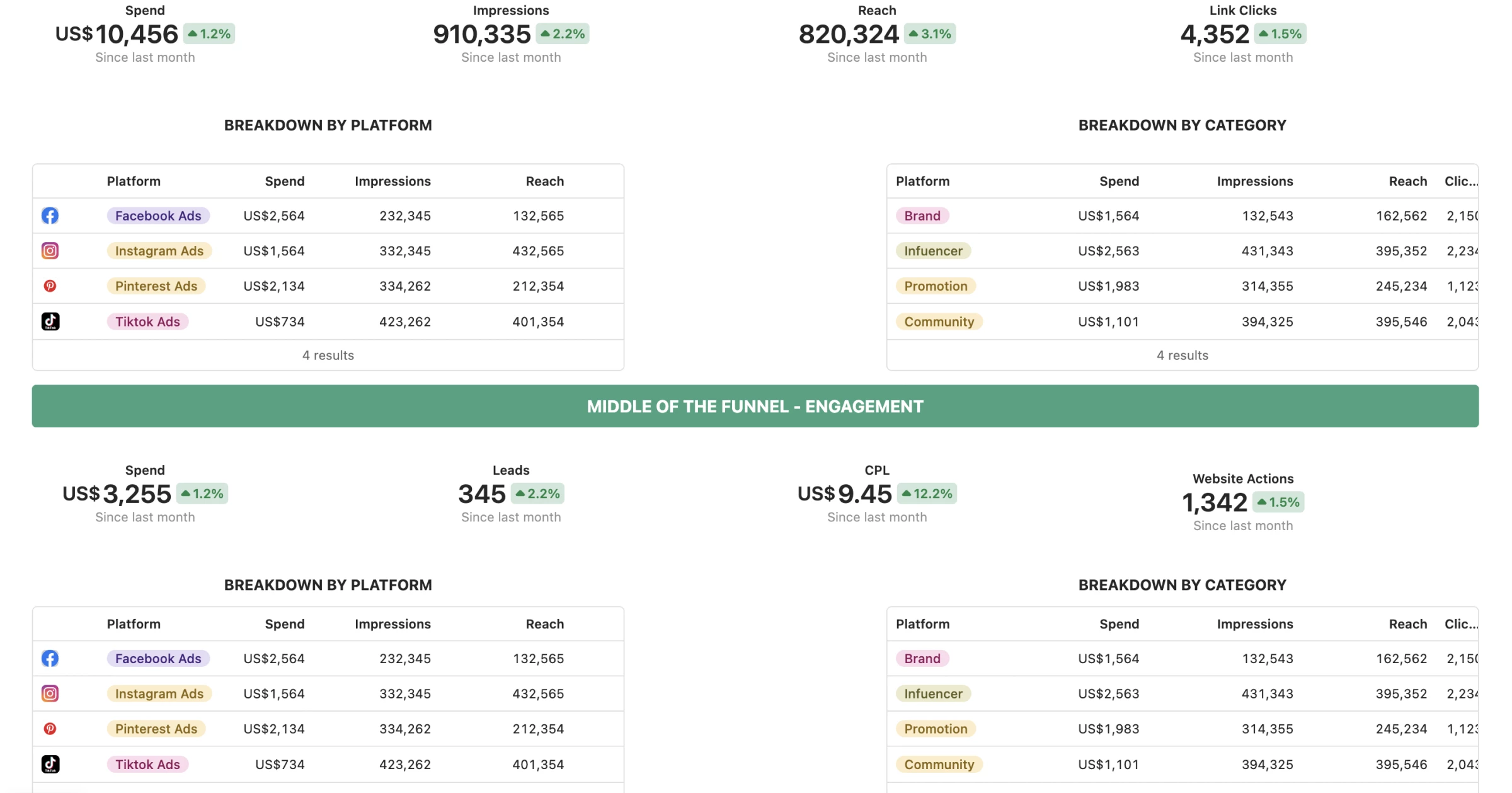
“ReportGarden dashboards provide a quick overview of the success of your campaign in real-time by breaking down detailed data into an understandable format.
Through the integration of data from several platforms, such as social media and email marketing campaigns into a unified dashboard, businesses can swiftly review their marketing objectives' effectiveness,” she says.
Munazza provides the scenarios where marketing dashboards are beneficial for B2B companies:
- Insights can help firms identify ineffective strategies and replace those with better revenue-generating as well as economically beneficial alternatives
- Key performance indicators (KPIs) can be gathered from strategic goals and incorporated into a dashboard to provide useful insights based on current events
- Using a proactive strategy such as predictive analysis, analytics dashboards allow organizations to plan for market trends and adapt their plans accordingly
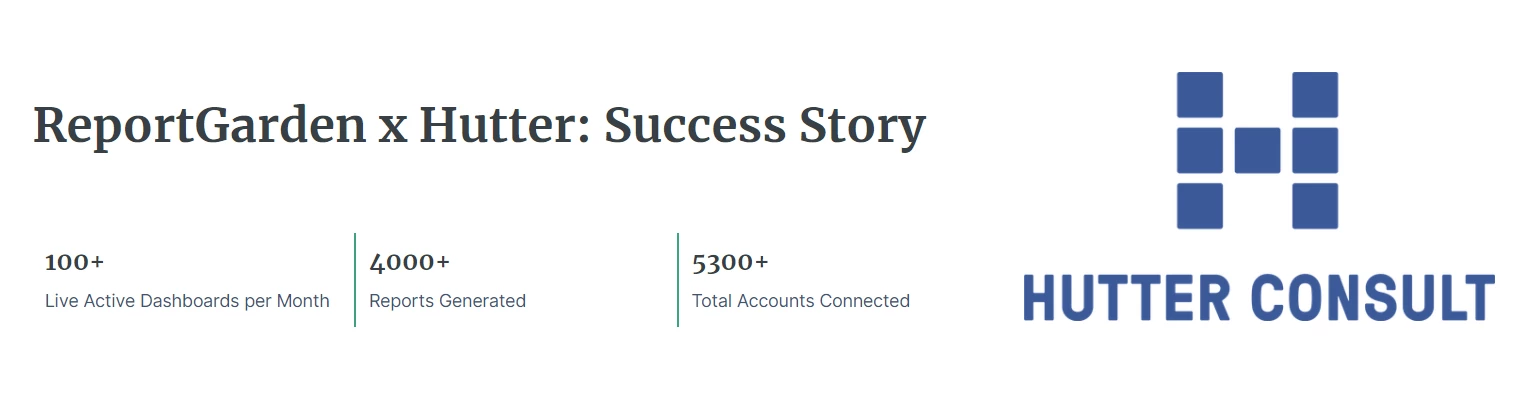
For example, Swiss marketing firm Hutter faced challenges in delivering accurate campaign data to clients worldwide. Seeking a robust reporting framework, the company leveraged ReportGarden's real-time dashboards.
“ReportGarden assisted Hutter in reporting efficiently in several ways, including customizable dashboards with white labeling, comprehensive metrics, perceptive graphics, linguistic personalization, a simple feedback system, several export possibilities, and much more,” she added.
“KPIs are visually tracked, analyzed, and displayed on a personalized dashboard. Files, documents, services, and APIs are all connected to the dashboard, which shows the data in an assortment of indicators, tables, line diagrams, and bar graphs,” she adds.
If you need assistance handling your next advertising project, try partnering with some of the best advertising agencies listed on DesignRush.
Meanwhile, check the DesignRush Podcast to discover more about the challenges and privacy concerns the AI era brings:
“Predictive analytics can help marketers make more informed choices when it comes to media content procurement and marketing,” says Munazza.
Concluding our conversation, we agreed that access to real-time insights is vital for businesses to rapidly adapt to market changes and drive competitive advantage.
READ NEXT: Why Is Big Data Integration Important?