
General Mills is using a familiar cereal complaint to create a premium packaging option.
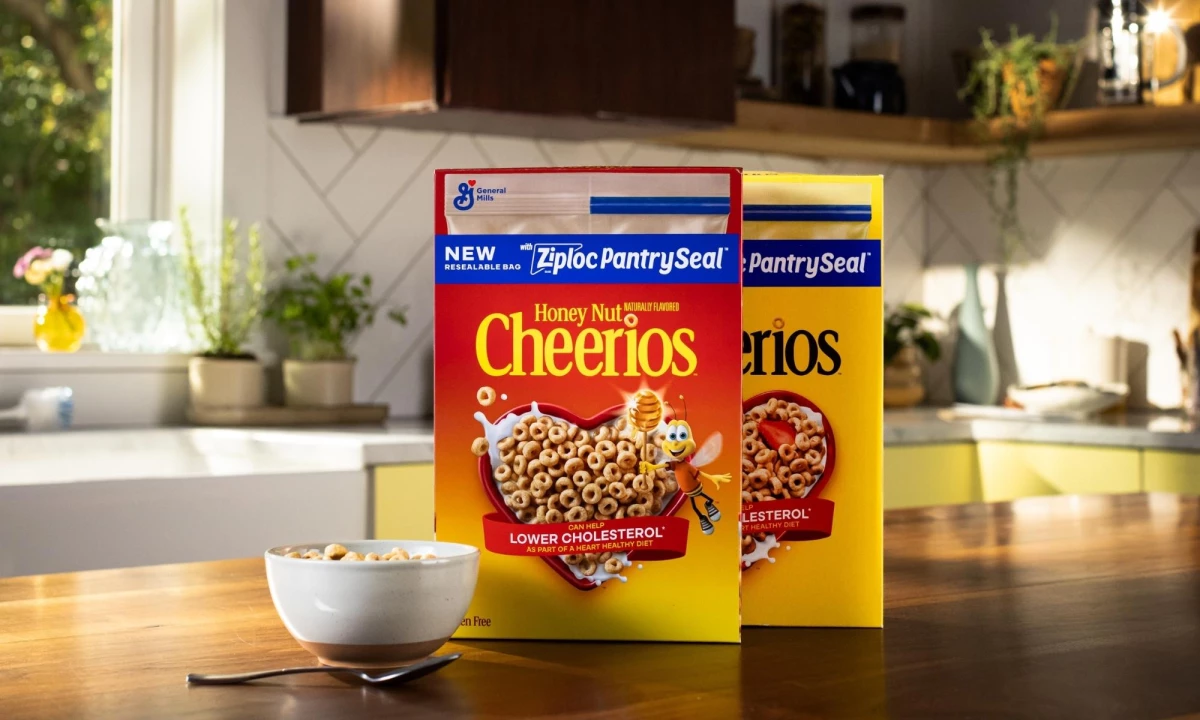
Cheerios and Ziploc introduced PantrySeal, a resealable bag inside a traditional cereal box.
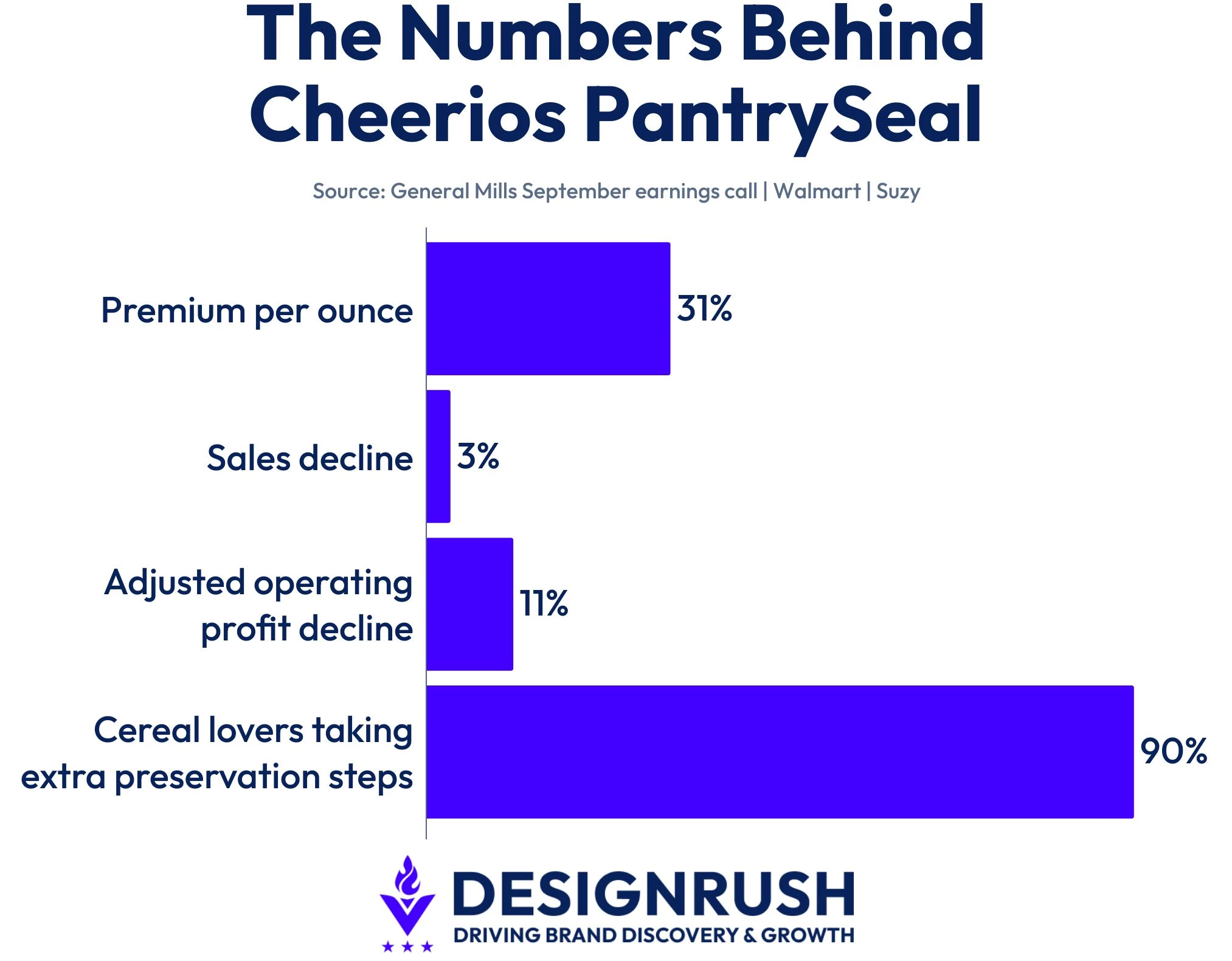
The new format targets the 90% of fans who take extra steps to keep their cereal fresh, per a December 2025 Suzy survey cited by the brand.
It also gives General Mills a product design that fits its stated focus on improving price mix.
"We saw, read and heard the requests from cereal fans," Emilie Knox, VP and business unit director for Cheerios at General Mills, told DesignRush.
"Cheerios with Ziploc PantrySeal brings together two trusted brands to make mornings even simpler with the same Cheerios you already know and love, now in a resealable bag with a built‑in pour spout."
The new packaging is available for Cheerios and Honey Nut Cheerios exclusively at Walmart.com.
General Mills plans to expand distribution to retailers nationwide in the coming months.
But the pricing raises a business question about how much shoppers will pay for a more convenient cereal box.
Cheerios Adds a Resealable Bag Inside the Box
PantrySeal combines Cheerios with Ziploc's resealable storage technology.
It opens partially across the top to create a pour spout, then seals inside the box after use.
The launch addresses a routine frustration without changing the cereal itself.
General Mills receives hundreds of thousands of requests, comments, and reactions annually about keeping cereal fresh.
The new packaging also required substantial production work that needed to fit existing output.
PantrySeal comes only from Buffalo, New York, where Cheerios began in 1941, adding a new line to a brand that ships nearly one box every second.
Meanwhile, Ziploc adds decades of food storage experience to the partnership.
The brand introduced its zipper technology in 1968, giving the collaboration a direct connection to its established product expertise.
PantrySeal gives Ziploc a new use case and gives General Mills a reason to charge more per ounce, which is co-branding with a clear commercial purpose.
General Mills Puts Price Mix Into Practice
Dana McNabb, General Mills COO and incoming CEO, has said that the company expects to return to price mix growth in fiscal 2027.
PantrySeal shows what this looks like on the shelf, with Walmart pricing it at a per-ounce premium over a standard Honey Nut Cheerios family box.
General Mills needs the lift after first-quarter net sales fell 3% to $4.4 billion, mostly from its U.S. yogurt divestiture.
Adjusted operating profit dropped 11% as input costs rose and volume slipped.
With volume down, packaging design becomes one of the few ways that General Mills can raise revenue per box without touching cereal quality.
Three lessons stand out for brands preparing a new product launch.
- Solve a recurring inconvenience. Brands should use customer feedback to identify routine frustrations and develop user-friendly features.
- Give premium pricing a tangible benefit. Product teams should make convenience visible and useful to justify a higher per-unit price to shoppers.
- Measure the trade-off between price and volume. Companies should track trial, repeat purchases, and sales to assess whether a premium format generates lasting demand.
PantrySeal's commercial value will depend on whether shoppers see enough everyday benefit to accept its higher unit price.
Our Take: Can Convenience Justify the Premium?
Convenience can support a higher price when shoppers experience the benefit every morning.
PantrySeal gives buyers a practical reason to consider a more expensive format.
The existing resealable Cheerios bag complicates the proposition.
Walmart lists a 28-ounce bag of original Cheerios at $6.77, while the original 11.2-ounce PantrySeal box costs $4.97.
This makes the Ziploc box about 83% more expensive per ounce than the existing bag.
We'd call PantrySeal a profitable packaging tier if shoppers keep paying extra for a tidier pour and easier storage after their first box.
But if the benefit feels marginal after the first purchase, the launch risks becoming a novelty that struggles to sustain demand.
KFC UK and Surreal are testing their own cereal premium with KFCereal, a £6 savory cereal aimed at KFC superfans willing to swap milk for gravy.
Packaging innovation requires a clear understanding of how design affects usability, shelf appeal, and perceived value.
Explore these top packaging design companies to find partners for your next product launch.