
An endless maze of yellow hallways has become one of the most valuable pieces of IP on the internet.
"Backrooms" recently became A24’s highest-grossing movie in North America after surpassing $97.7 million at the domestic box office.
Adapted from YouTuber Kane Parsons’ viral web horror series, the film also delivered the studio’s biggest opening weekend on record with $81.4 million.
What makes the phenomenon especially interesting for marketers is the people watching.
According to opening weekend audience data, an estimated 86% of the audience is younger than 35, while more than half are under 25.
This places the franchise squarely in front of one of the most difficult demographics for brands to reach through ads.
The result has been a wave of companies adapting the eerie aesthetic of "Backrooms" into social content.
Here is a look at the brands that stepped into the walls of the never-ending space, and how they adapted the trend for their own audiences.
1. Minecraft
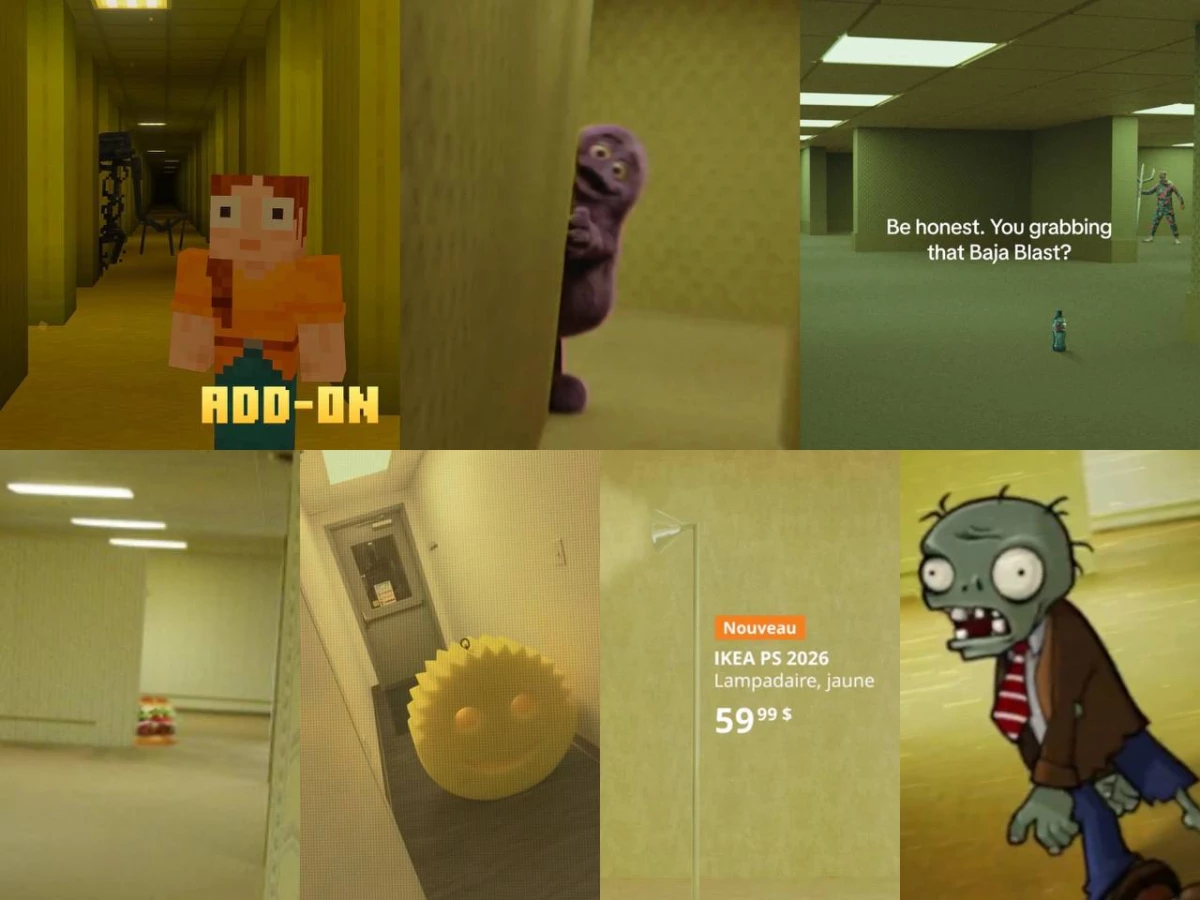
Minecraft recreated the familiar yellow corridors using wool and iron blocks, complete with a dark creature lurking in the distance.
The post also promoted a Backrooms-themed add-on that allows players to explore similar environments inside the game.
This move made the trend feel like a natural extension of gameplay rather than a standalone social post.
2. Plants vs. Zombies
Plants vs. Zombies transformed "Backrooms" into a version of its own world, decorating the walls with zombie and flower imagery.
It also features its signature Zombie character wandering through the space.
The caption referenced the movie's "noclip" lore while tying it back to the franchise's long-running brain-hunting premise.
if you're not careful and noclip out of the backyards, you'll spend forever looking for brains pic.twitter.com/P6fePdMwnJ
— Plants vs. Zombies (@PlantsvsZombies) May 29, 2026
3. Mountain Dew
Mountain Dew placed a mysterious figure dressed in a branded onesie inside the maze.
It then asks viewers if they'd grab the Baja Blast placed in the middle of the room, even with the branded figure ready to chase them down.
The setup turns the replies into an interactive game that attracts engagement.
Guys I’m scared #bajablast#backrooms#mountaindewpic.twitter.com/DnYHspKMAi
— Mountain Dew® (@MountainDew) May 29, 2026
4. McDonald’s
McDonald's produced one of the most ambitious executions of the trend with a two-minute exploration of an abandoned PlayPlace.
Viewers travel through dark slides, empty dining areas, overflowing fries, and broken equipment before eventually spotting Grimace hidden in a doorway.
The video dove into the Backrooms mythology while injecting recognizable McDonald's imagery throughout, creating something that felt closer to a short film.
5. Scrub Daddy
In a short reel posted on Instagram, Scrub Daddy turned the Backrooms into an unsettling sponge warehouse packed with oversized versions of its products.
A sanitation-suited figure pursues viewers through the maze while the smiling mascot repeatedly appears and disappears throughout the journey.
The effortful and innovative approach to the trend helped the brand stand out among other executions.
6. IKEA
IKEA took perhaps the most obvious route, but it also may have been the most fitting.
The retailer inserted its furniture into the "Backrooms" world, placing them smack in the middle of the barren environment.
In true IKEA fashion, prices were included in the carousel post.
The execution felt particularly on-brand, given that many fans already associate "Backrooms" with endless commercial interiors and furniture-store aesthetics.
7. Burger King
Burger King kept things simple by posting an image showing a Whopper hiding behind the walls of the Backrooms.
Fans familiar with the trend immediately understood the image, demonstrating how meme marketing often operates with "IYKYK" references.
— Burger King (@BurgerKing) May 29, 2026
How Internet Horror Works for Brands
The "Backrooms" trend concentrates the shared online attention that marketers are persistently chasing.
Unlike traditional entertainment properties, the concept was born on the internet.
It spread through social platforms, evolved through creator communities, and eventually became a major theatrical release, exceeding everyone's expectations.
The examples above then highlight how simple and low-effort references can be as effective as big-budget campaigns as long as they're tasteful and intentful.
Here are a few things the Backrooms phenomenon makes clear for marketers:
- Make the most out of the marketing window. Memes fade fast, so move while the trend is still alive, or audiences will call you out for showing up late.
- Adapt trends to fit your specific industry. The strongest executions add recognizable brand elements instead of replicating the original format.
- Reward audience knowledge. Fans are more likely to engage when content assumes familiarity, instead of overexplaining the reference.
The brands winning here made the Backrooms unmistakably their own, so a fan knows whose post it is before the logo or mascot even shows up.
Our Take: Are Brands Entering a New Era of Internet Marketing?
Some of the biggest marketing opportunities for brands today begin in corners of the internet that look insignificant until they suddenly aren't.
A teenager uploads videos about endless yellow hallways, and a few years later, the concept becomes A24's biggest domestic hit.
The lesson isn't that every brand should start chasing creepy internet memes, but how they should start paying attention if they want to capture the hearts of Gen Z audiences.
Keep in mind that attention now forms differently than it used to.
The brands that recognized the value of the Backrooms trend early and made a post about it understood they were showing up where passionate audiences are.
Brands hopping on entertainment need agencies that understand how to align brand positioning with the cultural moment a film or property is trying to own.
Take a look at the top brand strategy agencies in our directory.