
Airheads Halloween Campaign: Key Points
- Airheads launched “Decoy Boy,” a robot that lets adults relive trick-or-treating without the awkwardness.
- The activation taps into millennials' childhood nostalgia through humor, character design, and a giveaway running until October 17.
- The campaign expands Airheads’ seasonal marketing presence with a playful push into experiential engagement and earned media.
Halloween just got weirder, but a lot more fun.
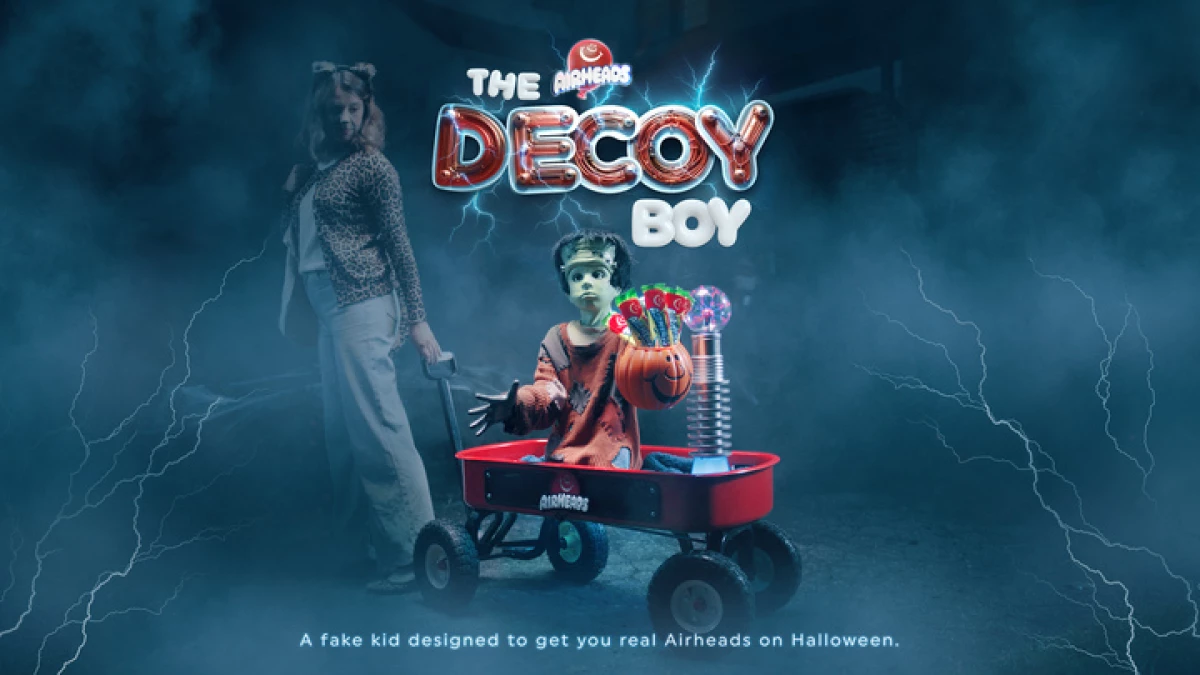
Airheads has unveiled "Decoy Boy," a trick-or-treating robot designed to help adults join the Halloween ritual again.
The launch transforms a common sentiment like missing childhood Halloween nights into an inventive way to reconnect with the holiday spirit.
For grown-ups nostalgic for candy runs but wary of looking out of place, Decoy Boy offers a perfect disguise.
It's a battery-powered robotic kid in costume, seated in a wagon, and capable of saying “trick or treat!” on command.
According to a OnePulse survey cited by the brand, 87% of adults think it’s weird to trick-or-treat alone despite loving it as children.
“Halloween should be fun for everyone, no matter your age or background,” said Chris Borges, Brand Director, Non-Chocolate Portfolio at Perfetti Van Melle.
“So we built the Decoy Boy to give anyone a way to embrace the spooky season and stock up on Airheads with a little extra flair and fun.”
Each robot can carry up to 15 pounds of candy and comes in one of three classic Halloween looks: ghost, wizard, or Frankenstein.
Notably, the robot has both a “persuasion dial” for extra treats and a “tantrum mode” for diehard fans.
It definitely treads the line between nostalgic and absurd, which are hallmarks of Airheads’ playful brand identity.
Fans can enter to win their own Decoy Boy through AirheadsDecoyBoy.com, with the giveaway closing on October 17 at noon EST.
Inside the Halloween Stunt
The campaign is marked by a nearly two-minute spot that sees an adult woman in a full cat costume trick-or-treating around her neighborhood.
"Aren't you a bit old?" one man tells her.
Viewers are then introduced to Dr.Phil Bucketts, who unveils Airheads' solution to trick-or-treating as an adult: the Decoy Boy.
It's a humanoid robot with innovative candy-extracting technology, so you don't have to miss out on the Halloween rituals you miss.
As soon as the robot gets Airheads from candy-givers, the woman cranks up the "persuasion" button, which prompts the Decoy Boy to get specific with his comments.
"I notice your registration has expired. Are you sure there aren't any Airheads hidden in your offshore bank accounts?" the boy says, interrogating the man.
Meanwhile, "Tantrum Mode" prompts Decoy Boy to scream as loud as he can until he gets the amount of Airheads he wants.
This campaign pushes Airheads deeper into experiential and digital engagement, a move in line with recent seasonal marketing shifts.
The robot concept doubles as both a practical gag and a social activation, encouraging fans to relive their best childhood memories while sharing their reactions online.
Airheads, best known for its chewy taffy bars, continues to grow globally under Perfetti Van Melle’s confectionery portfolio.
What Brands Can Learn from Airheads' Halloween Stunt
For agencies, Airheads’ Decoy Boy is a timely reminder that nostalgia and novelty can coexist in an experimental campaign.
- Finding ways to tap into nostalgia can refresh a long-standing holiday without losing emotional connection.
- Experiential efforts thrive when anchored in data-driven consumer insights, like Airheads’ survey on adult trick-or-treating.
- Giveaways and character-driven stunts extend short activations into shareable cultural moments.
Other brands have mined the same space.
HI-CHEW recently unveiled a mystery mix that will have candy fans guessing until Halloween, while Chipotle brought back its long-standing "Chip-or-Treat" offer in time for the holiday.
These efforts show how brands use absurdity and participation to make limited-time campaigns stick.
The real challenge for Airheads now is sustaining that buzz once the Halloween lights go out.
Our Take: Can Absurdity Build Authenticity?
This campaign works because of how unserious it is.
I like that Airheads didn’t dress up its marketing in irony. It literally built a kid robot so adults could chase candy again.
It’s equal parts ridiculous and sincere, which makes it feel human in a season packed with overproduced brand gimmicks.
The smartest thing here is how Airheads turned self-awareness into connection.
It’s not asking you to buy into a fantasy and instead asks you to laugh and join in.
And that kind of honesty, even when wrapped in a Halloween mask, is what keeps people coming back.
In other news, Trolli and Mountain Dew teamed up to launch two new flavors and blur the lines between snacks and drinks.